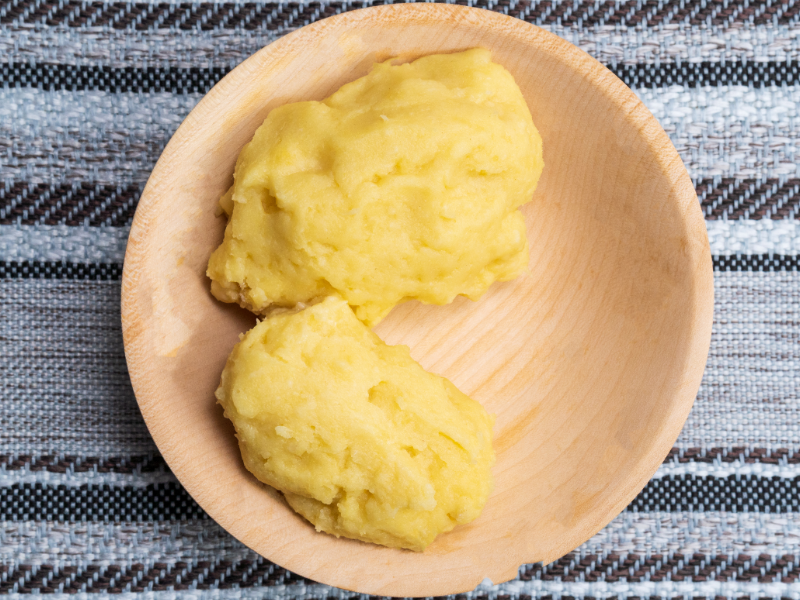
Sweet butternut or pumpkin mashed with peanut butter, creating a rich and creamy side dish that balances savory main courses.
Nutrition & Info
Allergen Warnings
Equipment Needed
Presentation Guide
Instructions
-
1
Peel and cube the butternut squash into small even pieces for faster cooking.
-
2
Place in a pot with half a cup of water, cover, and steam over medium heat for twenty minutes until very soft.
-
3
Mash the cooked squash with a potato masher until smooth with no large lumps remaining.
-
4
Stir in peanut butter, sugar, and salt, mixing until completely incorporated and creamy.
-
5
Cook on low heat for five more minutes, stirring constantly to prevent sticking to the bottom.
-
6
Serve warm as a side dish alongside sadza and meat or vegetable stew.
Did You Know?
Nhopi is often the first solid food given to Zimbabwean babies because of its smooth texture and nutritional density.
Chef's Notes
Equipment Tips
- pot
- potato masher
- cutting board
- knife
Garnishing
crushed peanuts, cinnamon dust
Accompaniments
sadza, grilled meat
The Story Behind Nhopi
Nhopi is one of the oldest dishes in Zimbabwean cuisine, dating back to when pumpkins and groundnuts were among the primary crops cultivated by Shona farmers. The combination of starchy pumpkin with protein-rich peanut butter created a nutritionally balanced food that sustained farming communities through long work days. The dish embodies the ingenuity of traditional Zimbabwean agriculture, combining two locally grown crops into something greater than the sum of its parts.


Comments (0)
Log in to leave a comment.
No comments yet. Be the first to share your thoughts!