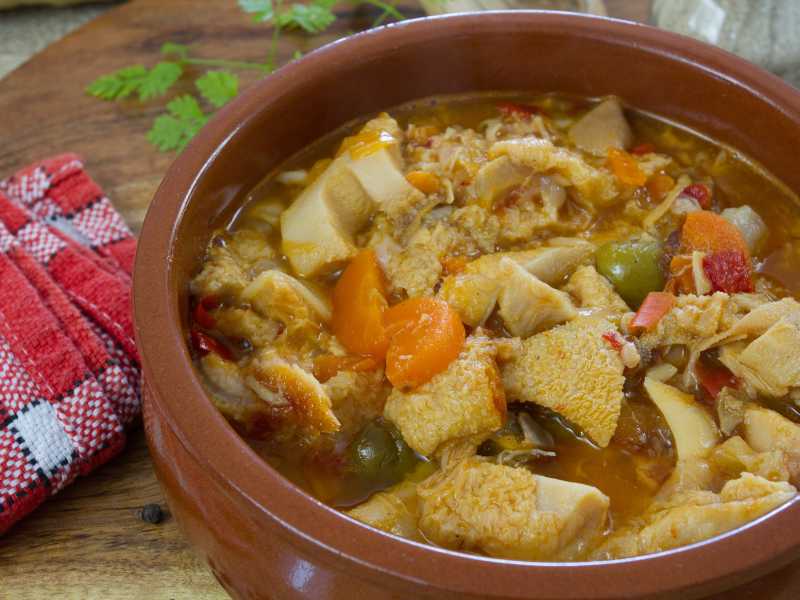
Slow-cooked cow heel pieces simmered until gelatinous and tender in a seasoned tomato and onion broth, prized for its rich collagen texture.
Instructions
-
1
Rinse cow heel pieces thoroughly under cold water, then place in a large pot and cover with water.
-
2
Bring to a boil and cook for ten minutes. Drain and rinse to remove any impurities from the surface.
-
3
In the same pot, heat oil and sauté onions and garlic until golden, about six minutes.
-
4
Add tomatoes, curry powder, salt, and pepper, cooking until tomatoes break down into a sauce.
-
5
Return cow heel to the pot, add six cups water, bring to a boil, then reduce to a low simmer.
-
6
Cover and cook for three to four hours until the meat is completely tender and falling off the bone. Serve with sadza.
Did You Know?
Mazondo is considered a delicacy in Zimbabwe, and the gelatinous texture is highly prized rather than avoided.
The Story Behind Mazondo
Mazondo reflects the Zimbabwean tradition of using every part of the animal, a practice born from both respect for livestock and economic necessity. Cow heel was historically an affordable cut that working families could obtain from butcheries, and the long slow cooking method transformed tough collagen into a silky, deeply flavored stew. The dish remains a weekend favorite when families have time for the extended cooking process.


Comments (0)
Log in to leave a comment.
No comments yet. Be the first to share your thoughts!