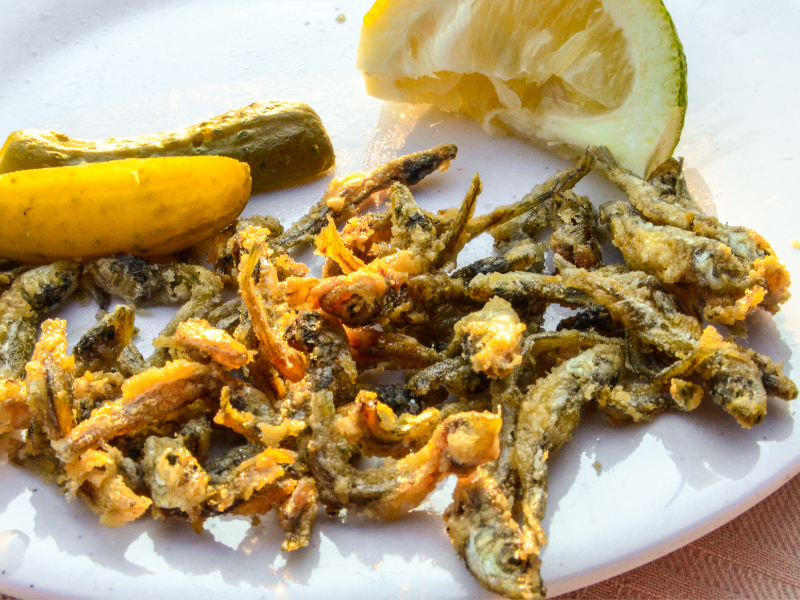
Tiny dried sardines cooked with tomatoes, onions, and groundnuts into a savory, protein-rich relish for nshima.
Nutrition & Info
Allergen Warnings
Equipment Needed
Presentation Guide
Vessel: plate alongside nshima
Garnishes: sliced tomatoes, onion rings
Accompaniments: nshima, vegetable relish
Instructions
-
1
Spread the dried kapenta on a clean tray and carefully pick through them to remove any debris, sand, or foreign particles. Place the cleaned kapenta in a dry skillet over medium heat and toast for three to four minutes, tossing frequently to remove excess moisture.
-
2
Transfer the toasted kapenta to a bowl and pour just enough warm water over them to cover. Soak for five minutes to rehydrate slightly and soften the texture, then drain the water completely and set the kapenta aside on a clean plate.
-
3
Heat the vegetable oil in a wide, heavy skillet over medium heat. Add the diced onion and sauté for three to four minutes until translucent and starting to turn golden at the edges. Add the curry powder and stir for thirty seconds until fragrant.
-
4
Add the chopped tomatoes to the skillet and cook, stirring occasionally, for about five minutes until they have broken down into a thick, saucy consistency and most of their liquid has evaporated. Season lightly with salt at this stage.
-
5
Add the drained kapenta to the tomato and onion mixture and stir gently to combine, being careful not to break the small fish apart too much. Dissolve the groundnut powder in the water and pour it evenly into the skillet.
-
6
Reduce the heat to low and simmer the stew uncovered for ten to twelve minutes, stirring occasionally, until the sauce has thickened to a rich, creamy consistency and the kapenta have absorbed the flavours of the tomato and groundnut mixture.
-
7
Taste and adjust the seasoning with additional salt if needed. Serve the kapenta stew hot alongside freshly prepared nshima, spooning the saucy fish over the firm maize porridge and eating with your hands in the traditional Zambian manner.
Did You Know?
Kapenta were introduced to Lake Kariba from Lake Tanganyika and now form a crucial protein source.
Chef's Notes
Equipment Tips
- skillet
- wooden spoon
- colander
Garnishing
sliced tomatoes, onion rings
Accompaniments
nshima, vegetable relish
The Story Behind Kapenta Stew
The Story: Kapenta stew features the tiny sardine-like fish (Limnothrissa miodon and Stolothrissa tanganicae) that were introduced to Lake Kariba from Lake Tanganyika in the 1960s and quickly became one of Zambia's most important protein sources. The dried kapenta are cooked with tomatoes, onions, and groundnut powder into a savory relish served over nshima. The kapenta fishery of Lake Kariba, where fishermen use bright lights to attract the fish at night, has become a major industry and a vital source of affordable protein for millions of Zambians. The fish are sun-dried on the lake shores and distributed throughout the country.
On the Calendar: Kapenta stew is everyday food, one of the most common and affordable relishes served with nshima at lunch and dinner across Zambia. Its low cost and high protein content make it a dietary staple for families of all economic levels.
Then and Now: From its introduction in the 1960s, kapenta rapidly became integral to Zambian food culture. Concerns about overfishing and the ecological impact of the kapenta fishery have prompted conservation efforts, but the fish remains essential to Zambian nutrition and cuisine.
Legacy: Kapenta stew is a reminder that great food traditions can be young: a fish introduced within living memory that has become as essential to the Zambian table as the ancient nshima it accompanies.


Comments (0)
Log in to leave a comment.
No comments yet. Be the first to share your thoughts!