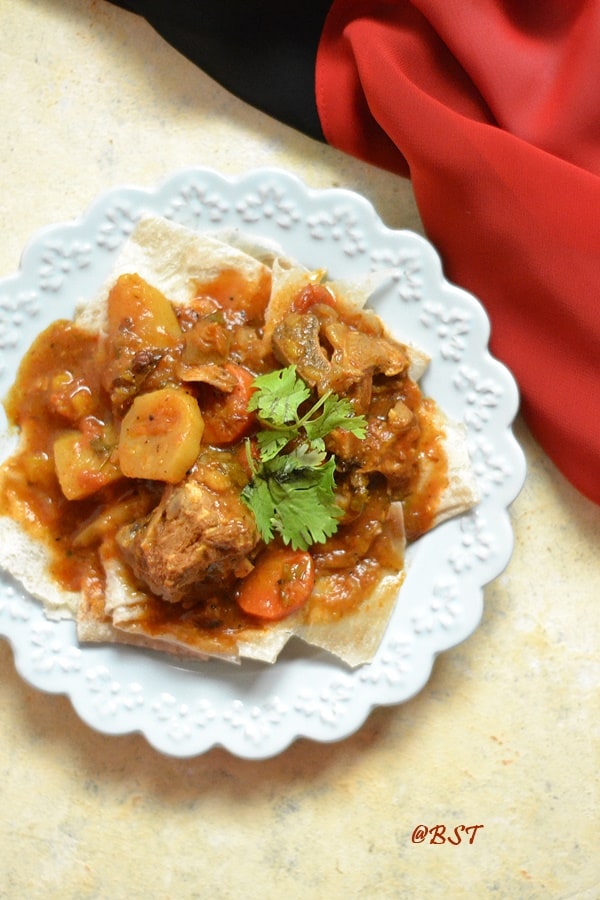
Yemen's fiery national dish — a bubbling stone pot stew of lamb and vegetables crowned with whipped fenugreek foam (hulbah) that melts into the stew.
Nutrition & Info
Allergen Warnings
Equipment Needed
Presentation Guide
Vessel: bubbling stone bowl (madara)
Garnishes: sahawiq (chili salsa), hulba (fenugreek froth)
Accompaniments: flatbread (khubz)
Instructions
-
1
Heat the vegetable oil in a large heavy pot over medium-high heat. Add the lamb cubes and sear in batches for four to five minutes until browned on all sides. Remove the meat and set it aside on a plate while you prepare the aromatic base.
-
2
In the same pot, sauté the diced onion until softened and translucent, about four minutes. Add the minced garlic, hawaij spice blend, and turmeric, stirring constantly for one minute until the spices are fragrant and have coated the onions evenly.
-
3
Return the browned lamb to the pot and add the chopped tomatoes, diced potatoes, and enough water to cover the ingredients by about three centimetres. Bring to a boil, then reduce the heat to low, cover, and simmer for one hour until the lamb is tender.
-
4
While the stew simmers, drain the soaked fenugreek seeds thoroughly and place them in a deep bowl. Beat vigorously with an electric hand mixer or whisk for five to eight minutes until the seeds break down and transform into a light, airy, pale green foam.
-
5
Stir the zhug paste into the simmering stew during the last ten minutes of cooking, adjusting the amount to your preferred heat level. The stew should be thick and richly flavoured with the meat falling apart easily when pressed with a spoon.
-
6
Ladle the hot stew into individual stone serving pots or deep heatproof bowls. Spoon a generous mound of the whipped fenugreek foam on top of each portion, allowing it to sit like a crown over the bubbling stew without stirring it in.
-
7
Serve the saltah immediately while very hot, with warm flatbread on the side. Diners tear pieces of bread and use them to scoop through the fenugreek foam and into the rich lamb stew beneath, combining all layers in each bite.
Did You Know?
Saltah is served in stone bowls (haradah) that keep it bubbling at the table.
Chef's Notes
Equipment Tips
- stone bowl (madara)
- pot
- whisk
Garnishing
sahawiq (chili salsa), hulba (fenugreek froth)
Accompaniments
flatbread (khubz)
The Story Behind سلتة
### The Story
Saltah is widely considered the national dish of Yemen, a fiery, bubbling stew that combines a meat-based broth (maraq) with a distinctive fenugreek froth called hulba and a spicy relish called sahawiq. The dish is served in a traditional stone bowl (madara) that retains heat, keeping the stew bubbling at the table. Saltah's origins are rooted in the Yemeni highlands, where the combination of a rich broth topped with whipped fenugreek foam evolved as a warming, nutritious meal suited to the cool mountain climate. Fenugreek has been cultivated in Yemen since antiquity, and its use as a frothy topping is unique to Yemeni cuisine.
### On the Calendar
Saltah is an everyday lunch dish across northern Yemen, eaten daily by many families. It is so central to Yemeni identity that the midday meal is sometimes simply called "saltah time." It appears at all occasions from casual lunches to formal gatherings.
### Then & Now
The base stew varies by household -- it may include lamb, chicken, or vegetables, with potatoes, tomatoes, and scrambled eggs being common additions. The hulba (fenugreek froth) is prepared by soaking fenugreek seeds overnight, then whipping them into a foam that is spooned over the hot broth. Sahawiq -- a pounded relish of fresh chilies, tomatoes, garlic, and cilantro -- provides fierce heat. The dish is eaten with Yemeni flatbread, torn and used to scoop the stew.
### Legacy
Saltah is the heartbeat of Yemeni daily life, a dish whose bubbling stone bowl, fenugreek froth, and fierce spice embody the bold, uncompromising character of Yemeni cuisine.

Comments (0)
Log in to leave a comment.
No comments yet. Be the first to share your thoughts!