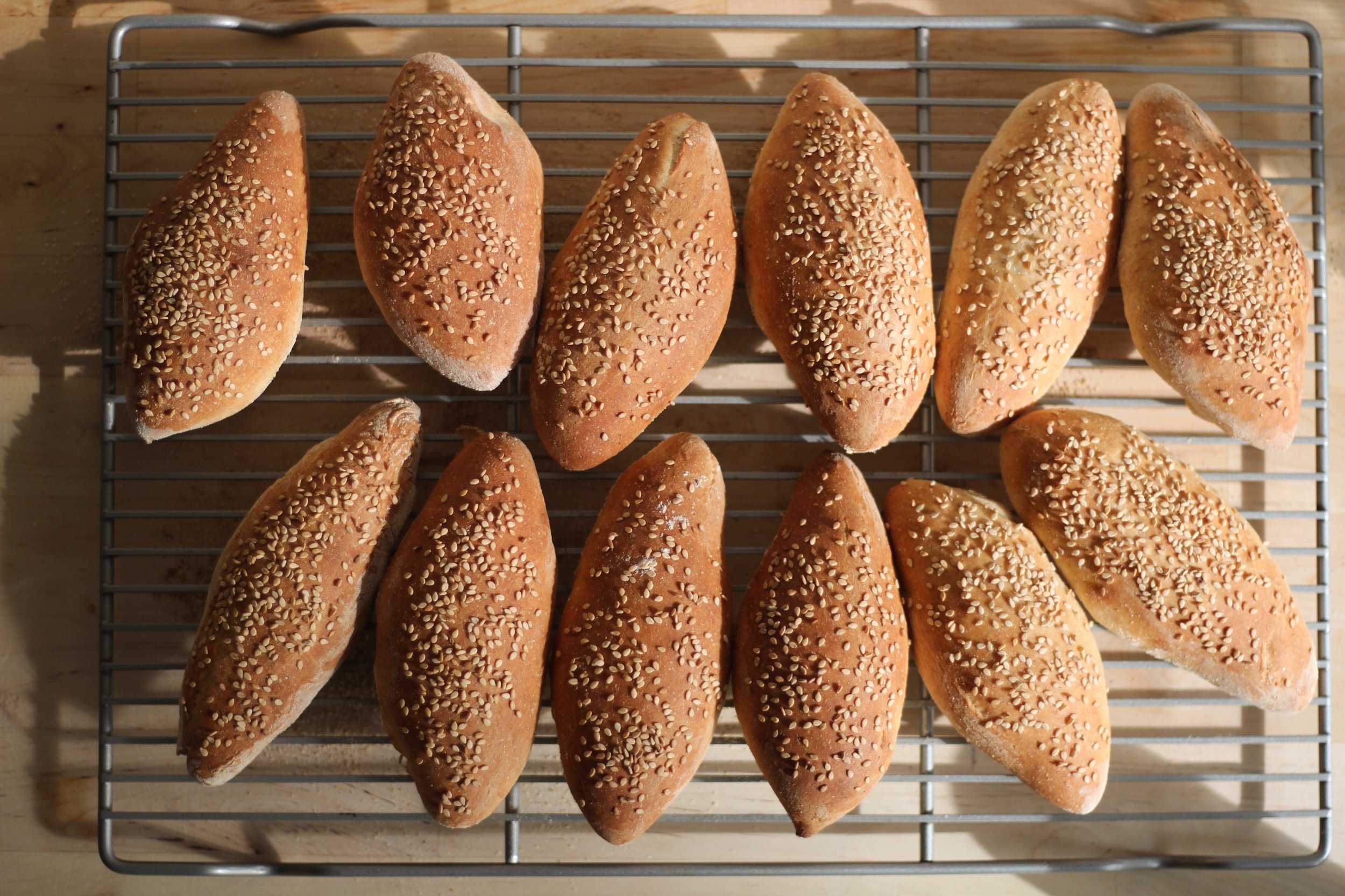
Buttery, flaky flatbread with countless layers that shatter deliciously, pan-fried golden. Paired with grated tomato and zhug, it's one of the most satisfying breads on earth.
Nutrition & Info
Allergen Warnings
Equipment Needed
Presentation Guide
Vessel: flat serving plate
Garnishes: grated tomato, hard-boiled egg
Accompaniments: zhug (spicy herb paste), honey
Instructions
-
1
Combine the flour, salt, and sugar in a large bowl. Gradually add the warm water while mixing with your hands until a smooth, supple dough forms. Knead vigorously on a clean surface for eight to ten minutes until the dough is very elastic.
-
2
Divide the dough into six equal portions and roll each into a smooth ball. Place the balls on a lightly oiled tray, cover with cling film, and allow them to rest for at least twenty minutes so the gluten relaxes and the dough becomes easier to handle.
-
3
Working on a generously buttered surface, take one dough ball and roll it out as thinly as possible into a large rectangle, stretching carefully with your hands until the dough is nearly translucent and thin enough to read through.
-
4
Spread a generous layer of softened butter evenly across the entire surface of the rolled dough. Fold the dough into thirds lengthwise like a letter, then fold into thirds again crosswise, creating a compact square with multiple layered butter pockets inside.
-
5
Repeat the rolling, buttering, and folding process with each remaining dough ball. Stack the folded squares between sheets of parchment paper, cover tightly, and refrigerate for at least twenty minutes or freeze for later use.
-
6
Heat a heavy skillet or flat griddle over medium heat and add a thin film of vegetable oil. Place one folded dough square in the pan and cook for three to four minutes per side, pressing gently with a spatula until deep golden brown and flaky.
-
7
Remove the cooked malawach from the pan and place on a serving plate. Serve hot alongside grated fresh tomatoes, a small bowl of spicy zhug paste, and halved hard-boiled eggs, tearing the flaky bread apart by hand to dip.
Did You Know?
Malawach from Yemeni Jewish cuisine is now a frozen food staple across the Middle East.
Chef's Notes
Equipment Tips
- skillet
- rolling pin
- mixing bowl
Garnishing
grated tomato, hard-boiled egg
Accompaniments
zhug (spicy herb paste), honey
The Story Behind ملوح
### The Story
Malawach is a flaky, buttery layered flatbread of Yemeni origin, made by folding thin sheets of dough with generous amounts of ghee or butter between each layer, then pan-frying until golden and crisp on the outside while remaining soft and laminated within. The bread originated among the Jewish communities of Yemen, particularly in the Aden region and the southern highlands, where it was prepared as a Sabbath bread that could be made in advance and reheated. When Yemeni Jews emigrated to Israel during Operation Magic Carpet (1949-1950), they brought malawach with them, and it became one of the most popular street foods in Israel while remaining a staple in Yemeni Muslim households as well.
### On the Calendar
In Yemen, malawach is a breakfast bread, served with honey, hard-boiled eggs, and fresh tomato relish (sahawiq). It is prepared for Sabbath in Jewish tradition and for Friday breakfast in Muslim households. It is also a common Ramadan suhoor food.
### Then & Now
Traditional malawach requires patient layering -- the dough is stretched thin, brushed with softened butter or samn, folded multiple times, and rested before frying. The result resembles a flaky, rich pancake with dozens of paper-thin layers visible when torn open. Commercial frozen versions exist, but hand-made malawach remains prized for its superior texture and butteriness.
### Legacy
Malawach is a remarkable example of a dish that transcends religious and cultural boundaries, uniting Yemeni Jewish and Muslim traditions through a shared love of exquisitely layered bread.

Comments (0)
Log in to leave a comment.
No comments yet. Be the first to share your thoughts!