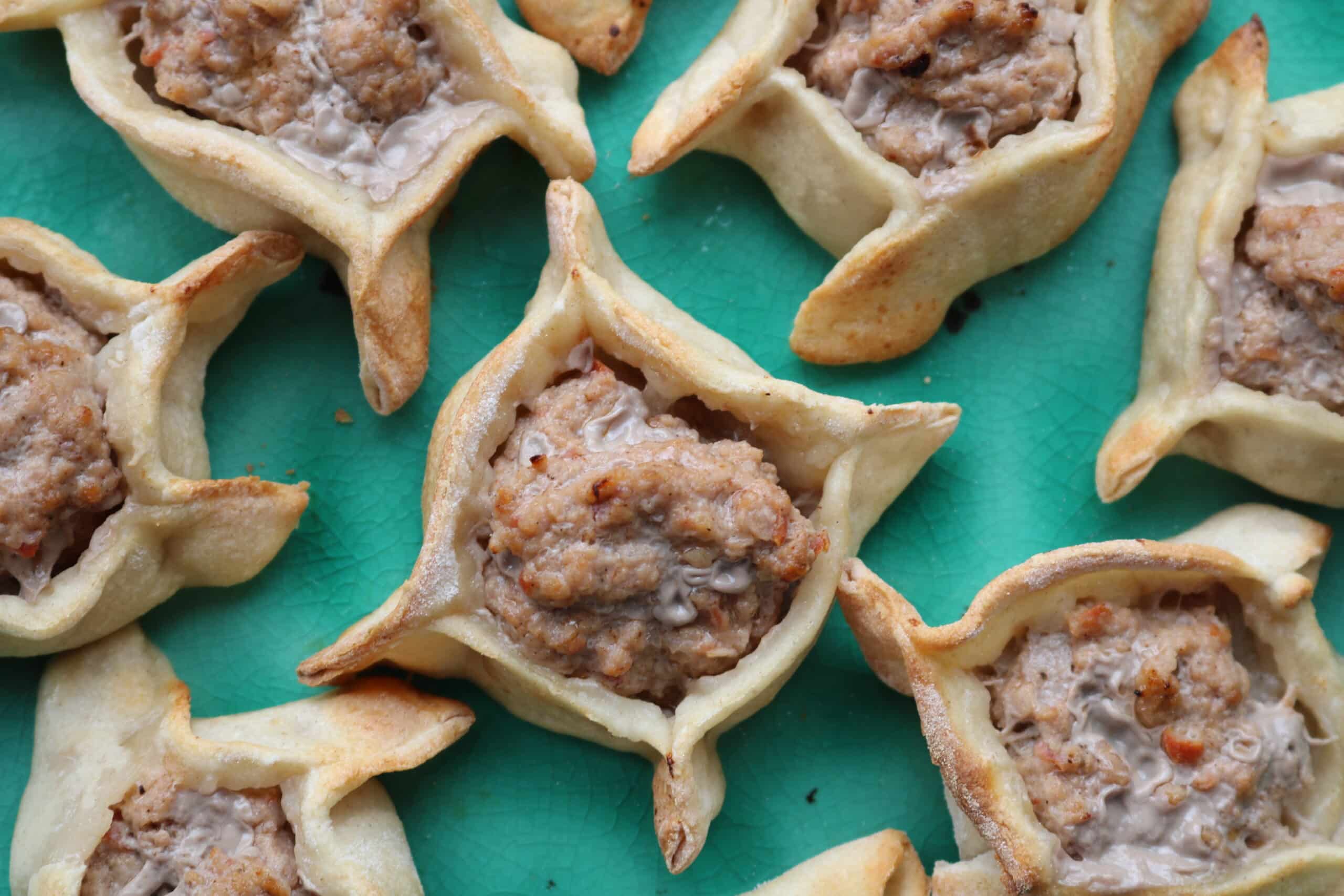
Layers of paper-thin buttery dough baked into a golden flaky cake, drizzled with raw honey and black seed. The centerpiece of Yemeni wedding feasts.
Nutrition & Info
Allergen Warnings
Equipment Needed
Presentation Guide
Vessel: round platter, honey pooled on top
Garnishes: drizzle of honey and ghee
Accompaniments: black tea
Instructions
-
1
Dissolve the yeast and sugar in the warm milk and let it stand for five minutes until frothy. In a large bowl, combine the flour and salt, then add the beaten eggs and the activated yeast mixture, stirring until a soft, slightly sticky dough forms.
-
2
Turn the dough onto a lightly floured surface and knead for ten minutes until it is smooth, elastic, and tacky but no longer sticky. If the dough feels too dry, add warm milk one tablespoon at a time until it reaches the right consistency.
-
3
Divide the kneaded dough into ten to twelve equal portions and roll each into a smooth ball. Place the balls on an oiled tray, cover with a damp cloth, and allow them to rest at room temperature for twenty minutes to relax the gluten.
-
4
Working with one ball at a time, flatten it with your hands on an oiled surface, then stretch and pull it outward as thinly as possible until it is nearly translucent, similar to strudel dough. Take care not to tear any holes in the sheet.
-
5
Brush the stretched layer generously with melted butter and place it into a greased round baking pan about thirty centimetres in diameter. Repeat with each remaining dough ball, stacking the buttered layers on top of one another in the pan.
-
6
After all layers are stacked, brush the top layer generously with egg yolk mixed with a splash of milk. Sprinkle the nigella seeds evenly over the surface, pressing them in gently so they adhere during baking.
-
7
Preheat the oven to one hundred and eighty degrees Celsius and bake the layered bread for twenty-five to thirty minutes until the top is a deep golden brown and the layers have puffed slightly, creating a flaky, laminated texture throughout.
-
8
Remove the bint al-sahn from the oven and immediately pour a generous amount of raw honey over the entire surface while the bread is still very hot, allowing it to seep between the layers. Serve warm, tearing pieces by hand at the table.
Did You Know?
Bint al-Sahn means 'daughter of the plate' — the number of thin layers judges the family's skill.
Chef's Notes
Equipment Tips
- round baking pan
- rolling surface
- pastry brush
- oven
Garnishing
drizzle of honey and ghee
Accompaniments
black tea
The Story Behind بنت الصحن
### The Story
Bint al-sahn, meaning "daughter of the plate," is a celebrated Yemeni honey cake made from layers of paper-thin dough brushed with ghee (samn) and baked until golden, then drenched in Yemen's prized honey. The dish has roots in the medieval Yemeni highlands, where honey production and wheat cultivation overlapped in the terraced mountain regions of Ibb and Taiz. Historical references to layered honey pastries appear in Rasulid-era texts from the 13th-14th century, though the tradition likely predates written records. The dough must be stretched by hand until nearly translucent -- a technique passed from mother to daughter that requires considerable skill.
### On the Calendar
Bint al-sahn is traditionally served as the final course of a formal Yemeni meal, particularly at weddings, Eid celebrations, and important family gatherings. It is considered a dish of honor -- its presence on the table signals the importance of the occasion or the guests.
### Then & Now
Authentic preparation demands high-quality Yemeni honey, ideally sidr (jujube) honey, which is among the most expensive honeys in the world. The dough layers are stretched individually, brushed with ghee, stacked, and baked until each layer crisps while remaining distinct. The finished cake is scored and drowned in warm honey at the table. Modern shortcuts using phyllo dough exist but are considered inferior by Yemeni cooks who value the hand-stretched texture.
### Legacy
Bint al-sahn is Yemen's most beloved celebratory sweet, a golden testament to the country's ancient honey traditions and the patience of its bakers.

Comments (0)
Log in to leave a comment.
No comments yet. Be the first to share your thoughts!