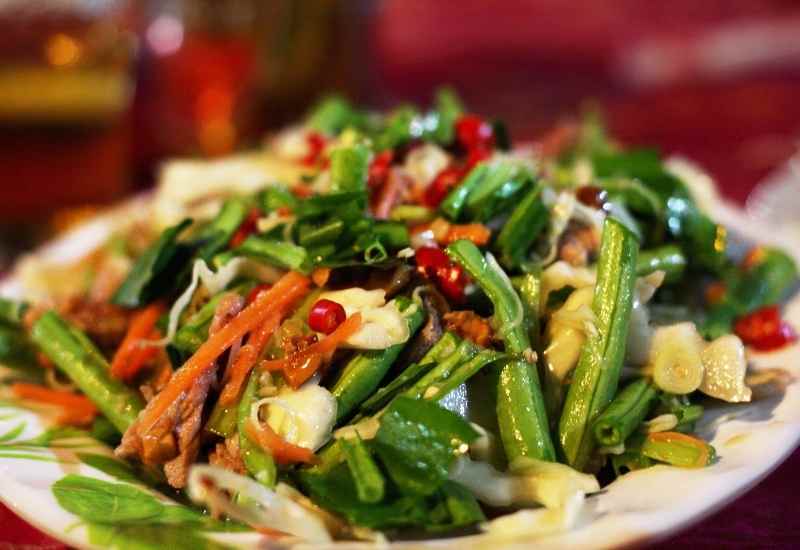
Cubes of tender beef tenderloin seared over intense heat in a wok with garlic and butter, then tossed with a tangy lime-pepper dipping sauce, served over a bed of watercress and tomatoes. The name refers to the shaking motion used while wok-tossing the beef.
Nutrition & Info
Allergen Warnings
Equipment Needed
Instructions
-
1
Marinate beef cubes in soy sauce, oyster sauce, sugar, and half the garlic for at least fifteen minutes at room temperature.
-
2
Make the dipping sauce by mixing lime juice, salt, and black pepper in a small bowl and setting aside.
-
3
Heat a wok over the highest possible heat until smoking, add oil and butter, and immediately add the beef in a single layer without overcrowding.
-
4
Let the beef sear undisturbed for one minute to develop a deep brown crust, then shake and toss the wok vigorously for another minute until all sides are seared.
-
5
Add remaining garlic, toss once more for thirty seconds, then immediately transfer the beef to a plate.
-
6
Arrange watercress, tomato wedges, and red onion rings on a serving platter, pile the seared beef on top, and serve with the lime-pepper dipping sauce.
Did You Know?
Bo luc lac is one of the clearest examples of French-Vietnamese fusion cuisine, combining the French technique of searing beef with butter alongside the Vietnamese love of lime-pepper dipping sauce and fresh greens.
Chef's Notes
Equipment Tips
- wok or cast iron skillet
- tongs
The Story Behind Bò lúc lắc
Bo luc lac emerged during the French colonial period in Vietnam when Western cuts of beef became more widely available. Vietnamese cooks adapted the French fondness for seared beef by preparing it in a wok over extremely high heat and pairing it with traditional Vietnamese condiments. The dish became a staple of Saigon restaurant culture and remains popular both in Vietnam and in Vietnamese diaspora communities worldwide.

Comments (0)
Log in to leave a comment.
No comments yet. Be the first to share your thoughts!