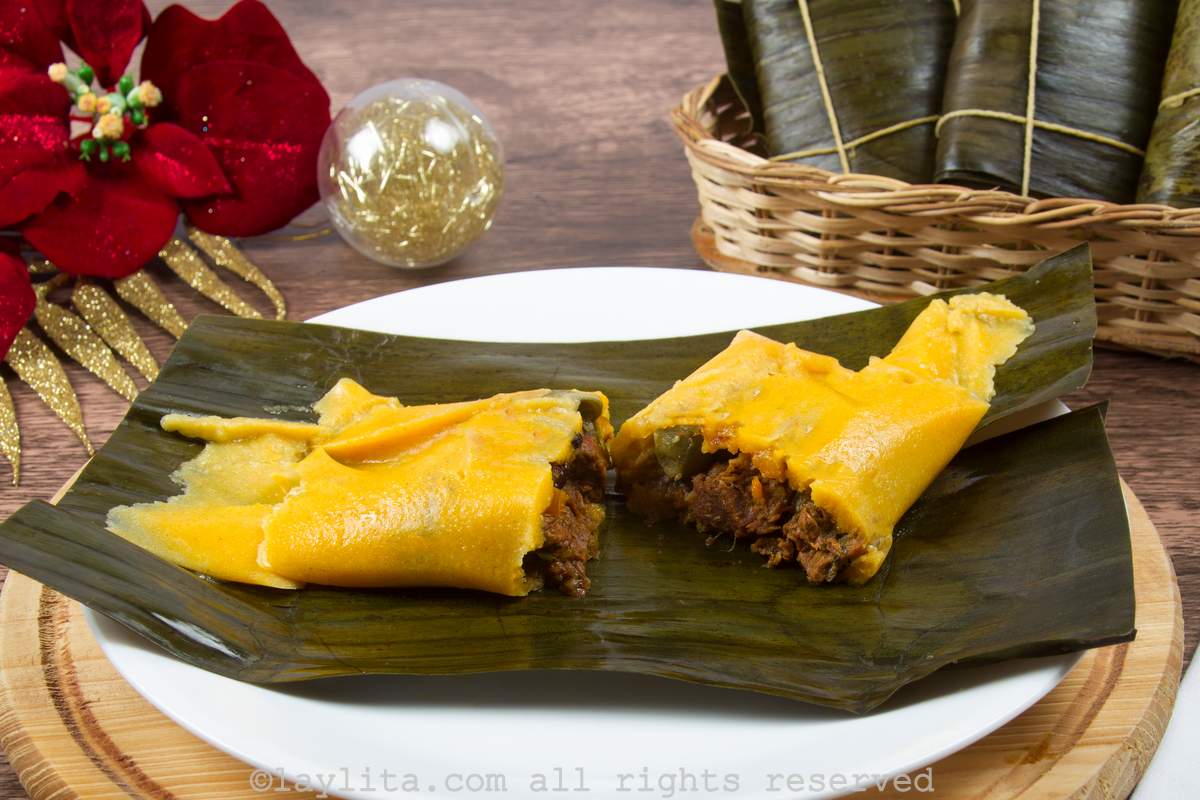
An elaborate banana-leaf-wrapped corn dough parcel stuffed with a rich beef and chicken stew, olives, capers, and raisins — the crown jewel of Venezuelan Christmas.
Nutrition & Info
Equipment Needed
Presentation Guide
Vessel: banana leaf (unwrapped at table)
Garnishes: none
Accompaniments: pan de jamon (non-pork version), ensalada de gallina
Instructions
-
1
Make annatto oil by heating oil with annatto seeds, then strain.
-
2
Mix corn flour with warm broth and annatto oil to form a smooth, pliable dough. Rest 30 min.
-
3
Sauté onion, garlic, bell pepper. Add beef and chicken, cook until browned. Add cumin, salt, pepper. Simmer with broth until tender.
-
4
Soften banana leaves over an open flame or in hot water.
-
5
Spread dough on a banana leaf square. Add stew filling, olives, capers, and raisins.
-
6
Fold into a tight rectangular package and tie with twine. Boil in salted water for 1 hour.
Did You Know?
Making hallacas is a sacred Venezuelan family ritual — the entire extended family gathers for a full-day hallaca assembly line called the hallacazo.
Chef's Notes
Equipment Tips
- large pot
- banana leaves
- kitchen twine
- mixing bowls
Garnishing
none
Accompaniments
pan de jamon (non-pork version), ensalada de gallina
The Story Behind Hallaca
The hallaca represents Venezuela's cultural fusion — indigenous corn dough, European olives and capers, and African plantain leaves combined in one dish. Each family guards its recipe as a treasured heirloom. During the December holidays, hallacas are exchanged between families as gifts, and judging whose hallaca is best is a beloved annual debate.
More Venezuelan Dishes
 Easy
📜 Story
Easy
📜 Story
Arepa Reina Pepiada
Queen Arepa
Breakfast, lunch, dinner, snack Easy
📜 Story
Easy
📜 Story
Arroz con Leche Venezolano
Venezuelan Rice Pudding
Dessert or afternoon snack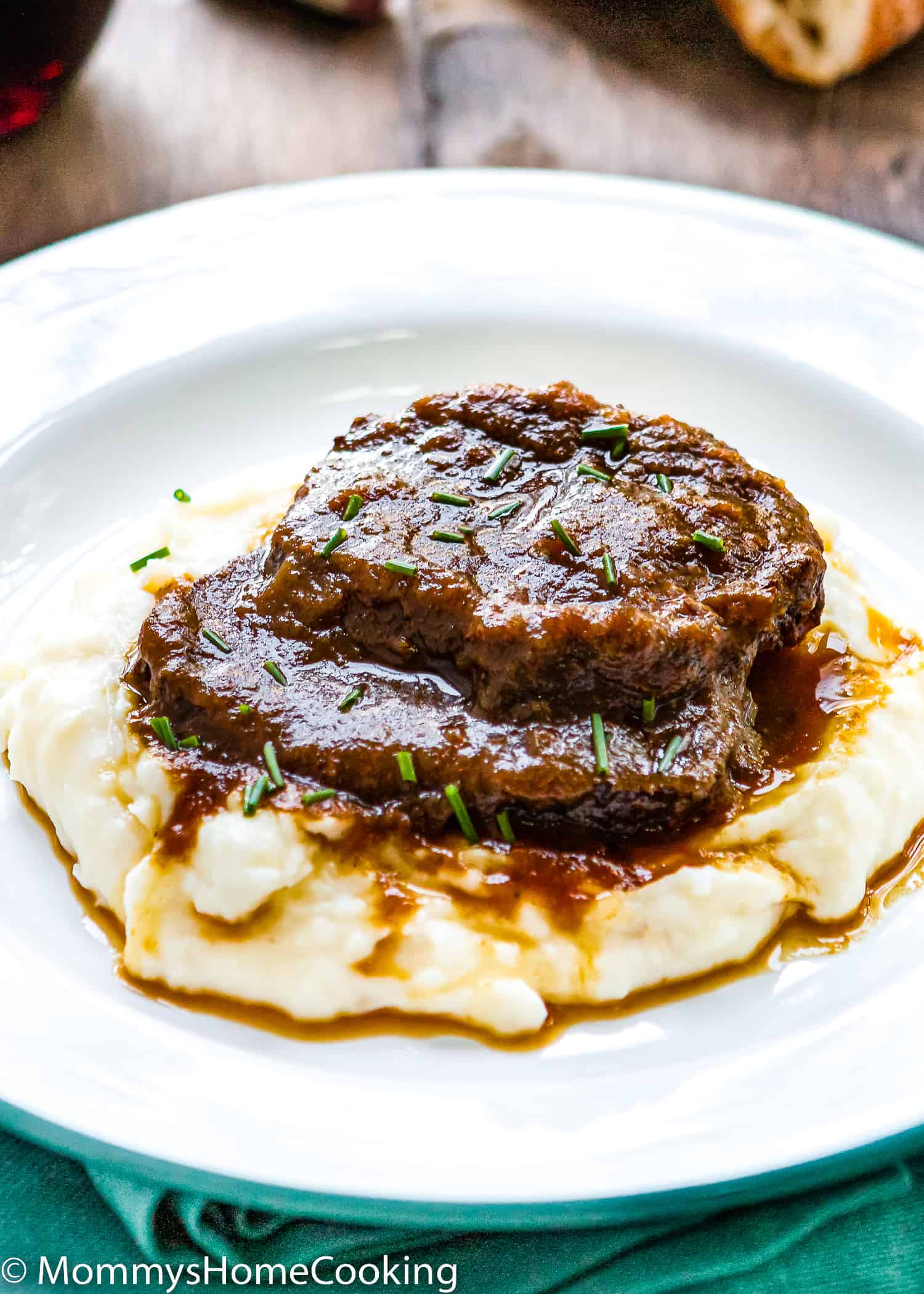 Medium
📜 Story
Medium
📜 Story
Asado Negro
Black Roast Beef
Sunday lunch, celebrations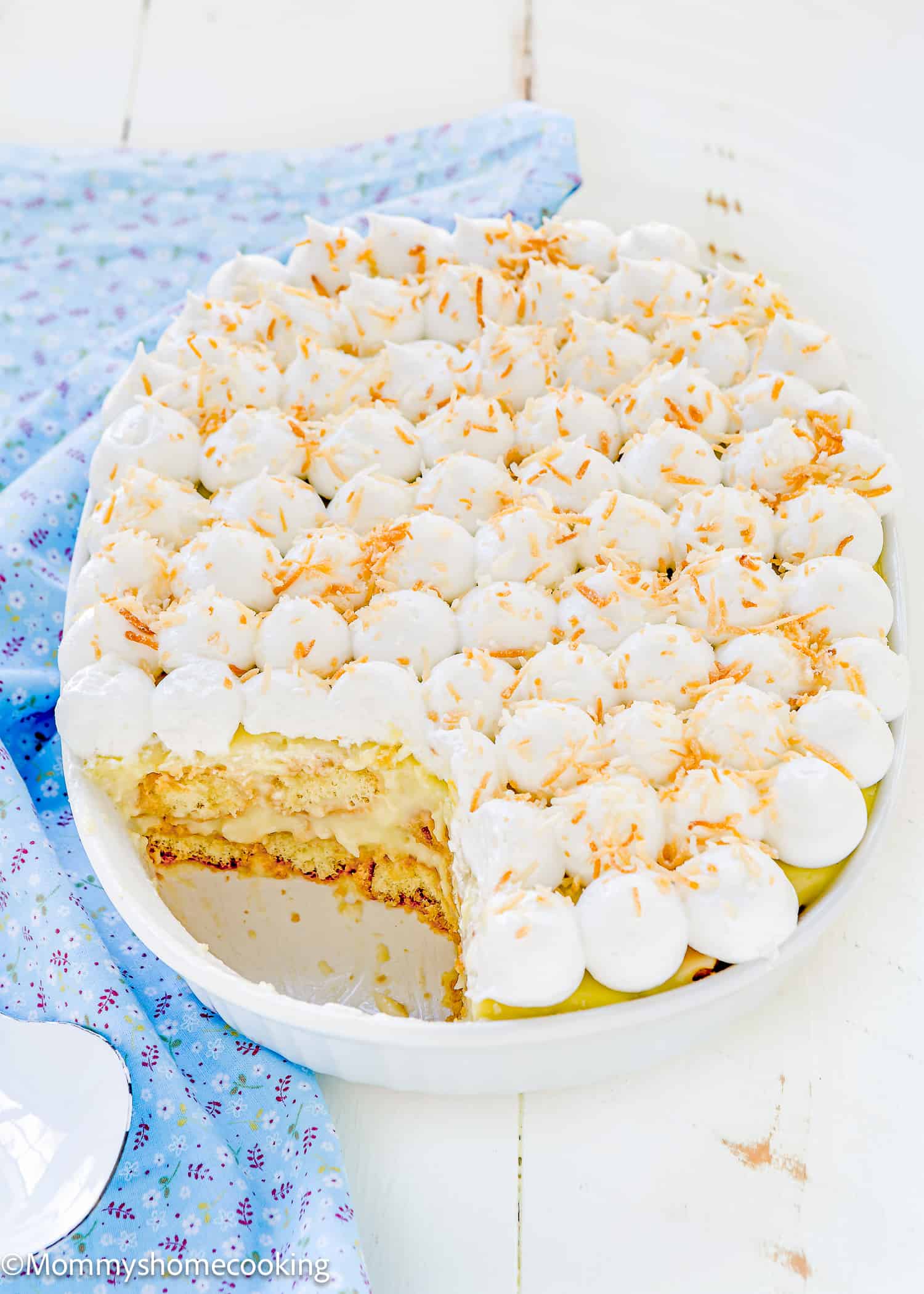 Medium
📜 Story
Medium
📜 Story
Bienmesabe
Coconut Cream Cake
Dessert at celebrations and family meals
Comments (0)
Log in to leave a comment.
No comments yet. Be the first to share your thoughts!