
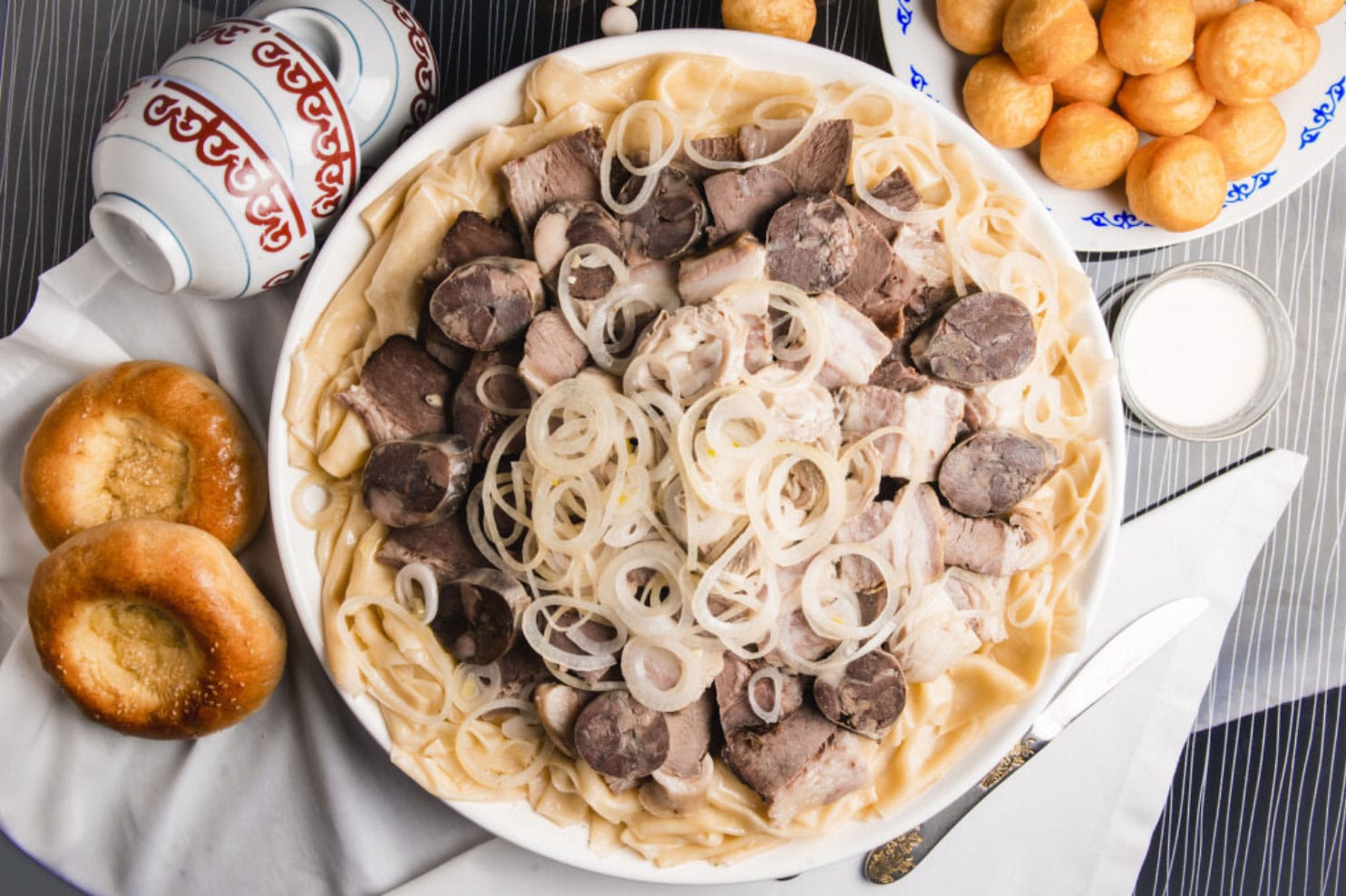
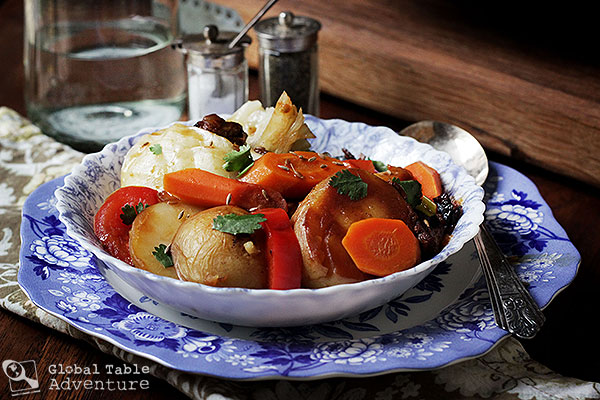
Hand-pulled noodles served in a rich lamb and vegetable stew with tomatoes and peppers. The Silk Road in a bowl.
Nutrition & Info
Allergen Warnings
Equipment Needed
Presentation Guide
Vessel: deep wide bowl
Garnishes: fresh herbs, chili flakes
Accompaniments: vinegar, fresh bread
Instructions
-
1
Combine the flour and salt in a large bowl, then gradually pour in the warm water while mixing with your hands until a firm, smooth dough forms. Knead vigorously for ten minutes until elastic and springy.
-
2
Shape the dough into a flat disc and coat it generously with vegetable oil. Cover tightly with cling film and allow it to rest at room temperature for at least thirty minutes so the gluten relaxes fully.
-
3
Divide the rested dough into thick ropes about two centimetres wide. Roll each rope on an oiled surface, then carefully stretch and pull by hand into long thin noodles, twisting and slapping against the counter to elongate them evenly.
-
4
Heat two tablespoons of oil in a large heavy pot or kazan over high heat. Add the lamb cubes in a single layer and sear without stirring for three to four minutes until deeply browned on all sides, then remove and set aside.
-
5
In the same pot, sauté the onions until golden, about five minutes. Add the garlic, bell peppers, tomatoes, and potato cubes, stirring frequently for another three minutes until the vegetables begin to soften slightly.
-
6
Stir in the tomato paste, cumin, coriander, and black pepper, cooking for one minute until fragrant. Return the browned lamb to the pot and pour in enough water to cover the ingredients by about three centimetres.
-
7
Bring the stew to a boil, then reduce the heat to medium-low. Cover partially and simmer for twenty-five to thirty minutes, stirring occasionally, until the lamb is tender and the potatoes are cooked through. Adjust salt to taste.
-
8
While the stew simmers, bring a large pot of salted water to a rolling boil. Cook the hand-pulled noodles in batches for two to three minutes until they float and turn tender. Drain and rinse briefly under cold water.
-
9
Divide the cooked noodles among deep bowls, then ladle the hot lamb and vegetable stew generously over the top. Garnish with freshly chopped cilantro and dill, and serve immediately while steaming hot.
Did You Know?
The art of hand-pulling lagman noodles takes years to master and is a point of great pride.
Chef's Notes
Equipment Tips
- wok
- large pot
- rolling pin or noodle stretching surface
Garnishing
fresh herbs, chili flakes
Accompaniments
vinegar, fresh bread
The Story Behind Lagman
The Story: Lagman is a hand-pulled noodle dish served in a rich stew of lamb, tomatoes, peppers, onions, and garlic, seasoned with cumin and chili. The dish represents the Silk Road in a single bowl, combining Chinese noodle-pulling technique with Central Asian meat stewing traditions. The name derives from the Chinese la mian (pulled noodles), and the dish's journey westward from China through the Uyghur regions and into Uzbekistan maps the ancient trade routes themselves. Lagman exists in both soup and stir-fried versions, with the soupy form more common in Uzbekistan.
On the Calendar: Lagman is everyday comfort food, eaten for lunch or dinner throughout the year. It is especially popular in the Fergana Valley, where the noodle-pulling tradition is strongest and lagman shops are found on every block.
Then & Now: Hand-pulling lagman noodles remains a respected skill in Uzbekistan, with experienced cooks stretching a single lump of dough into dozens of uniform strands. While machine-made noodles exist, the hand-pulled versions command higher prices and greater respect. Lagman has become popular in Russia, Turkey, and South Korea through Uzbek diaspora communities.
Legacy: Lagman is living proof that the Silk Road was not merely a trade route but a culinary highway, carrying flavors and techniques across continents.

Comments (0)
Log in to leave a comment.
No comments yet. Be the first to share your thoughts!