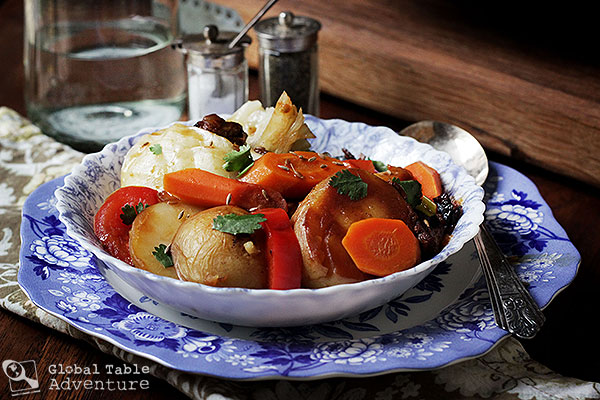
A magnificent one-pot dish where layers of lamb, potatoes, cabbage, tomatoes, and peppers steam together in their own juices without added water, creating concentrated flavors.
Nutrition & Info
Equipment Needed
Presentation Guide
Vessel: large communal platter
Garnishes: fresh basil, black pepper
Accompaniments: lepyoshka bread
Instructions
-
1
Oil the bottom of a heavy pot, then layer sliced onions evenly across the base to prevent sticking and add a sweet foundation.
-
2
Layer lamb cubes over onions, season with cumin, coriander, salt, and pepper, then add carrots and potatoes in successive layers.
-
3
Place cabbage wedges, sliced bell peppers, and tomato slices on top, tuck in the halved garlic head, and scatter fresh basil.
-
4
Seal the pot with a tight-fitting lid, place over the lowest possible heat, and cook for two hours without opening the lid.
-
5
The vegetables release enough moisture to steam everything perfectly — resist the temptation to peek or stir during the cooking time.
-
6
Carefully transfer to a large platter maintaining the layers, letting everyone see the beautiful mosaic of vegetables and tender meat.
Did You Know?
The cardinal rule of dimlama is never lifting the lid during cooking — the dish relies entirely on trapped steam from the vegetables own juices.
Chef's Notes
Equipment Tips
- large heavy pot with tight lid
- sharp knife
Garnishing
fresh basil, black pepper
Accompaniments
lepyoshka bread
The Story Behind Dimlama
Dimlama reflects the Uzbek philosophy of patient, low-intervention cooking. Rural families would prepare it in the morning, seal the pot, and let it cook while working in the fields, returning to find a perfect one-pot feast.


Comments (0)
Log in to leave a comment.
No comments yet. Be the first to share your thoughts!