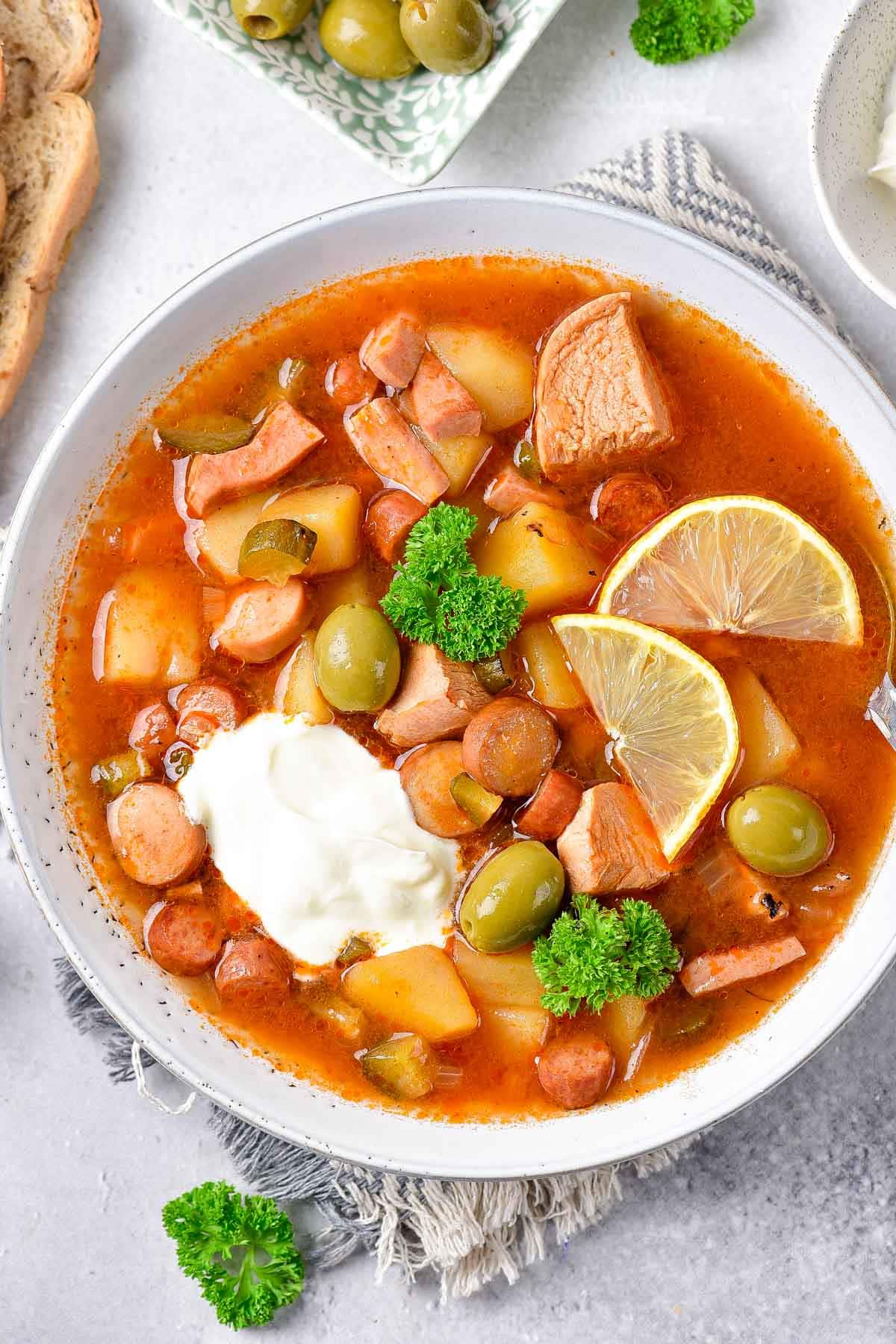
A thick, piquant soup combining smoked beef, pickles, olives, and tomato in a deeply savory broth finished with lemon and sour cream.
Nutrition & Info
Allergen Warnings
Equipment Needed
Presentation Guide
Vessel: deep bowl
Garnishes: lemon slice, sour cream, fresh parsley
Accompaniments: dark bread
Instructions
-
1
Sauté diced onion in butter in a large pot until translucent, about 4 minutes.
-
2
Add tomato paste and cook, stirring, for 2 minutes until darkened.
-
3
Add diced smoked beef and beef sausage, cook 5 minutes.
-
4
Pour in beef broth, add diced pickles with a splash of their brine, bring to a simmer.
-
5
Cook for 30 minutes on low heat. Add olives and capers in the last 5 minutes.
-
6
Serve hot with a lemon slice, fresh parsley, and sour cream in each bowl.
Did You Know?
Solyanka gets its name from the word 'sol' (salt), reflecting the salty, briny character of its pickled ingredients.
Chef's Notes
Equipment Tips
- large pot
- skillet
- ladle
Garnishing
lemon slice, sour cream, fresh parsley
Accompaniments
dark bread
The Story Behind Солянка
Solyanka has been part of Ukrainian and broader Eastern Slavic cuisine since at least the 15th century. Originally a peasant dish designed to use leftover meats and preserved vegetables, it evolved into a sophisticated restaurant soup prized for its complex layering of salty, sour, and smoky flavors.
Traditionally enjoyed as a restorative meal after celebrations, solyanka is known as a hangover cure across Eastern Europe.
Modern Ukrainian solyanka emphasizes quality smoked meats and a careful balance of pickle brine, tomato, and lemon acidity that makes each bowl a study in contrasts.

Comments (0)
Log in to leave a comment.
No comments yet. Be the first to share your thoughts!