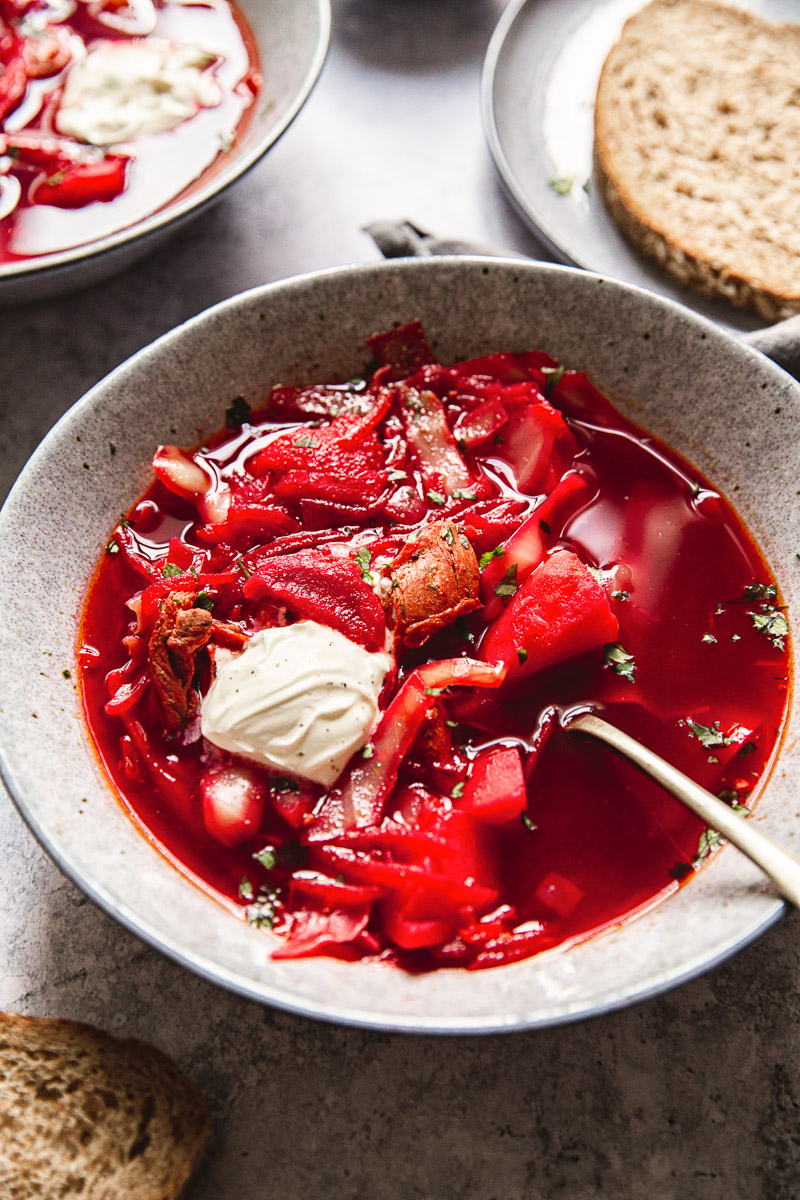
Ukraine's iconic ruby-red beet soup with tender beef, cabbage, potatoes, and a crown of sour cream and fresh dill. Every spoonful is a balance of sweet, sour, and savory.
Nutrition & Info
Allergen Warnings
Equipment Needed
Presentation Guide
Vessel: deep ceramic bowl
Garnishes: sour cream (smetana), fresh dill
Accompaniments: pampushky (garlic bread rolls)
Instructions
-
1
Place the beef cubes in a large pot with eight cups of cold water and bring to a boil over high heat. Skim off any foam that rises to the surface during the first five minutes, then reduce heat to low and simmer for one hour until the beef is tender.
-
2
While the beef simmers, heat the vegetable oil in a large skillet over medium heat. Add the diced onion and grated carrot, sautéing for four minutes until softened. Add the grated beets and tomato paste, stirring to coat, and cook for eight minutes until the beets soften.
-
3
Transfer the sautéed vegetable mixture to the pot with the beef broth. Add the cubed potatoes and shredded cabbage, then bring back to a gentle simmer. Cook for twenty minutes until the potatoes are tender and the cabbage has softened completely.
-
4
Add the vinegar, minced garlic, and bay leaf to the pot and stir well. Season with salt and pepper to taste. The vinegar is essential as it preserves the vibrant ruby-red colour of the beets and provides the characteristic tangy flavour of authentic Ukrainian borscht.
-
5
Remove the pot from the heat and let the borscht rest with the lid on for at least thirty minutes. This resting period allows all the flavours to develop and meld together, and borscht genuinely tastes even better when reheated the following day.
-
6
Remove the bay leaf and ladle the borscht into deep bowls. Top each serving with a generous dollop of sour cream and a sprinkle of freshly chopped dill. Serve with dark rye bread or crusty bread on the side for a complete Ukrainian meal.
Did You Know?
Ukrainian borscht was inscribed on UNESCO's Intangible Cultural Heritage list in 2022. Every Ukrainian grandmother has her own secret recipe, and there are over 70 regional variations.
Chef's Notes
Equipment Tips
- large stock pot
- sharp knife
- grater
- ladle
Garnishing
sour cream (smetana), fresh dill
Accompaniments
pampushky (garlic bread rolls)
The Story Behind Борщ
The Story: Borscht is Ukraine's national soup and one of the most culturally significant dishes in Eastern European cuisine. Its origins trace to ancient Slavic traditions of cooking foraged plants, with early versions made from hogweed (borshchivnyk) before beets became the defining ingredient after their introduction to the region. By the medieval period, beet-based borscht had become the centerpiece of Ukrainian home cooking, with each region developing its own variation. In 2022, UNESCO inscribed Ukrainian borscht culture on its List of Intangible Cultural Heritage in Need of Urgent Safeguarding.
On the Calendar: Borscht is an everyday soup eaten throughout the year, but it holds special significance at Christmas Eve (Sviata Vecherya), where a meatless version is served as part of the twelve-dish holiday meal. It is also central to Easter celebrations, weddings, and funeral repasts.
Then & Now: While the core recipe of beets, cabbage, potatoes, and a sour element (tomato or fermented beet liquid) remains constant, there are dozens of regional variations across Ukraine. Green borscht, made with sorrel in spring, and cold borscht served in summer demonstrate the dish's adaptability. Borscht has become an international symbol of Ukrainian identity and resilience.
Legacy: Borscht is far more than a soup: it is a UNESCO-recognized cultural treasure, a symbol of Ukrainian identity, and a dish that carries centuries of agricultural wisdom, family tradition, and national pride in every ruby-red bowl.


Comments (0)
Log in to leave a comment.
No comments yet. Be the first to share your thoughts!