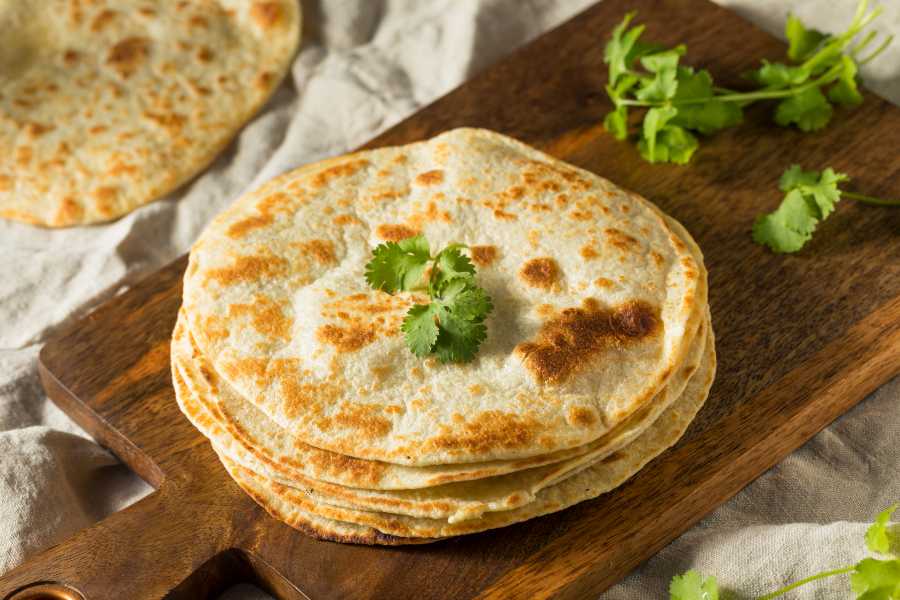
A flaky, layered flatbread enriched with oil and cooked on a flat griddle until golden with crispy edges, a beloved street food and meal accompaniment.
Nutrition & Info
Allergen Warnings
Equipment Needed
Presentation Guide
Instructions
-
1
Mix flour, salt, and sugar in a bowl, add warm water and oil gradually, and knead for ten minutes until smooth and elastic.
-
2
Cover the dough and rest for thirty minutes at room temperature to allow the gluten to relax.
-
3
Divide dough into six balls, roll each into a thin circle, brush with oil, fold into thirds, roll again into a circle.
-
4
Heat a flat griddle over medium heat, place the chapati on it, and cook for two minutes until bubbles appear.
-
5
Flip and brush the cooked side with oil, cook two more minutes, then flip again and brush the other side.
-
6
The chapati should be golden brown with flaky layers. Stack finished chapatis wrapped in a towel to stay warm.
Did You Know?
Ugandan chapati is distinctly flakier than Indian chapati because of the coiling technique used to create multiple layers.
Chef's Notes
Equipment Tips
- flat griddle or heavy skillet
- rolling pin
- mixing bowl
- clean surface
Garnishing
none
Accompaniments
The Story Behind Ugandan Chapati
Chapati arrived in Uganda through Indian traders and railway workers in the late 19th century, but Ugandans transformed it into something uniquely their own. The Ugandan version is oilier and flakier, with a coiling technique that creates distinct layers. It became so embedded in Ugandan food culture that most Ugandans consider chapati a traditional dish rather than an import. Weekend chapati-making is a family ritual across the country.

Comments (0)
Log in to leave a comment.
No comments yet. Be the first to share your thoughts!