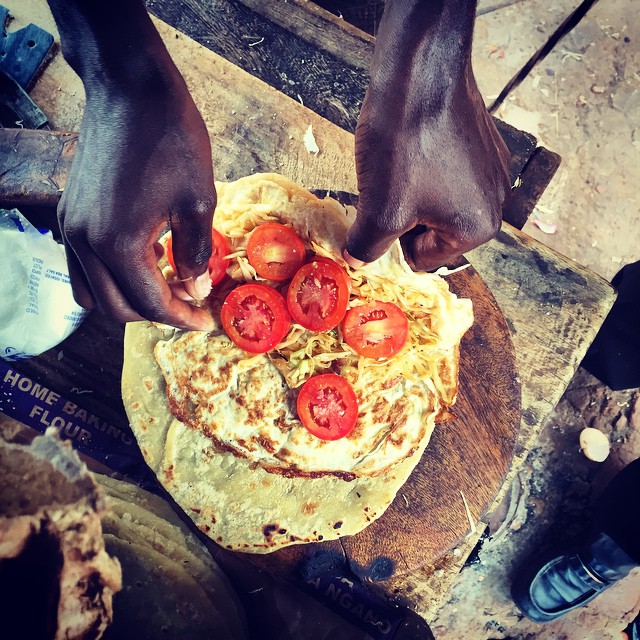
A chapati flatbread rolled around a fried egg omelet with vegetables. Uganda's most popular street food with a punny name.
Nutrition & Info
Allergen Warnings
Equipment Needed
Presentation Guide
Instructions
-
1
Crack two eggs into a bowl and beat them lightly with a fork until the yolks and whites are just combined. Season with salt and black pepper, then add the sliced onion and shredded cabbage directly to the beaten eggs and stir to distribute evenly.
-
2
Heat one tablespoon of oil in a flat skillet or griddle over medium heat until the surface is evenly hot. Pour half the egg and vegetable mixture into the pan, swirling quickly to spread it into a thin, even omelette that covers the entire surface.
-
3
Once the bottom of the omelette is set but the top is still slightly wet, carefully lay a chapati flat on top of the omelette, pressing it down gently to adhere. Cook for another thirty seconds to ensure the egg is fully set underneath.
-
4
Using a wide spatula, flip the entire chapati-and-omelette combination so the chapati is now on the bottom and the omelette faces up. Arrange a few slices of fresh tomato along the centre of the omelette in a neat line.
-
5
Roll the chapati tightly around the omelette filling, starting from one edge and rolling toward the other, creating a compact cylinder. The tomato slices should be enclosed within the rolled layers along with the egg and vegetables.
-
6
Wrap the rolled rolex in aluminium foil or wax paper to hold its shape and keep it warm. Repeat the entire process with the remaining eggs, vegetables, and second chapati. Serve immediately while hot, eating directly from the wrapping as street food.
Did You Know?
The name 'Rolex' comes from 'rolled eggs' said quickly. It has nothing to do with watches.
Chef's Notes
Equipment Tips
- flat griddle or skillet
- spatula
- bowl
Garnishing
sliced tomatoes, cabbage
Accompaniments
The Story Behind Rolex
The Story: The Rolex is Uganda's most famous street food: a fresh chapati rolled around a fried egg omelet mixed with tomatoes, onions, cabbage, and sometimes chili. The name is a playful corruption of rolled eggs, which in the rapid speech of Kampala's street vendors becomes Rolex. The dish emerged in the early 2000s from the street food stalls of Kampala, combining the Indian-influenced chapati (adopted into Ugandan cuisine during the colonial period) with the universal appeal of a quick, protein-rich, portable meal. The Rolex represents the creative energy of Ugandan street food culture.
On the Calendar: The Rolex is anytime food, eaten for breakfast, lunch, dinner, and late-night snacks. It is available from street vendors throughout Kampala and increasingly across the country, from dawn until well past midnight.
Then and Now: From humble street-stall origins, the Rolex has achieved national icon status. Uganda applied to UNESCO in 2019 to have the Rolex recognized as an intangible cultural heritage. The dish has been featured in international food media and has become the symbol of Kampala's innovative street food scene.
Legacy: The Rolex proves that great national dishes do not need centuries of history; they need only a hot griddle, fresh eggs, and the creative genius of a street vendor who saw that a rolled chapati could become a revolution.


Comments (0)
Log in to leave a comment.
No comments yet. Be the first to share your thoughts!