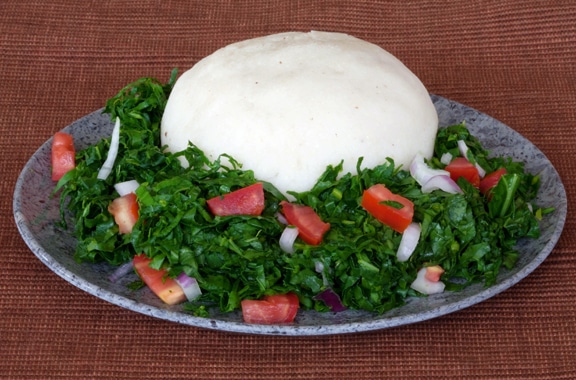
A thick, firm porridge made from white maize flour cooked with water until it forms a smooth, moldable mass, the staple accompaniment to Ugandan stews.
Nutrition & Info
Equipment Needed
Presentation Guide
Vessel: serving plate, molded into dome
Garnishes: none traditional
Accompaniments: bean stew, groundnut sauce, meat stew
Instructions
-
1
Bring water to a rolling boil in a heavy-bottomed pot, then add salt and stir to dissolve completely.
-
2
Gradually sprinkle in maize flour while stirring vigorously with a wooden stick to prevent any lumps from forming.
-
3
Continue adding flour and stirring until the mixture pulls away from the sides of the pot and becomes very thick.
-
4
Reduce heat to low, cover the pot, and let steam for five minutes to cook the flour through completely.
-
5
Remove from heat, wet a wooden spoon, and shape the posho into a smooth mound on a serving plate.
-
6
Serve immediately alongside stews, beans, or grilled meats as the starchy base of the meal.
Did You Know?
The firmness of posho varies by region: western Uganda prefers it softer (called kalo), while central Uganda likes it firm enough to mold by hand.
Chef's Notes
Equipment Tips
- heavy-bottomed pot
- wooden cooking stick or sturdy spoon
Garnishing
none traditional
Accompaniments
bean stew, groundnut sauce, meat stew
The Story Behind Posho
Posho arrived in Uganda through colonial-era maize cultivation and quickly became the most consumed staple in the country. While matoke remains culturally significant in Buganda, posho transcended ethnic boundaries to become truly national. Its affordability and filling nature made it essential in schools, hospitals, and homes across all regions. The skill of making smooth, lump-free posho is a point of pride for Ugandan cooks.


Comments (0)
Log in to leave a comment.
No comments yet. Be the first to share your thoughts!