
Oluwombo Enyama
Oluwombo Enyama (oh-loo-WOM-boh eh-NYAH-mah)
Beef in Banana Leaf
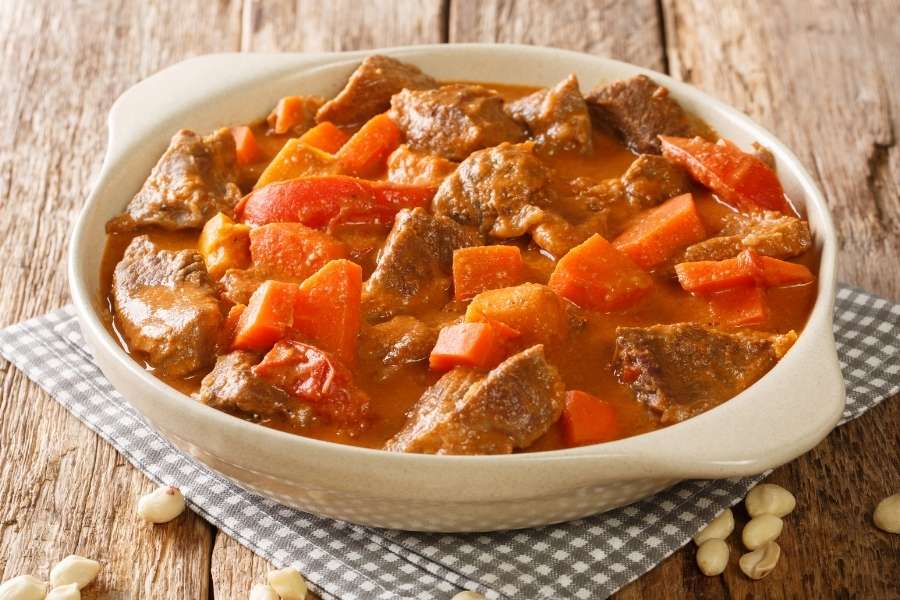
Tender beef chunks slow-steamed in banana leaves with a rich tomato and onion sauce, producing fork-tender meat infused with earthy banana leaf aroma.
Instructions
-
1
Soften banana leaves over an open flame or in boiling water until they become pliable and easy to fold.
-
2
Season beef with salt, pepper, curry powder, garlic, and ginger, mixing thoroughly to coat each piece.
-
3
Place softened banana leaves in layers, add the seasoned beef, tomatoes, onions, and beef stock in the center.
-
4
Fold the banana leaves carefully to create a tight, sealed parcel, tying securely with string.
-
5
Place in a steaming pot with water beneath and steam on low heat for ninety minutes until beef is very tender.
-
6
Unwrap at the table, allowing the fragrant steam to escape. The beef should be meltingly tender in a concentrated sauce.
Did You Know?
Opening a luwombo parcel at the table is considered a moment of ceremony, and the eldest person present is often given the honor.
The Story Behind Oluwombo Enyama
This beef variation of luwombo follows the same royal Buganda tradition of banana-leaf steaming. Beef luwombo became the most popular version as cattle ownership spread across Uganda. The technique of sealing meat in banana leaves creates a pressurized cooking environment that tenderizes even tough cuts while concentrating every drop of flavor. It remains the dish most associated with Ugandan hospitality.


Comments (0)
Log in to leave a comment.
No comments yet. Be the first to share your thoughts!