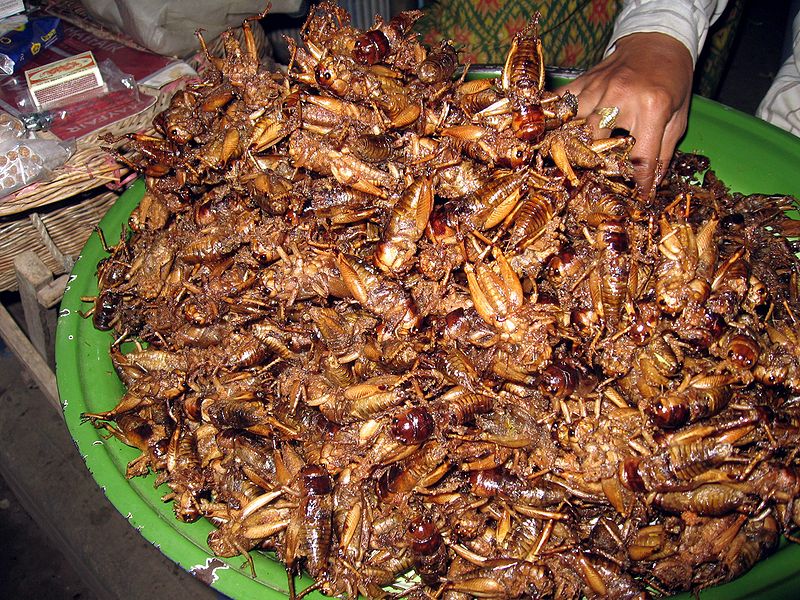
Seasonal grasshoppers de-winged and fried with onions and salt until crispy, a prized Ugandan delicacy harvested during the rainy season.
Nutrition & Info
Allergen Warnings
Equipment Needed
Presentation Guide
Vessel: small bowl or paper cone
Garnishes: none
Accompaniments: cold beer, roasted plantain
Instructions
-
1
Remove wings and legs from grasshoppers, wash thoroughly in cold water, and drain well in a colander.
-
2
Heat a dry skillet over medium heat and add grasshoppers, letting them toast in their own fat for five minutes.
-
3
Add vegetable oil and sliced onions, stirring frequently as the grasshoppers become crispy and golden.
-
4
Season with salt and optional cayenne pepper, continuing to fry for another five minutes until very crispy.
-
5
Drain briefly on paper towels to remove excess oil while keeping them hot.
-
6
Serve immediately as a crunchy, protein-rich snack, eaten by hand like popcorn.
Did You Know?
Nsenene harvesting is a major economic activity in Uganda, with a kilogram of grasshoppers costing more than a kilogram of beef during peak season.
Chef's Notes
Equipment Tips
- large skillet
- colander
- paper towels
Garnishing
none
Accompaniments
cold beer, roasted plantain
The Story Behind Nsenene
Nsenene are one of Uganda's oldest foods, harvested for centuries during the two annual rainy seasons when swarms of long-horned grasshoppers emerge at night. The insects are attracted to bright lights and collected in massive quantities by communities working together. Once considered peasant food, nsenene are now a premium delicacy commanding high prices in urban markets. Their harvest is a cultural event that brings communities together.


Comments (0)
Log in to leave a comment.
No comments yet. Be the first to share your thoughts!