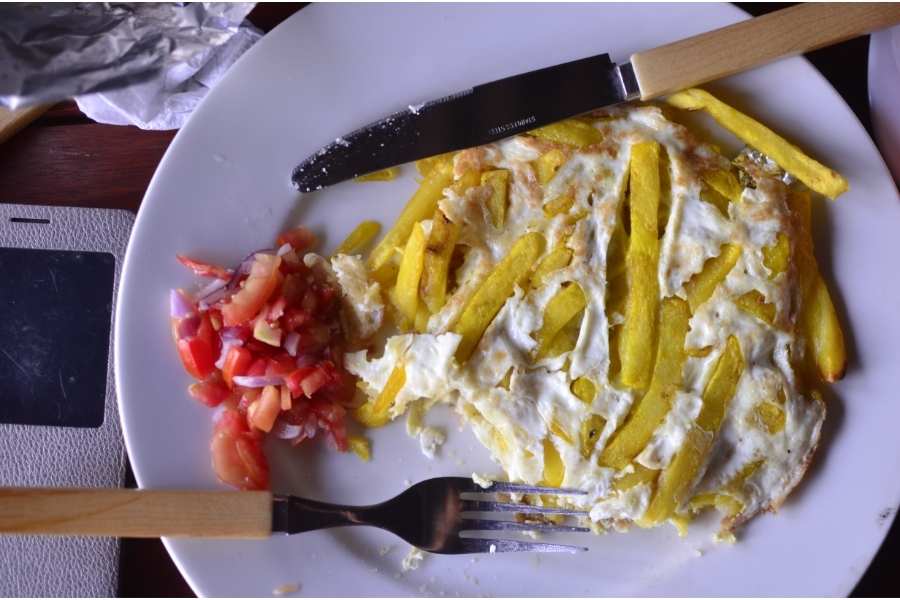
Chopped chapati pieces mixed with thick bean stew, a hearty and affordable street food that is the quintessential Ugandan budget meal.
Instructions
-
1
Cook beans in a thick tomato and onion sauce with curry powder until the sauce is rich and clings to the beans.
-
2
Cut chapatis into bite-sized strips or squares using a knife or kitchen scissors.
-
3
Arrange chapati pieces on a plate and ladle the thick bean stew generously over and around them.
-
4
Optionally mix the chapati and beans together so every piece of bread absorbs the flavorful sauce.
-
5
Garnish with sliced green chili for extra heat if desired.
-
6
Serve immediately while the chapati is still slightly crispy against the warm bean sauce.
Did You Know?
The name kikomando comes from "commando" because it was the tough, no-frills meal eaten by workers and students who could not afford more.
The Story Behind Kikomando
Kikomando is Uganda's most democratic dish, born in the working-class neighborhoods of Kampala where street vendors combined two affordable staples into one filling meal. The name, derived from "commando," reflects its reputation as fuel for hardworking people. Despite its humble origins, kikomando has become a beloved comfort food across all social classes, with some upscale restaurants now offering gourmet versions.


Comments (0)
Log in to leave a comment.
No comments yet. Be the first to share your thoughts!