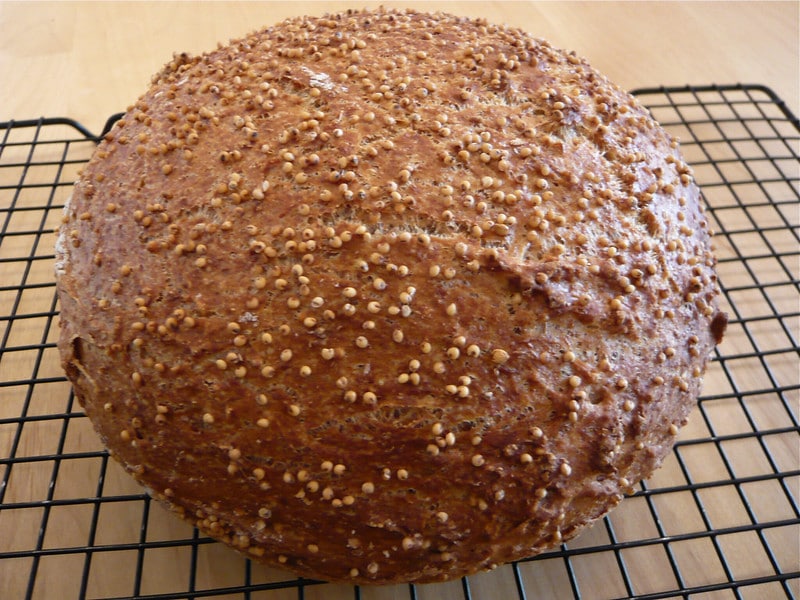
A dense, dark bread made from millet flour mixed with cassava flour, kneaded into a smooth mass and served as a starchy accompaniment to stews.
Nutrition & Info
Equipment Needed
Presentation Guide
Instructions
-
1
Bring water to a vigorous boil in a heavy-bottomed pot, adding a pinch of salt.
-
2
Gradually sprinkle cassava flour into the boiling water while stirring with a strong wooden stick.
-
3
When the mixture thickens, begin adding millet flour gradually, stirring vigorously and constantly.
-
4
Continue mingling for ten to fifteen minutes with great effort, pressing and turning the mass until smooth.
-
5
The kalo is ready when it forms a cohesive, dark-brown mass that pulls cleanly from the pot sides.
-
6
Wet your hands, shape into a dome on a serving plate, and serve alongside soups and stews.
Did You Know?
Making kalo requires significant upper body strength, and in northern Uganda it is traditionally considered a test of a good cook.
Chef's Notes
Equipment Tips
- heavy pot
- strong wooden mingling stick
- serving plate
Garnishing
none
Accompaniments
malakwang, bean soup, meat stew
The Story Behind Kalo
Kalo is the ancestral staple of northern Uganda, where millet has been cultivated for thousands of years in the drier savannah climate. Unlike the banana-based foods of the south, kalo reflects the grain-growing traditions of the Acholi, Langi, and other northern peoples. The laborious process of mingling millet flour into a smooth mass is a skill passed from mothers to daughters, and the dark, earthy bread connects modern Ugandans to their agricultural heritage.

Comments (0)
Log in to leave a comment.
No comments yet. Be the first to share your thoughts!