Giant swamp taro grown in pits and boiled or roasted. Tuvalu's most important traditional crop and staple food.
Nutrition & Info
Allergen Warnings
Equipment Needed
Presentation Guide
Instructions
-
1
Peel the pulaka root using a sturdy vegetable peeler or sharp knife, removing all of the thick, fibrous outer skin. Cut the peeled root into large, even chunks about five centimetres across, ensuring uniform sizing so all pieces cook at the same rate.
-
2
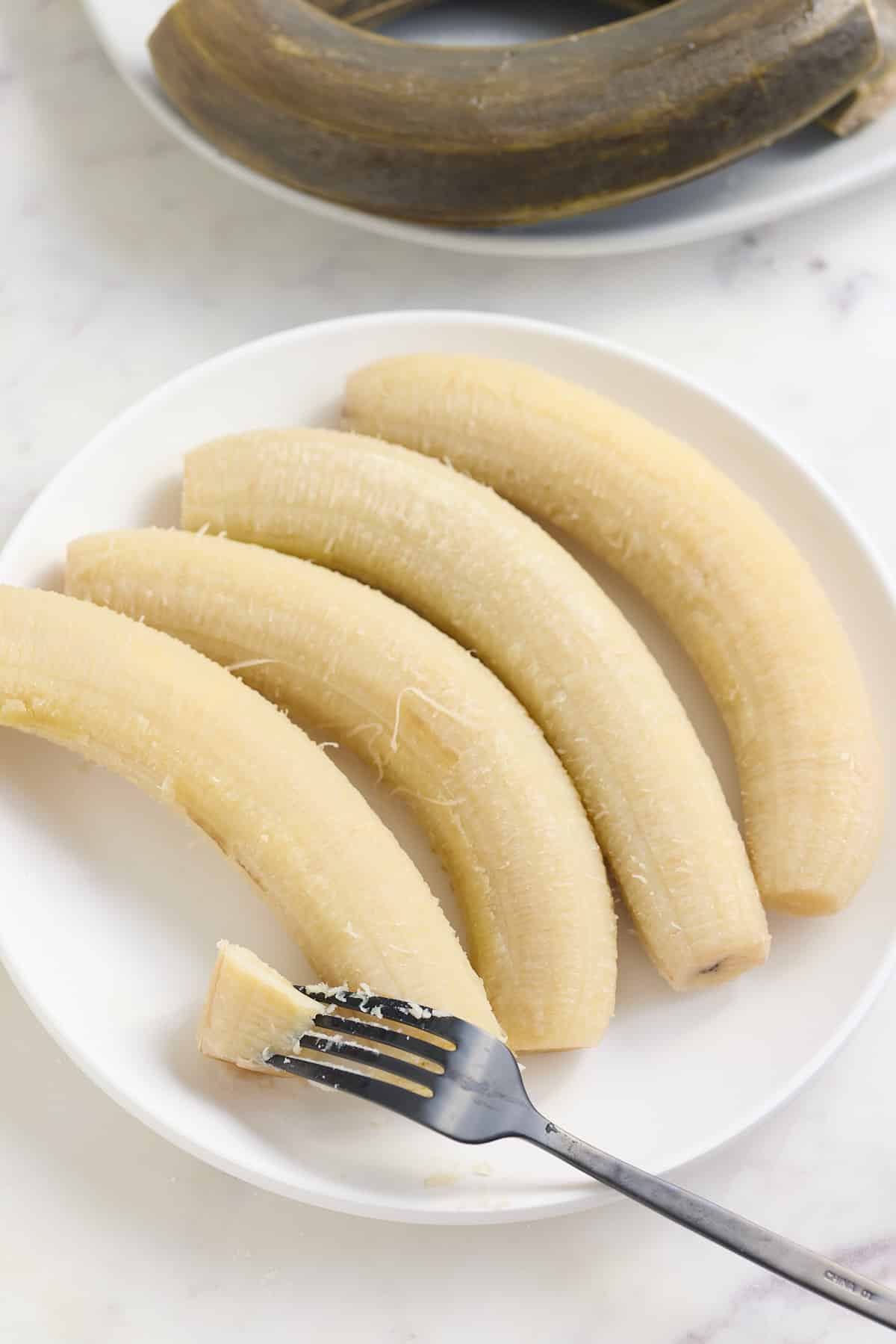
Place the pulaka chunks in a large pot of cold salted water, ensuring the pieces are fully submerged. Bring to a boil over high heat, then reduce to a steady simmer and cook for thirty to forty minutes until the flesh is completely tender when pierced with a fork.
-
3
Drain the cooked pulaka thoroughly and return it to the warm pot. Using a wooden spoon or potato masher, mash the pulaka until it reaches a smooth, dense consistency similar to thick mashed potatoes, with no fibrous lumps remaining in the finished product.
-
4
Alternatively, for a traditional presentation, leave the boiled pulaka in whole chunks rather than mashing. Wrap the cooked pieces in banana leaves to keep them warm and moist, which also imparts a subtle, earthy fragrance to the starchy root vegetable.
-
5
Heat the coconut cream gently in a small saucepan over low heat until warm but not boiling. Season with a pinch of salt and stir. Pour the warm coconut cream generously over the prepared pulaka just before serving.
-
6
Serve the pulaka immediately alongside grilled fish, which is the traditional Tuvaluan accompaniment. The mild, starchy character of the pulaka serves as the perfect neutral base to absorb the rich coconut cream and complement the smoky flavour of grilled fish.
Did You Know?
Pulaka pits are dug below the water table — growing them is one of Tuvalu's most impressive agricultural achievements.
Chef's Notes
Equipment Tips
- large pot
- sharp knife
- tongs
Garnishing
coconut cream
Accompaniments
The Story Behind Pulaka
The Story: Pulaka is giant swamp taro (Cyrtosperma merkusii), cultivated in Tuvalu in deep, hand-dug pits that reach the freshwater lens beneath the coral atoll surface. The pits, lined with composted organic matter, represent one of the most labor-intensive agricultural systems in the world and reflect the determination of atoll communities to grow food in one of Earth's most challenging environments. The harvested corms are boiled, roasted, or baked in earth ovens, producing a starchy, dense food that serves as the traditional staple carbohydrate. Pulaka cultivation has been practiced across Polynesian and Micronesian atolls for centuries.
On the Calendar: Pulaka is a staple food served at daily meals and featured prominently at feasts and celebrations, where large corms are slow-cooked in earth ovens. The quality and size of a family's pulaka crop is a source of pride and social standing.
Then and Now: Pulaka cultivation has declined as imported rice and flour have become cheaper and easier to prepare. Climate change and saltwater intrusion threaten the freshwater lens that makes pulaka pits viable. Conservation efforts are underway to preserve pulaka cultivation as both a food security measure and a cultural heritage practice.
Legacy: Pulaka is the triumph of human ingenuity over impossible conditions, a crop that atoll communities willed into existence by digging into coral rock to find fresh water and fertile ground where none seemed to exist.
Comments (0)
Log in to leave a comment.
No comments yet. Be the first to share your thoughts!