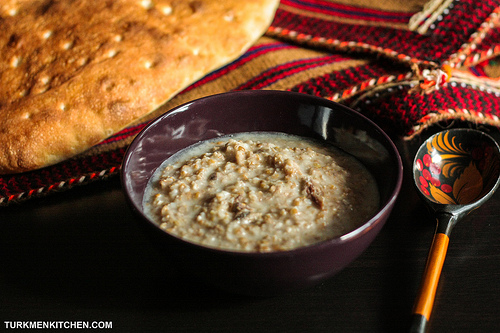
A thick nourishing porridge of crushed wheat simmered with lamb and onions until creamy, served as a sustaining winter meal.
Nutrition & Info
Allergen Warnings
Equipment Needed
Presentation Guide
Vessel: deep ceramic bowl
Garnishes: butter, fresh dill
Accompaniments: chorek flatbread
Instructions
-
1
Brown diced lamb in butter in a heavy pot until golden on all sides then add onion and cook until softened.
-
2
Add water, salt, and cumin then bring to a boil and reduce heat to simmer for thirty minutes until the lamb is tender.
-
3
Add crushed wheat to the pot stirring well and continue cooking on very low heat for forty-five minutes stirring frequently.
-
4
The porridge is ready when the wheat has broken down into a thick creamy consistency and the lamb is falling apart.
-
5
Season with additional salt and pepper to taste then let the porridge rest covered for ten minutes off the heat.
-
6
Serve in deep bowls with a generous knob of butter and fresh dill scattered on top.
Did You Know?
Yarma ash was the traditional food of Turkmen shepherds who carried crushed wheat on long journeys across the Karakum Desert.
Chef's Notes
Equipment Tips
- large heavy pot
- wooden spoon
- ladle
Garnishing
butter, fresh dill
Accompaniments
chorek flatbread
The Story Behind Yarma Ash
Yarma ash represents the ancient grain-based cuisine of settled Turkmen communities, where crushed wheat was a dietary staple alongside the meat and dairy of nomadic life. This porridge bridges the agricultural and pastoral traditions of Turkmen culture, creating a hearty meal that sustained families through harsh Central Asian winters.
More Turkmen Dishes
Balyk Beshbarmak
Fish with Noodles
Lunch or dinner in Caspian coastal regions Easy
📜 Story
Easy
📜 Story
Byzmyk
Turkmen Pasta with Yogurt
Lunch or family dinner Medium
📜 Story
Medium
📜 Story
Chorek
Turkmen Flatbread
Every meal, daily bread Medium
📜 Story
Medium
📜 Story
Dograma
Shredded Bread and Meat Stew
Wedding feasts and celebrations
Comments (0)
Log in to leave a comment.
No comments yet. Be the first to share your thoughts!