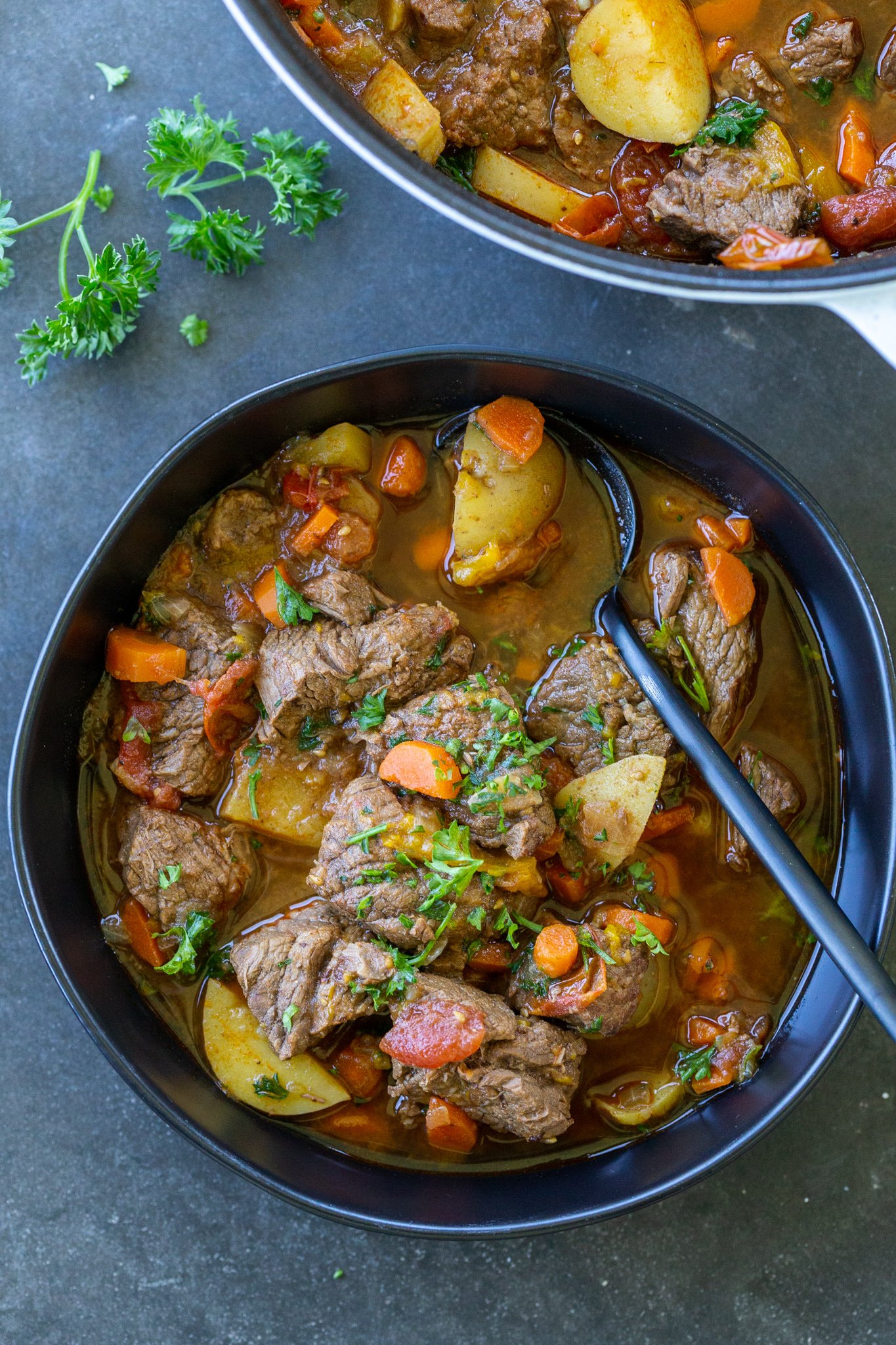
A hearty clear broth soup loaded with large chunks of bone-in lamb, whole potatoes, carrots, and tomatoes simmered until deeply flavorful.
Nutrition & Info
Equipment Needed
Presentation Guide
Vessel: deep ceramic bowl
Garnishes: fresh cilantro, dill
Accompaniments: chorek flatbread
Instructions
-
1
Place bone-in lamb pieces in a large pot with cold water and bring slowly to a boil, skimming off foam as it rises to the surface.
-
2
Add quartered onion and simmer on low heat for one hour until the lamb is becoming tender and the broth is rich and golden.
-
3
Add potatoes, carrots, tomatoes, and bell pepper to the pot and continue simmering for thirty more minutes until vegetables are soft.
-
4
Season with cumin, salt, and black pepper adjusting to taste as the broth should be well seasoned and deeply savory throughout.
-
5
Ladle the soup into large bowls making sure each serving gets a generous piece of lamb and an assortment of vegetables.
-
6
Garnish abundantly with chopped fresh cilantro and dill then serve with warm flatbread on the side for dipping.
Did You Know?
Shurpa is considered a restorative soup in Turkmen culture and is traditionally served to guests as a gesture of warm hospitality.
Chef's Notes
Equipment Tips
- large heavy pot
- ladle
- sharp knife
Garnishing
fresh cilantro, dill
Accompaniments
chorek flatbread
The Story Behind Shurpa
Shurpa is one of the oldest soups in Central Asian cuisine, shared across Turkmen, Uzbek, and other Turkic culinary traditions. The Turkmen version emphasizes large pieces of bone-in lamb simmered slowly to produce a deeply nourishing broth, reflecting the pastoral heritage of a people whose livelihood centered on sheep herding.
More Turkmen Dishes
Balyk Beshbarmak
Fish with Noodles
Lunch or dinner in Caspian coastal regions Easy
📜 Story
Easy
📜 Story
Byzmyk
Turkmen Pasta with Yogurt
Lunch or family dinner Medium
📜 Story
Medium
📜 Story
Chorek
Turkmen Flatbread
Every meal, daily bread Medium
📜 Story
Medium
📜 Story
Dograma
Shredded Bread and Meat Stew
Wedding feasts and celebrations
Comments (0)
Log in to leave a comment.
No comments yet. Be the first to share your thoughts!