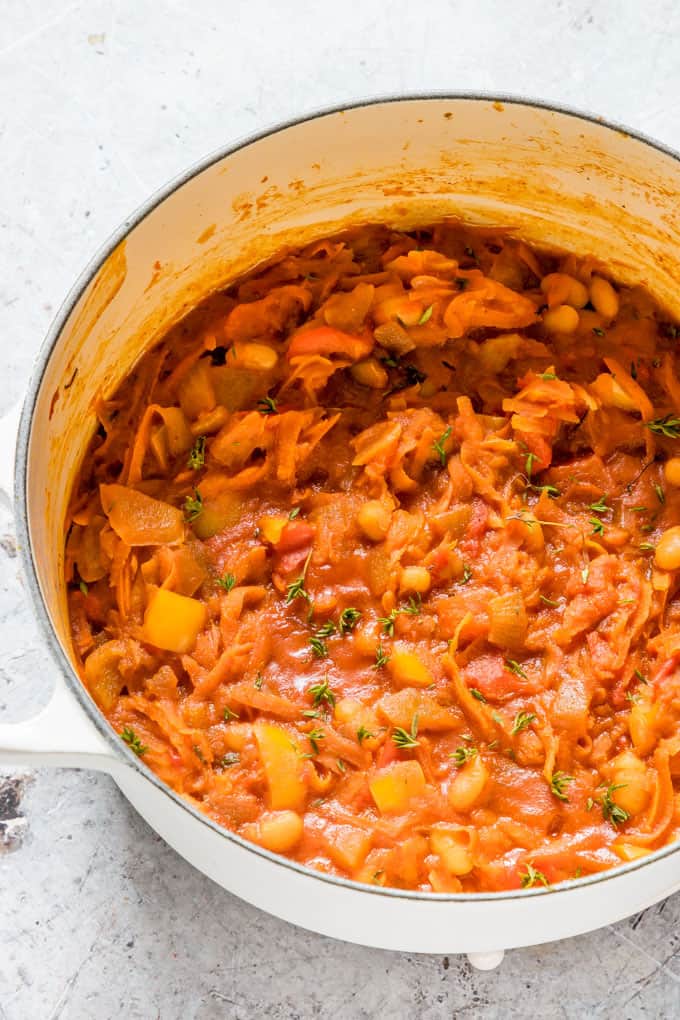
A fiery, smoky paste of sun-dried chili peppers, garlic, caraway, and olive oil, the essential condiment that defines Tunisian cuisine.
Nutrition & Info
Equipment Needed
Presentation Guide
Instructions
-
1
Soak dried chilies in hot water for one hour until completely softened and rehydrated. Drain well and remove stems.
-
2
Toast caraway and cumin seeds in a dry pan for two minutes until fragrant. Grind to a fine powder in a mortar.
-
3
Combine softened chilies, garlic, ground spices, coriander, salt, and tomato paste in a food processor.
-
4
Process until a thick, smooth paste forms, scraping sides frequently. Add olive oil gradually while processing.
-
5
Taste and adjust heat, salt, and garlic levels. The paste should be fiery, garlicky, and deeply aromatic.
-
6
Transfer to glass jars, cover the surface with a thin layer of olive oil to preserve, and refrigerate.
Did You Know?
Tunisia consumes more harissa per capita than any other nation, going through an estimated twelve kilograms per household annually.
Chef's Notes
Equipment Tips
- food processor or mortar and pestle
- glass jars
- cutting board
Garnishing
olive oil film, caraway seeds
Accompaniments
bread, olives
The Story Behind Harissa
Harissa is the soul of Tunisian cuisine, so fundamental that UNESCO recognized it as part of Tunisia's intangible cultural heritage in 2022. This chili paste appears at every Tunisian meal without exception, stirred into soups, spread on sandwiches, and served alongside every dish. The Tunisian version, distinguished by its use of caraway and coriander, differs from other North African harissas and represents centuries of spice trade and culinary refinement.
More Tunisian Dishes
 Hard
📜 Story
Hard
📜 Story
Assida Zgougou
Aleppo Pine Seed Pudding
Mawlid an-Nabi celebration Easy
📜 Story
Easy
📜 Story
Bambalouni
Tunisian Fried Doughnuts
Afternoon snack, beach foodBrik a l'Oeuf
Crispy Egg Pastry
Starter, Ramadan iftarChakchouka aux Poivrons
Tunisian Pepper and Tomato Stew
Accompaniment to main dishes
Comments (0)
Log in to leave a comment.
No comments yet. Be the first to share your thoughts!