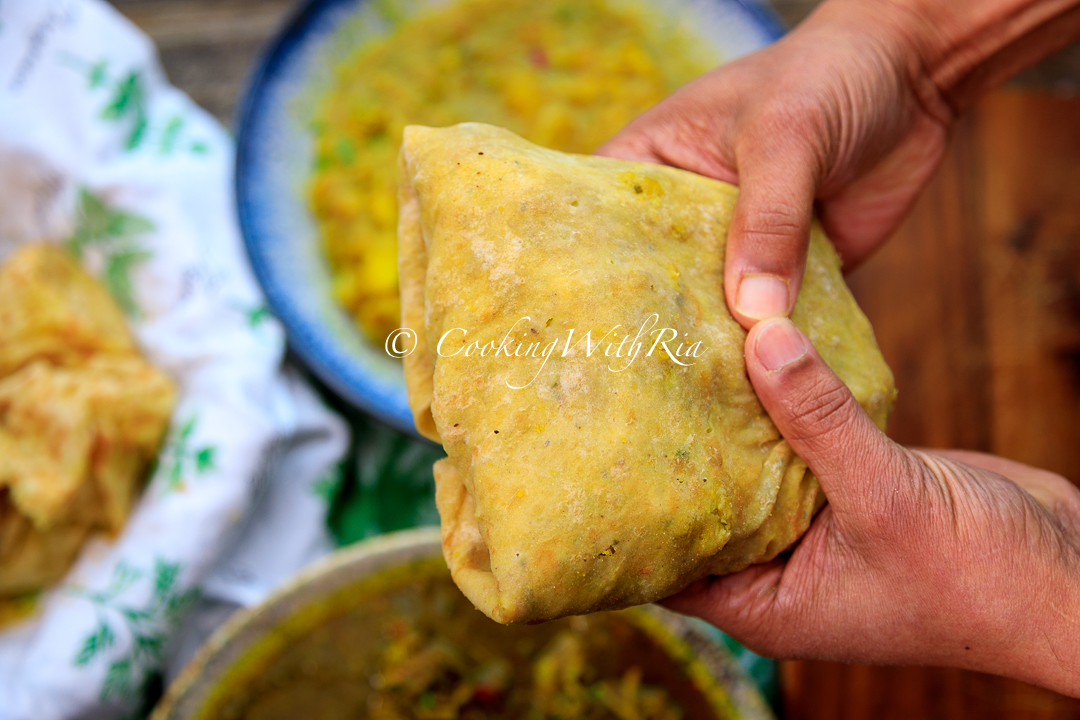
Tender curried chicken wrapped in a buttery, flaky dhalpuri roti (stuffed with ground split peas). The roti tears perfectly to scoop up every drop of rich curry.
Nutrition & Info
Allergen Warnings
Equipment Needed
Presentation Guide
Vessel: roti skin wrapped around curry
Garnishes: pepper sauce
Accompaniments: pumpkin, channa (chickpeas)
Instructions
-
1
Boil the yellow split peas in salted water until very soft, about twenty minutes. Drain completely and grind them using a food processor or mortar into a dry, coarse powder. Season with cumin and salt, then set aside to cool as the dhal puri filling.
-
2
Prepare the roti dough by combining the flour, baking powder, salt, and oil in a large bowl. Gradually add warm water and knead for five minutes until the dough is soft, smooth, and elastic. Cover with a damp cloth and rest for thirty minutes.
-
3
Divide the dough into equal balls about the size of a tennis ball. Flatten each ball into a six-inch circle, place two tablespoons of the split pea filling in the centre, then gather the edges together and seal. Roll out again gently into a flat round disc.
-
4
Cook each filled roti on a hot tawa or cast-iron skillet over medium-high heat for two to three minutes per side, brushing lightly with oil. The roti should puff slightly and develop golden brown spots. Clap the cooked roti between your palms to separate the layers.
-
5
For the curry, heat the oil in a heavy pot over medium heat. Add the onion, garlic, curry powder mixed with a splash of water, and cumin. Sauté for three minutes until the curry paste is fragrant and the raw flour smell has cooked out completely.
-
6
Add the chicken pieces to the curry base and stir to coat thoroughly. Brown the chicken for five minutes, then add the cubed potatoes, whole scotch bonnet, and enough water to cover. Simmer covered for thirty minutes until the chicken is falling-off-the-bone tender.
-
7
Remove the scotch bonnet pepper from the curry. Place a warm roti flat on a plate, spoon the chicken curry generously into the centre, then fold the roti around the curry to form a wrap. Serve immediately with pepper sauce on the side.
Did You Know?
Trinidadian roti was brought by Indian indentured laborers in the 1800s and evolved into something uniquely Caribbean with local spices and cooking methods.
Chef's Notes
Equipment Tips
- tawa
- rolling pin
- large pot
Garnishing
pepper sauce
Accompaniments
pumpkin, channa (chickpeas)
The Story Behind Chicken Roti
The Story: Trinidadian roti and curry chicken represents the most iconic fusion in the island's cuisine: Indian flatbread filled with Caribbean-spiced curry. Indian indentured laborers who arrived from 1845 onward brought roti-making skills and curry traditions that blended with local ingredients and Creole seasoning to produce something entirely new. The dhalpuri roti, filled with ground split peas, and the paratha-style buss-up-shut became the vessels for curries seasoned with Trinidadian green seasoning, scotch bonnet pepper, and local curry powder.
On the Calendar: Roti is eaten at any time of day and is one of the most popular takeaway foods in Trinidad. Roti shops are community institutions, with fiercely loyal customer bases. It is also essential at Hindu religious celebrations and family gatherings.
Then & Now: From humble origins in Indian-Trinidadian communities, roti has become the most democratic food in Trinidad, embraced by every ethnic group. Roti shops are found on every major road, and the skill of stretching dhalpuri or clapping buss-up-shut is passed from generation to generation.
Legacy: Roti and curry chicken is the most perfect expression of Trinidad's Indian-Caribbean fusion, a dish that belongs to everyone on the island and tastes like no roti found anywhere in India.

Comments (0)
Log in to leave a comment.
No comments yet. Be the first to share your thoughts!