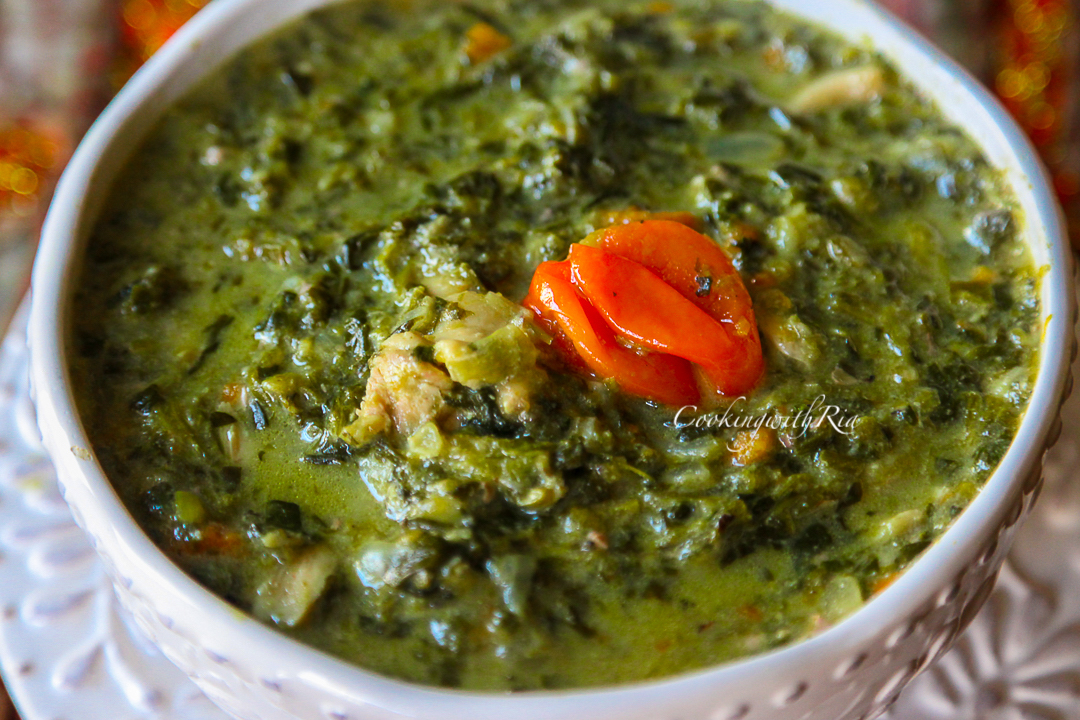
A thick, verdant soup of dasheen leaves cooked with coconut milk, okra, pumpkin, and crab, blended until creamy. Trinidad's Sunday lunch essential.
Nutrition & Info
Allergen Warnings
Equipment Needed
Presentation Guide
Vessel: deep serving bowl
Garnishes: crab claws on top
Accompaniments: rice, macaroni pie, fried plantain
Instructions
-
1
Strip the dasheen leaves from their stems, discarding any damaged or yellowed leaves. Wash the leaves thoroughly in several changes of water to remove any grit. Roll several leaves together and chop them roughly, making them easier to cook down evenly.
-
2
Place the prepared dasheen leaves in a large heavy pot along with the coconut milk, water or stock, sliced okra, cubed pumpkin, diced onion, minced garlic, and fresh thyme sprigs. The pot should be generously filled as the leaves will reduce dramatically.
-
3
Place the whole scotch bonnet pepper on top of the mixture without piercing or cutting it. The intact pepper imparts a gentle, aromatic heat to the callaloo without releasing the intense, searing spiciness contained within its seeds and membranes.
-
4
Bring the pot to a boil over high heat, then reduce to medium-low and simmer for twenty-five to thirty minutes, stirring occasionally. The leaves and vegetables should be completely soft and the pumpkin should be falling apart, thickening the liquid naturally.
-
5
Carefully remove and discard the whole scotch bonnet pepper and the thyme stems from the pot. Using an immersion blender, blend the callaloo directly in the pot until thick, smooth, and uniformly green with no visible chunks of leaf remaining.
-
6
Taste the blended callaloo and adjust the seasoning with salt and black pepper. The final consistency should be thick enough to coat the back of a spoon generously. If too thick, thin with a splash of coconut milk or water and stir through.
-
7
Serve the callaloo hot in deep bowls alongside steamed white rice, stewed meats, or provisions. In Trinidad, callaloo is a centerpiece of the Sunday lunch table and is considered incomplete without rice and some form of stewed or braised protein.
Did You Know?
Callaloo is considered Trinidad's national dish alongside doubles. The secret to good callaloo is the okra, which gives it its distinctive silky thickness.
Chef's Notes
Equipment Tips
- large pot
- immersion blender
- ladle
Garnishing
crab claws on top
Accompaniments
The Story Behind Callaloo
The Story: Trinidadian callaloo is a thick, verdant soup made by cooking dasheen (taro) leaves with okra, coconut milk, pumpkin, and crab, blended until creamy and served alongside rice. Its roots lie firmly in West African cooking traditions, where leafy green soups thickened with okra were staples. Enslaved Africans in Trinidad adapted their ancestral recipes to local ingredients, with dasheen leaves replacing African greens and blue crab adding sweetness and richness.
On the Calendar: Callaloo is a Sunday lunch tradition in Trinidad, served alongside rice, stewed chicken or beef, macaroni pie, and coleslaw in what is known as Sunday food. It also appears at celebrations, Carnival gatherings, and family limes.
Then & Now: The recipe has been passed down through generations with minimal change: dasheen leaves, okra, and coconut milk remain non-negotiable. Some cooks add crab, others omit it; some blend until smooth, others prefer a chunkier texture. Callaloo is one of the dishes most often cited by Trinidadians abroad as the taste they miss most.
Legacy: Callaloo is Trinidad's most deeply African dish, a green, nourishing soup that connects the island's kitchens to the ancestral cooking traditions of West Africa.

Comments (0)
Log in to leave a comment.
No comments yet. Be the first to share your thoughts!