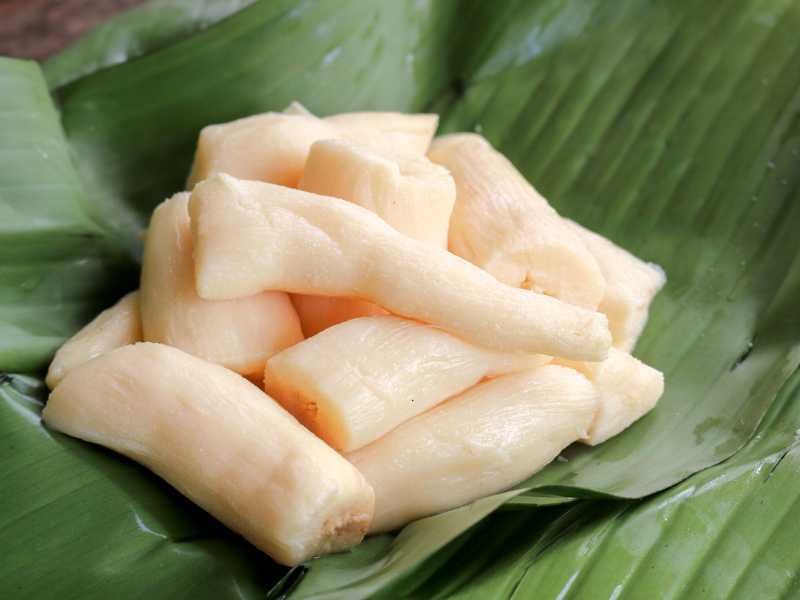
Sweet, mildly alcoholic fermented cassava wrapped in banana leaves, with a tangy, pudding-like texture created by natural yeast fermentation over several days.
Nutrition & Info
Equipment Needed
Presentation Guide
Vessel: banana leaf on plate
Garnishes: none, served plain
Accompaniments: black coffee, fresh fruit
Instructions
-
1
Steam cassava chunks for twenty-five minutes until tender but not mushy. Let cool to room temperature.
-
2
Sprinkle crushed yeast balls evenly over the cooled cassava, tossing gently to coat all pieces.
-
3
Wrap portions in banana leaf packets and place in an airtight container.
-
4
Leave at room temperature for two to three days. The cassava will become soft, sweet, and slightly tangy.
-
5
Check daily by smell; it should develop a pleasant sweet-sour aroma without any off odors.
-
6
Unwrap and serve chilled or at room temperature as a sweet treat.
Did You Know?
The natural fermentation in tapai produces a small amount of alcohol, making it one of the oldest fermented foods in the Malay-Austronesian world.
Chef's Notes
Equipment Tips
- steamer
- banana leaves
- airtight container
Garnishing
none, served plain
Accompaniments
black coffee, fresh fruit
The Story Behind Tapai
Tapai is a fermented delicacy shared across the Malay and Austronesian world, from Borneo to Timor. In Timor-Leste, it holds special significance as a harvest celebration food, marking the abundance of cassava that sustained communities through lean seasons. The fermentation process, using traditional yeast balls passed between families, represents indigenous food science that has been refined over thousands of years.
More Timorese Dishes
 Easy
📜 Story
Easy
📜 Story
Ai Farina
Cassava Flour Porridge
Breakfast and emergency food during lean times Easy
📜 Story
Easy
📜 Story
Ai Manas Sauce
Timorese Chili Condiment
Every meal, served as a table condiment Easy
📜 Story
Easy
📜 Story
Batar Da'an
Corn and Bean Stew
Lunch, dinner Easy
📜 Story
Easy
📜 Story
Batar Da'an Mean
Corn and Red Bean Stew
Daily meals in highland communities
Comments (0)
Log in to leave a comment.
No comments yet. Be the first to share your thoughts!