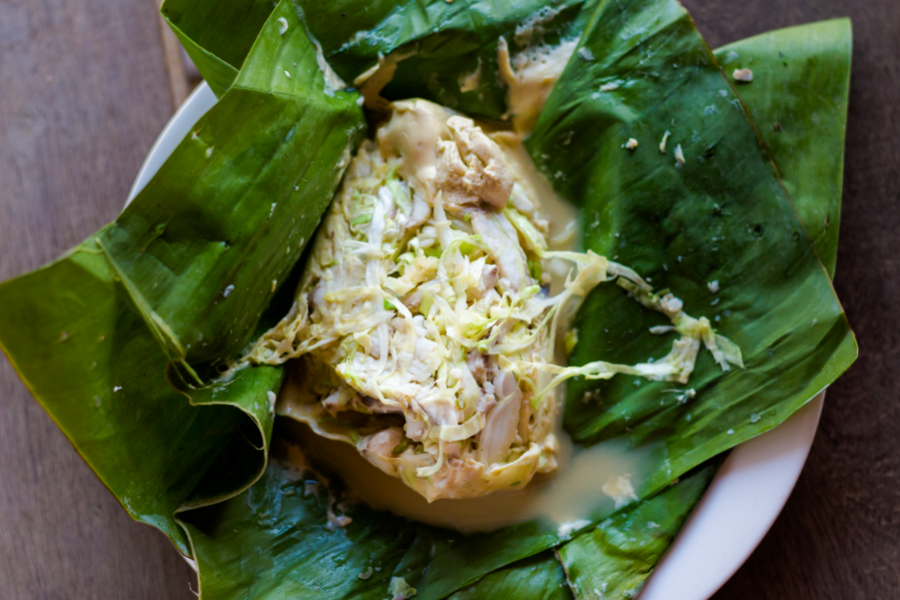
A pungent, amber-colored fermented fish sauce made from anchovies and sea salt, aged in clay jars for months, used as a fundamental seasoning and dipping sauce in Timorese cuisine.
Nutrition & Info
Allergen Warnings
Equipment Needed
Presentation Guide
Vessel: small ceramic dipping bowl
Garnishes: sliced chili, lime
Accompaniments: steamed rice, raw vegetables, grilled fish
Instructions
-
1
Clean anchovies by removing heads and entrails. Rinse briefly in seawater or salted water.
-
2
Layer anchovies and salt alternately in a clean clay jar, starting and ending with salt.
-
3
Cover the jar mouth with cheesecloth and place the lid on loosely to allow gas to escape.
-
4
Place jar in a warm, shaded area. Let ferment for two to three months, stirring weekly.
-
5
After fermentation, strain the liquid through fine cheesecloth to separate the clear amber sauce.
-
6
Bottle the strained budu and store in a cool place. The sauce will keep for over a year.
Did You Know?
A well-made budu can ferment for over a year, developing increasingly complex umami flavors that Timorese cooks prize highly.
Chef's Notes
Equipment Tips
- clay jar with lid
- cheesecloth
- fine strainer
Garnishing
sliced chili, lime
Accompaniments
steamed rice, raw vegetables, grilled fish
The Story Behind Budu
Budu is part of the ancient Austronesian tradition of fermenting fish that spans from Southeast Asia to the Pacific Islands. In Timor-Leste, making budu was historically a communal activity in fishing villages, with families aging their batches in clay jars passed down through generations. The sauce provides essential protein and minerals in a shelf-stable form, making it critical to food security in a tropical climate before refrigeration.
More Timorese Dishes
 Easy
📜 Story
Easy
📜 Story
Ai Farina
Cassava Flour Porridge
Breakfast and emergency food during lean times Easy
📜 Story
Easy
📜 Story
Ai Manas Sauce
Timorese Chili Condiment
Every meal, served as a table condiment Easy
📜 Story
Easy
📜 Story
Batar Da'an
Corn and Bean Stew
Lunch, dinner Easy
📜 Story
Easy
📜 Story
Batar Da'an Mean
Corn and Red Bean Stew
Daily meals in highland communities
Comments (0)
Log in to leave a comment.
No comments yet. Be the first to share your thoughts!