
ข้าวเหนียวมะม่วง
ข้าวเหนียวมะม่วง (khao NEE-ow mah-MOONG)
Mango Sticky Rice
Ripe mango on sweet coconut-infused sticky rice, drizzled with coconut cream and toasted mung beans. Thailand's most perfect pairing.
Nutrition & Info
Allergen Warnings
Equipment Needed
Presentation Guide
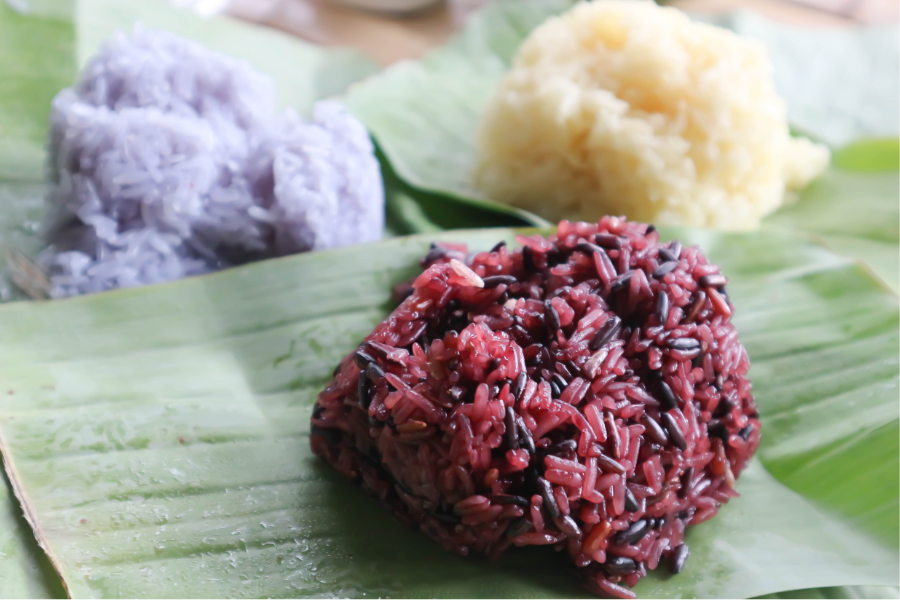
Vessel: banana leaf or small plate
Garnishes: coconut cream drizzle, toasted mung beans
Instructions
-
1
Drain the soaked glutinous rice and rinse it one final time. Line a steamer basket with cheesecloth, spread the rice evenly across it, and steam over vigorously boiling water for twenty to twenty-five minutes until every grain is fully cooked and translucent.
-
2
While the rice steams, gently heat half of the coconut milk with the sugar and salt in a saucepan over low heat, stirring until the sugar dissolves completely. Remove from heat and set aside. Warm the remaining coconut milk separately for the topping sauce.
-
3
Transfer the freshly steamed hot rice into a large bowl and immediately pour the sweetened coconut milk over it. Fold once or twice very gently with a rubber spatula, then cover tightly and let the rice absorb the liquid undisturbed for fifteen minutes.
-
4
After resting, the rice should appear plump, glossy, and lightly sticky with all the coconut milk fully absorbed. Each grain should be tender and slightly sweet. Avoid excessive stirring which would turn the rice gummy and lose its pleasant texture.
-
5
Peel the mangoes and slice the flesh away from the stone in large cheeks. Cut each cheek into thin parallel slices without cutting all the way through, then fan them out gracefully on serving plates in the traditional Thai presentation style.
-
6
Mound a generous portion of the coconut sticky rice alongside the fanned mango slices on each plate. Spoon the warm reserved coconut milk over the rice, allowing it to pool slightly around the edges and glaze the surface.
-
7
Sprinkle the toasted split mung beans and sesame seeds over the coconut cream on top of the rice. Serve immediately at room temperature while the rice is still soft and the mango is at its peak sweetness and juiciness.
Did You Know?
Best version only possible during mango season (April-June) with Nam Dok Mai mangoes.
Chef's Notes
Equipment Tips
- bamboo steamer
- saucepan
- mixing bowl
Garnishing
coconut cream drizzle, toasted mung beans
The Story Behind ข้าวเหนียวมะม่วง
## The Story
Mango sticky rice (khao niao mamuang) has been part of Thai daily life since the Ayutthaya period (1351-1767). The tradition of preparing khao niao mun, sticky rice cooked in coconut milk, dates to the early Rattanakosin period under King Rama II. Mangoes originally grew wild in South Asia and Myanmar, while glutinous rice cultivation centered in the Isan region of northeastern Thailand and Laos. The pairing of the two proved inspired.
## On the Calendar
Mango sticky rice is intimately tied to Songkran, the Thai New Year celebrated in mid-April, marking the peak of mango season. It also plays a role in Buddhist almsgiving ceremonies, offered to monks as a merit-making gesture.
## Then & Now
During the reign of King Rama V (1868-1910), mango sticky rice was formally included in Thai royal recipe books. Today it is Thailand's most recognizable dessert, sold from street carts to Michelin-starred restaurants. Its global fame surged in 2022 after a viral cultural moment brought it worldwide attention.
## Legacy
Mango sticky rice symbolizes the Thai philosophy of balancing flavors: the sweetness of ripe mango, the richness of coconut cream, and the subtle saltiness of the rice create a harmonious whole.


Comments (0)
Log in to leave a comment.
No comments yet. Be the first to share your thoughts!