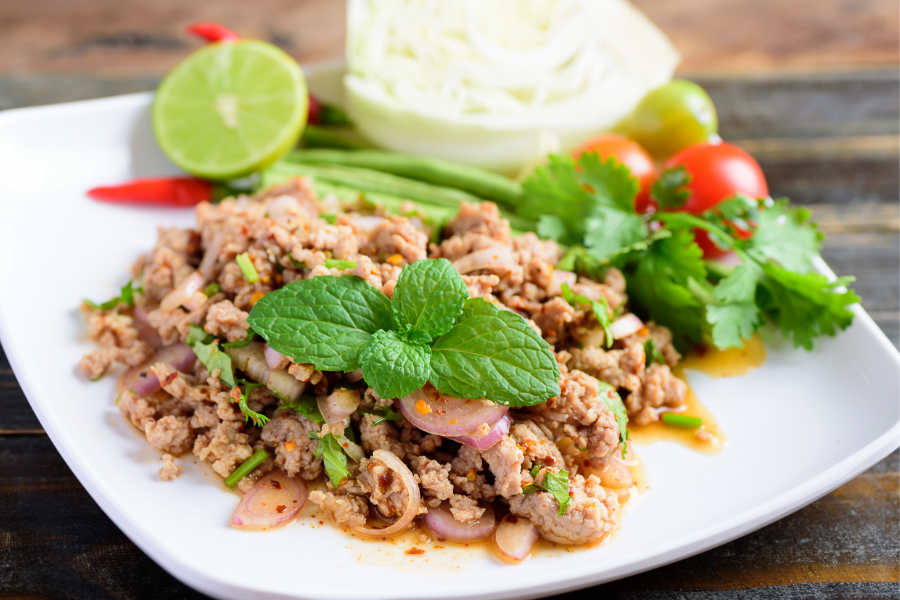
A zesty and herbaceous salad of minced chicken seasoned with lime juice, fish sauce, toasted rice powder, and a generous scattering of fresh mint and cilantro. This refreshing Isaan classic delivers an electrifying balance of sour, salty, and spicy flavors.
Nutrition & Info
Allergen Warnings
Equipment Needed
Instructions
-
1
Toast uncooked sticky rice in a dry skillet over medium heat for five minutes, shaking frequently until golden brown and fragrant, then grind to a coarse powder in a mortar.
-
2
Cook ground chicken in a wok over high heat, breaking it into fine crumbles with a spatula, adding a splash of water to keep it moist and prevent clumping for about six minutes.
-
3
Remove the cooked chicken from heat and transfer it to a large mixing bowl, allowing it to cool slightly so the herbs will not wilt when combined with the hot meat.
-
4
Add lime juice and fish sauce to the chicken, tossing thoroughly to ensure every piece of meat absorbs the bright, tangy dressing and develops a complex savory flavor.
-
5
Fold in the sliced shallots, scallions, mint, cilantro, and crushed toasted chilies, then sprinkle the toasted rice powder over everything and toss gently to combine all elements.
-
6
Serve immediately on a platter lined with crisp lettuce leaves, accompanied by sticky rice and raw vegetables such as cabbage wedges, green beans, and Thai basil sprigs.
Did You Know?
Larb is the national dish of Laos and a beloved staple across Isaan. The word 'larb' is considered lucky in Thai culture, as it sounds like the word for fortune, making it a popular dish at celebrations.
Chef's Notes
Equipment Tips
- wok
- mortar and pestle
- skillet
The Story Behind Larb Gai
Larb traces its origins to the Isaan region of northeastern Thailand and neighboring Laos, where it has been prepared for centuries as a communal dish eaten with sticky rice. The technique of toasting rice and grinding it into powder predates modern Thai cuisine and connects to ancient grain-processing traditions. Larb reflects the Isaan philosophy of bold, uncooked flavors balanced through acid, heat, and herbal freshness. It gained national prominence in Thailand during the twentieth century as Isaan workers migrated to Bangkok and brought their food traditions with them.


Comments (0)
Log in to leave a comment.
No comments yet. Be the first to share your thoughts!