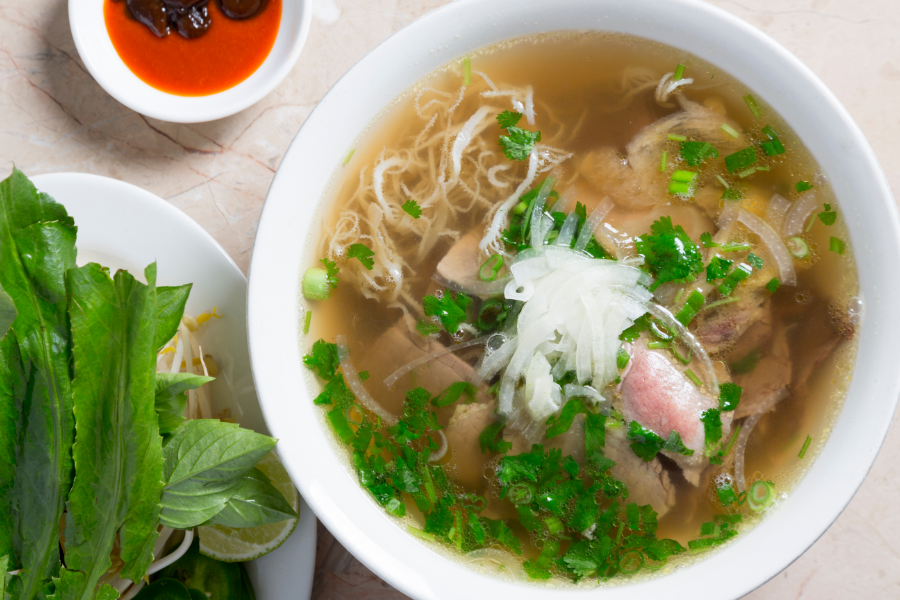
An intensely flavorful dark broth noodle soup that was originally sold from boats along Bangkok's canals. The deeply spiced broth combines aromatic herbs, dark soy, and rich stock into one of Thailand's most complex and satisfying noodle dishes.
Nutrition & Info
Allergen Warnings
Equipment Needed
Instructions
-
1
Build the aromatic broth by simmering beef stock with star anise, cinnamon stick, dark soy sauce, and fish sauce for sixty minutes over low heat until deeply fragrant and dark in color.
-
2
Add beef brisket to the simmering broth and cook gently for thirty minutes until the meat is tender enough to pull apart easily but still holds its shape when sliced thin.
-
3
Prepare a spice paste by pounding dried chilies, garlic, cilantro roots, and white peppercorns together in a mortar until smooth, then stir two tablespoons into the simmering broth.
-
4
Blanch the thin rice noodles in rapidly boiling water for just thirty seconds until they are pliable but still have a slight chew, then drain immediately and divide among serving bowls.
-
5
Top the noodles with sliced brisket, morning glory, and bean sprouts, then ladle the boiling hot broth over everything, ensuring the vegetables wilt slightly from the heat of the liquid.
-
6
Garnish each bowl with fried garlic, fresh Thai basil, and a drizzle of chili vinegar, then serve immediately alongside condiment trays holding sugar, fish sauce, dried chili flakes, and vinegar.
Did You Know?
Boat noodles were traditionally served in tiny bowls so small that diners would eat five to ten bowls per sitting. The tradition of small servings continues at famous boat noodle alleys in Bangkok, where bowls cost as little as 15 baht each.
Chef's Notes
Equipment Tips
- large stockpot
- strainer
- mortar and pestle
- ladle
The Story Behind Kuay Teow Reua
Boat noodles emerged in the floating markets of Bangkok during the early twentieth century when vendors paddled along the city's extensive canal network selling noodle soup from their boats. The small serving sizes were practical for canal-side transactions. The dark, aromatic broth typically included star anise, cinnamon, and Chinese five-spice, reflecting the influence of Chinese immigrants on Thai street food culture. As canals were filled in to create roads, boat noodle vendors moved to land-based stalls but maintained the tradition of tiny bowls. Today, Victory Monument in Bangkok remains the most famous destination for boat noodles.


Comments (0)
Log in to leave a comment.
No comments yet. Be the first to share your thoughts!