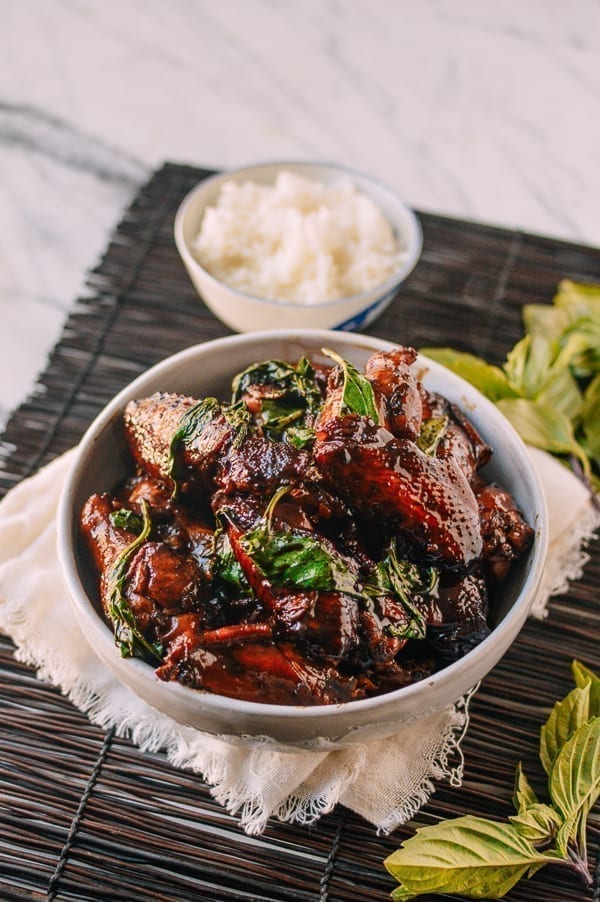
Succulent chicken pieces braised in equal parts sesame oil, soy sauce, and rice wine with garlic, ginger, and a cascade of fragrant Thai basil leaves — aromatic, savory, and deeply Taiwanese.
Nutrition & Info
Allergen Warnings
Equipment Needed
Presentation Guide
Vessel: clay pot (砂鍋)
Garnishes: Thai basil, sliced chili
Accompaniments: steamed rice, stir-fried greens
Instructions
-
1
Heat sesame oil in a clay pot or heavy skillet over medium heat. Add ginger slices and fry until fragrant, about 1 minute.
-
2
Add smashed garlic and dried chilies, stir 30 seconds until golden.
-
3
Add chicken pieces skin-side down. Sear without moving for 3 minutes until golden.
-
4
Add soy sauce, rice wine, and rock sugar. Stir to coat all pieces evenly.
-
5
Cover and braise over medium-low heat for 15 minutes, stirring occasionally, until sauce reduces to a glossy, sticky glaze.
-
6
Remove lid, toss in Thai basil leaves, stir for 30 seconds until just wilted. Serve immediately from the clay pot.
Did You Know?
The "three cups" refer to equal measures of sesame oil, soy sauce, and rice wine — the entire flavor foundation comes from just these three liquids plus aromatics.
Chef's Notes
Equipment Tips
- clay pot or cast iron skillet
- stove
Garnishing
Thai basil, sliced chili
Accompaniments
steamed rice, stir-fried greens
The Story Behind 三杯雞
Three-cup chicken originated in Jiangxi province on mainland China, where legend says it was created by a patriot's family using only three simple ingredients. The dish crossed to Taiwan with KMT migrants in 1949 and was transformed by the addition of Thai basil (jiǔcéng tǎ), which grows abundantly in Taiwan's tropical climate. The Taiwanese version, cooked in a clay pot and perfumed with basil, became so iconic that it is now considered one of Taiwan's national dishes.

Comments (0)
Log in to leave a comment.
No comments yet. Be the first to share your thoughts!