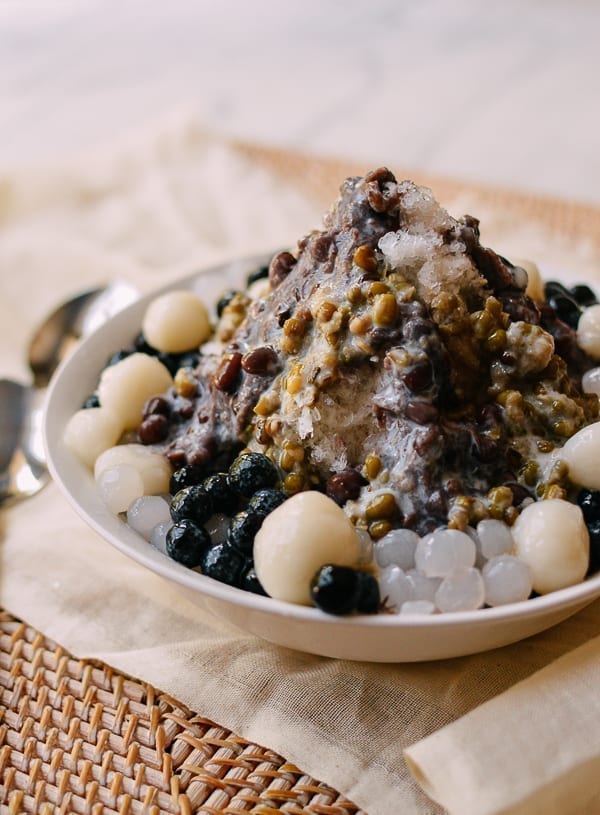
A towering mountain of finely shaved ice blanketed with sweet toppings — red beans, taro balls, grass jelly, condensed milk, and fresh mango — Taiwan's ultimate summer dessert experience.
Nutrition & Info
Allergen Warnings
Equipment Needed
Presentation Guide
Vessel: large bowl
Garnishes: condensed milk drizzle, mint leaf
Accompaniments: extra sugar syrup
Instructions
-
1
Prepare toppings: cook red beans with sugar until soft; boil taro balls until they float; cube grass jelly and aiyu jelly.
-
2
Shave ice into a tall mound in large bowls using an ice shaver. The ice should be fluffy, not chunky.
-
3
Arrange toppings artfully over the ice mountain — red beans, taro balls, grass jelly, aiyu jelly, and fresh mango.
-
4
Drizzle with condensed milk or sugar syrup. Scatter sweetened peanuts over the top.
-
5
Serve immediately before the ice melts. Eat from the top down, mixing toppings with ice.
Did You Know?
Mango shaved ice at Ice Monster in Taipei became so famous that the shop was named one of the world's best dessert destinations — lines regularly exceeded one hour during peak mango season.
Chef's Notes
Equipment Tips
- ice shaver
- serving bowls
- spoons
Garnishing
condensed milk drizzle, mint leaf
Accompaniments
extra sugar syrup
The Story Behind 剉冰
Shaved ice in Taiwan traces to the Japanese colonial period (1895-1945), when the Japanese introduced kakigōri-style shaved ice. Taiwanese vendors transformed it with local toppings like red beans, taro balls, grass jelly, and aiyu jelly, creating an entirely new dessert category. The 1990s-2000s mango shaved ice boom, led by shops like Ice Monster and Smoothie House, brought Taiwanese shaved ice to international fame.

Comments (0)
Log in to leave a comment.
No comments yet. Be the first to share your thoughts!