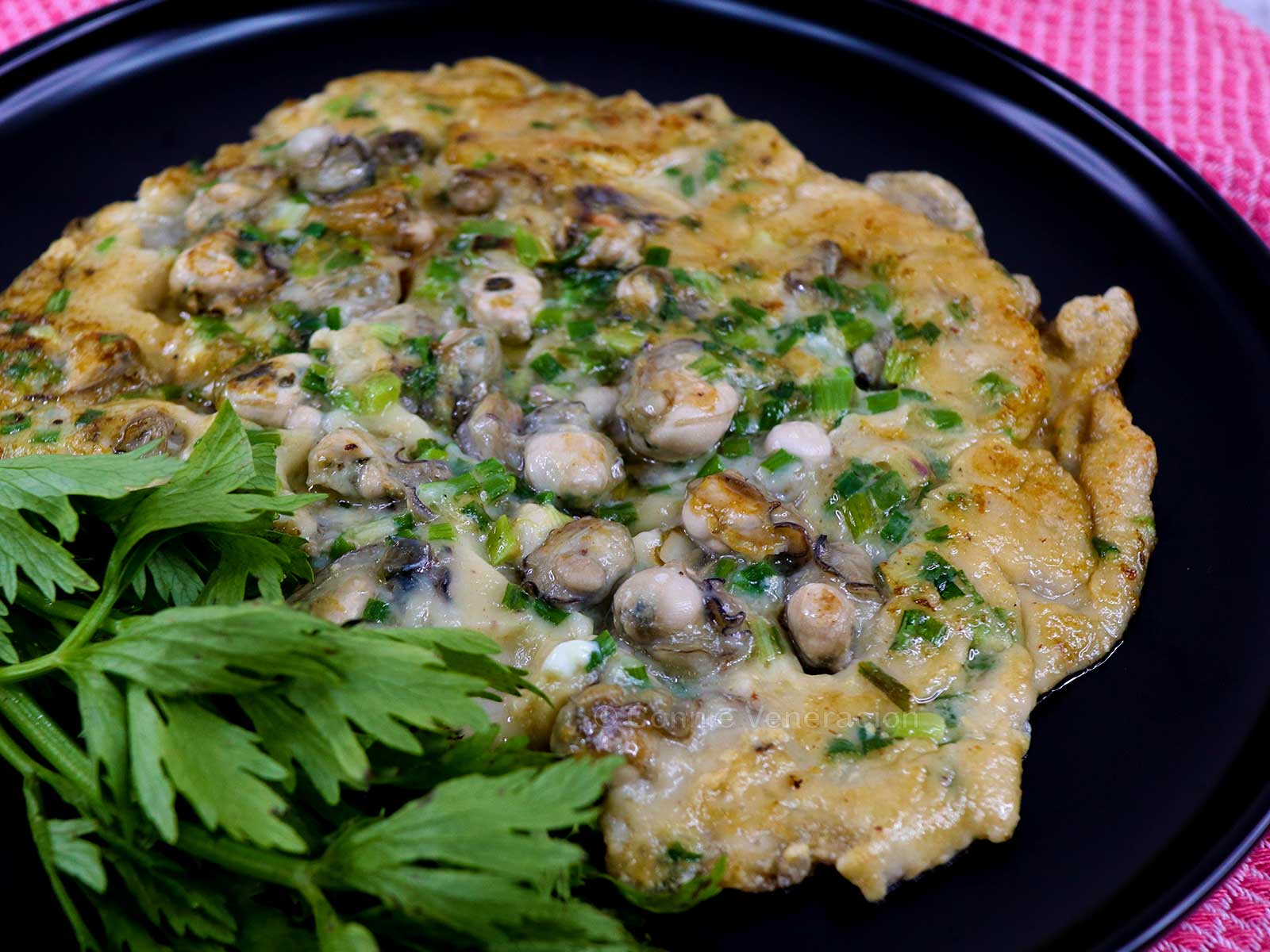
A crispy-edged, gooey Taiwanese night market classic of plump oysters folded into a starchy egg batter with chrysanthemum greens, drizzled with sweet-and-tangy chili sauce.
Nutrition & Info
Allergen Warnings
Equipment Needed
Presentation Guide
Vessel: oval plate
Garnishes: sweet chili sauce, cilantro
Accompaniments: pickled radish
Instructions
-
1
Mix sweet potato starch with water to form a thin, smooth slurry.
-
2
Heat oil on a flat griddle or large skillet over medium-high heat. Scatter oysters in a single layer and cook 1 minute.
-
3
Pour the starch slurry over the oysters, spreading evenly. Let cook until edges start to crisp, about 2 minutes.
-
4
Crack eggs directly on top and break the yolks, spreading loosely. Scatter chrysanthemum greens over the surface.
-
5
When the bottom is golden and crispy, flip in sections and cook 1-2 minutes more.
-
6
Slide onto a plate and drizzle generously with the sweet chili sauce mixture. Serve immediately.
Did You Know?
Legend says oyster omelette was invented during a siege when soldiers mixed oysters with starch because rice was scarce — necessity created one of Taiwan's most iconic dishes.
Chef's Notes
Equipment Tips
- flat griddle or non-stick skillet
- spatula
Garnishing
sweet chili sauce, cilantro
Accompaniments
pickled radish
The Story Behind 蚵仔煎
Oyster omelette (蚵仔煎) arrived in Taiwan with Hokkien immigrants from Fujian province during the Qing Dynasty. The dish adapted to Taiwanese tastes with the addition of sweet potato starch (a cheap, abundant local crop) and the signature sweet chili sauce. Today it is voted one of the top must-eat Taiwanese night market foods in nearly every culinary survey and is a fixture at every major night market from Shilin to Liuhe.

Comments (0)
Log in to leave a comment.
No comments yet. Be the first to share your thoughts!