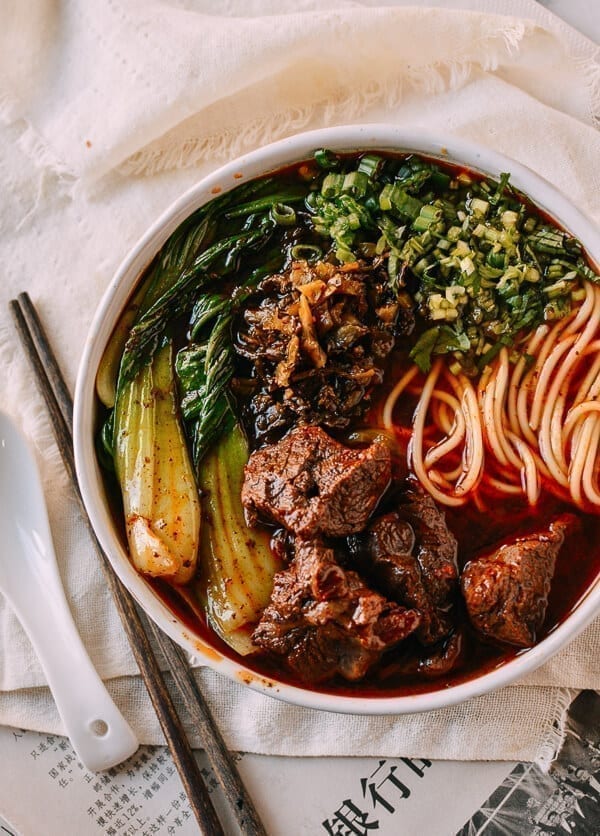
Rich, aromatic broth simmered with star anise and soy, loaded with braised beef chunks and chewy wheat noodles. Taiwan's national comfort dish.
Nutrition & Info
Allergen Warnings
Equipment Needed
Presentation Guide
Vessel: deep noodle bowl
Garnishes: sliced scallions, pickled mustard greens, fresh cilantro
Accompaniments: chili oil, pickled cabbage
Instructions
-
1
Bring a large pot of water to a rolling boil and blanch the beef shank chunks for two minutes to remove impurities. Drain the beef, rinse under cold water, and set aside. Discard the blanching water and clean the pot.
-
2
Heat two tablespoons of vegetable oil in the same pot over medium-high heat. Add the ginger slices, smashed garlic, and quartered onions, stir-frying for two minutes until fragrant and the edges begin to caramelize and char slightly.
-
3
Add the doubanjiang to the aromatics and stir-fry for one minute until the oil turns a deep red colour and the paste is fragrant. Add the blanched beef chunks and sear them briefly on all sides to coat them with the spicy paste.
-
4
Pour in the water, then add the soy sauce, rock sugar, quartered tomatoes, star anise, and cinnamon stick. Bring everything to a vigorous boil, then reduce the heat to low and cover with a tight-fitting lid.
-
5
Simmer the broth for two and a half to three hours, checking occasionally and skimming any foam from the surface. The beef is ready when it yields easily to a chopstick pushed through the centre but still holds its shape.
-
6
In a separate large pot of boiling water, cook the wheat noodles according to the package directions until just tender with a slight chew. Blanch the bok choy halves in the same water for thirty seconds, then drain both immediately.
-
7
Divide the cooked noodles among deep bowls and ladle the rich, dark broth generously over them. Arrange sliced beef shank and bok choy on top, then garnish with chopped scallions and a drizzle of chilli oil if desired.
Did You Know?
Taipei holds an annual beef noodle soup festival with competitions among hundreds of restaurants.
Chef's Notes
Equipment Tips
- large stock pot
- strainer
- ladle
Garnishing
sliced scallions, pickled mustard greens, fresh cilantro
Accompaniments
chili oil, pickled cabbage
The Story Behind Niu Rou Mian
The Story: Taiwanese beef noodle soup (niu rou mian) is a dish born of exile and reinvention. When Kuomintang soldiers and their families fled mainland China for Taiwan after 1949, they brought regional noodle traditions from Sichuan, Shandong, and Gansu. Unable to replicate their home dishes exactly, they improvised with local ingredients, combining slow-braised beef shanks with a rich broth flavored by doubanjiang (fermented bean paste), star anise, and soy sauce, poured over chewy wheat noodles. The dish crystallized in the military dependents' villages (juancun) where these communities settled.
On the Calendar: Beef noodle soup is eaten year-round, at any meal. Taipei hosts an annual Beef Noodle Festival, a city-sponsored competition where restaurants vie for the title of best bowl, drawing enormous crowds and media attention.
Then & Now: From its juancun origins, beef noodle soup has risen to become arguably Taiwan's most famous single dish. Styles range from clear broth to deeply red-braised, with tomato, curry, and herbal variations. The dish represents the fusion of mainland Chinese nostalgia and Taiwanese innovation.
Legacy: Beef noodle soup is the story of Taiwan itself: a creation born from displacement that became something new, beloved, and entirely its own.
Comments (1)
Log in to leave a comment.
Made this last weekend and my family loved it. Will definitely make again!