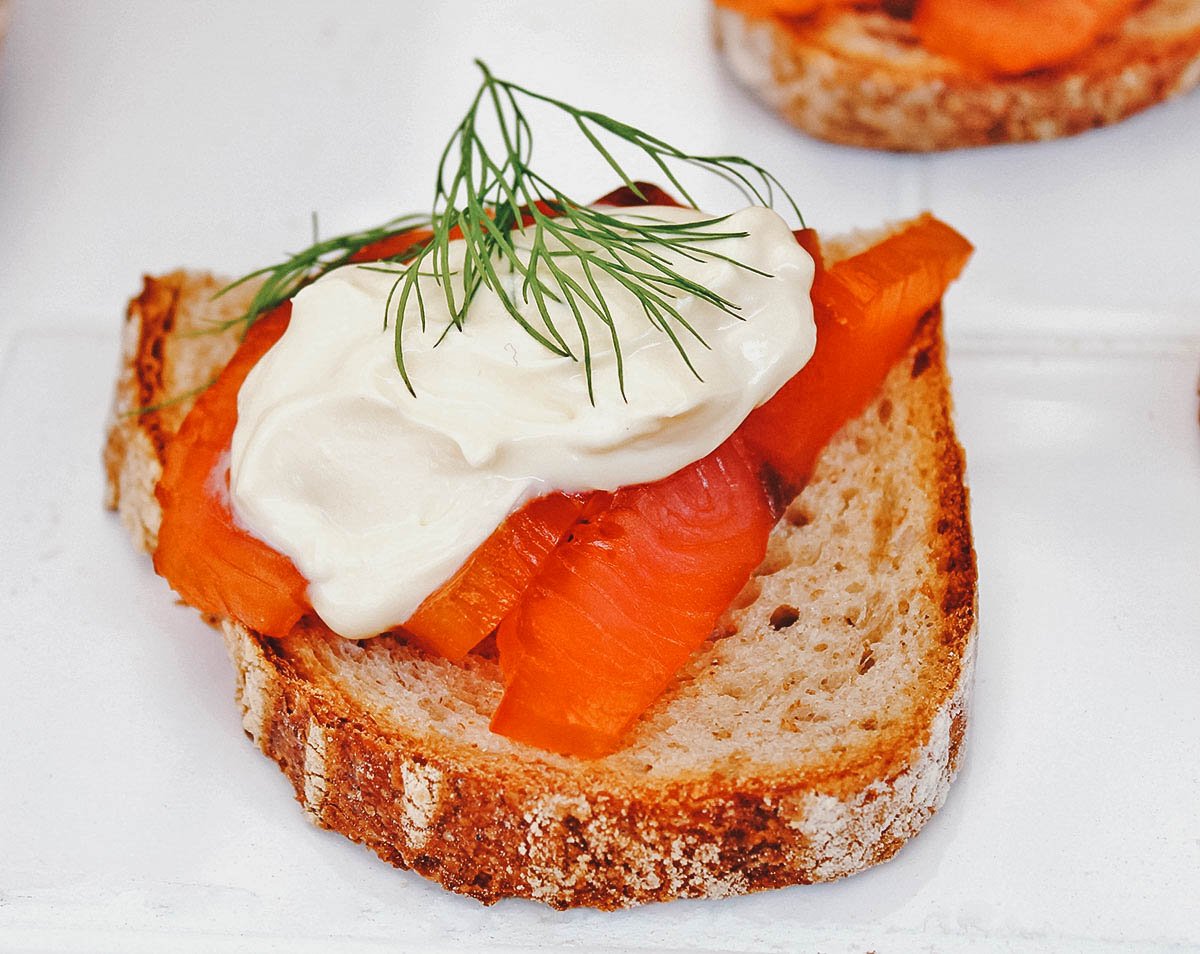
Salmon cured in a blend of sugar, salt, and dill for three days, sliced paper-thin and served with a sweet-sharp mustard-dill sauce. Elegant Scandinavian luxury.
Nutrition & Info
Allergen Warnings
Equipment Needed
Presentation Guide
Vessel: chilled serving platter
Garnishes: fresh dill, lemon wedges
Accompaniments: hovmästarsås (mustard-dill sauce), crispbread
Instructions
-
1
Check the salmon fillet for any remaining pin bones by running your fingers along the flesh and pulling out any bones with tweezers. If using a whole side, cut it into two equal halves so the pieces can be stacked flesh to flesh.
-
2
Combine the coarse salt, sugar, and crushed white peppercorns in a bowl, mixing evenly. This dry cure will draw moisture from the salmon through osmosis, concentrating the flavour and firming the texture over the curing period.
-
3
Lay a large sheet of cling film on a rimmed baking tray. Spread half the chopped dill across the centre, then place one salmon piece skin-side down on the dill. Spread the entire cure mixture evenly over the flesh surface.
-
4
Splash the aquavit or vodka over the cured surface if using, then cover with the remaining dill. Place the second salmon piece on top with the skin facing upward, creating a flesh-to-flesh sandwich with the cure and dill between the halves.
-
5
Wrap the salmon tightly in the cling film, then place a smaller baking tray or cutting board on top and weigh it down with heavy cans or a brick. Refrigerate for forty-eight hours, turning the salmon package over once every twelve hours.
-
6
Unwrap the cured salmon and scrape off all the dill and cure mixture with the back of a knife. Pat the surface dry with paper towels. The flesh should appear darker, feel firmer, and have a silky, slightly translucent appearance.
-
7
To make the hovmästarsås, whisk together the mustard, sugar, and vinegar in a bowl. Slowly drizzle in the oil while whisking constantly until the sauce emulsifies and thickens. Fold in the chopped dill and season with salt and pepper.
-
8
Using a long, sharp knife held at a very low angle almost parallel to the cutting board, slice the gravlax into paper-thin pieces away from the skin. Arrange on a platter and serve with the mustard-dill sauce and crispbread.
Did You Know?
The word 'gravlax' comes from the Norse 'grava' (to dig) and 'lax' (salmon) — Vikings originally cured salmon by burying it in the ground.
Chef's Notes
Equipment Tips
- sharp knife
- plastic wrap
- baking dish
- weight
Garnishing
fresh dill, lemon wedges
Accompaniments
hovmästarsås (mustard-dill sauce), crispbread
The Story Behind Gravlax
The Story: Gravlax is salmon cured with a mixture of salt, sugar, and dill, producing silky, translucent slices of fish with an herbaceous sweetness. The name derives from the Old Norse words grav (grave or pit) and lax (salmon), referring to the medieval technique of burying salted salmon in sand above the high-tide line, where fermentation would preserve the fish. The modern sugar-and-dill cure dates to the eighteenth century, when Scandinavian cooks refined the technique away from fermentation toward the delicate cure we know today.
On the Calendar: Gravlax is a fixture of the Swedish smorgasbord, appearing at Christmas julbord, Easter celebrations, Midsummer feasts, and any festive gathering. It is also everyday fare, served on crispbread for breakfast or lunch.
Then and Now: The transition from buried, fermented fish to the refined sugar-dill cure represents one of Swedish cuisine's great evolutions. Modern gravlax is typically cured for 24 to 72 hours and served with hovmastarsas (sweet mustard-dill sauce). The dish has become one of Sweden's most successful culinary exports, found on menus worldwide.
Legacy: Gravlax is the Viking technique civilized by the Enlightenment, a dish that transforms raw salmon into silk through nothing more than salt, sugar, dill, and patience.



Comments (1)
Log in to leave a comment.
Reminds me of my grandmother's cooking. Such a nostalgic flavor.