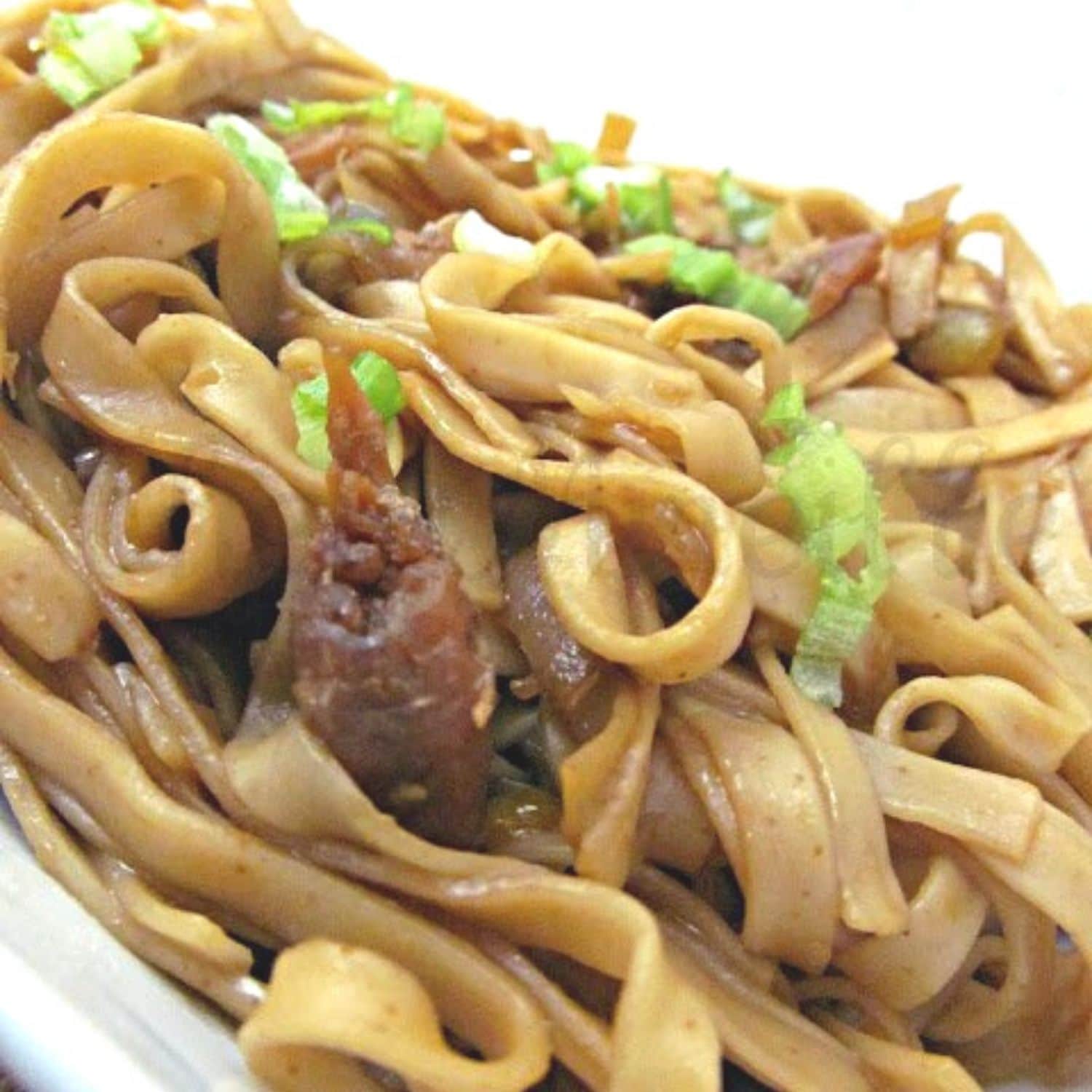
Surinamese-style stir-fried egg noodles with chicken, cabbage, bean sprouts, and soy sauce, a popular Javanese-influenced street food and home-cooked meal.
Nutrition & Info
Allergen Warnings
Equipment Needed
Presentation Guide
Vessel: large plate or takeaway container
Garnishes: fried shallots, sliced cucumber
Accompaniments: sambal, fried egg
Instructions
-
1
Cook noodles according to package directions until just al dente. Drain and toss with a little oil to prevent sticking.
-
2
Heat oil in a wok over high heat. Stir-fry chicken until golden, about four minutes. Remove and set aside.
-
3
Add garlic and onions to the wok, stir-fry one minute. Add cabbage and celery, cooking until just wilted.
-
4
Return chicken to the wok. Add noodles, soy sauce, ketjap manis, and sesame oil. Toss vigorously until everything is well combined and heated through.
-
5
Add bean sprouts in the last minute of cooking. Season with white pepper and salt. Serve immediately while hot and aromatic.
Did You Know?
In Suriname, bami and nasi are so fundamental that a combination plate of both is called "bami-nasi" and is the default takeaway order.
Chef's Notes
Equipment Tips
- wok or large skillet
- tongs
- cutting board
Garnishing
fried shallots, sliced cucumber
Accompaniments
sambal, fried egg
The Story Behind Bami
Bami is the Surinamese adaptation of Indonesian bakmi noodles, brought by Javanese contract workers who arrived between 1890 and 1939. In Suriname, the dish evolved with local ingredients and preferences, becoming sweeter and more heavily seasoned than its Indonesian ancestor. Today bami is everyday food across all ethnic communities, available at every warung and Chinese restaurant throughout the country.
More Surinamese Dishes
 Easy
📜 Story
Easy
📜 Story
Bakabana
Fried Plantain with Peanut Sauce
Afternoon snack or side dish Easy
📜 Story
Easy
📜 Story
Bara
Fried Split Pea Fritters
Snack, breakfast, or with roti meals Medium
📜 Story
Medium
📜 Story
Bojo
Cassava Coconut Cake
Celebrations, birthdays, Christmas Easy
📜 Story
Easy
📜 Story
Bruine Bonen met Rijst
Brown Beans with Rice
Everyday lunch and dinner
Comments (0)
Log in to leave a comment.
No comments yet. Be the first to share your thoughts!