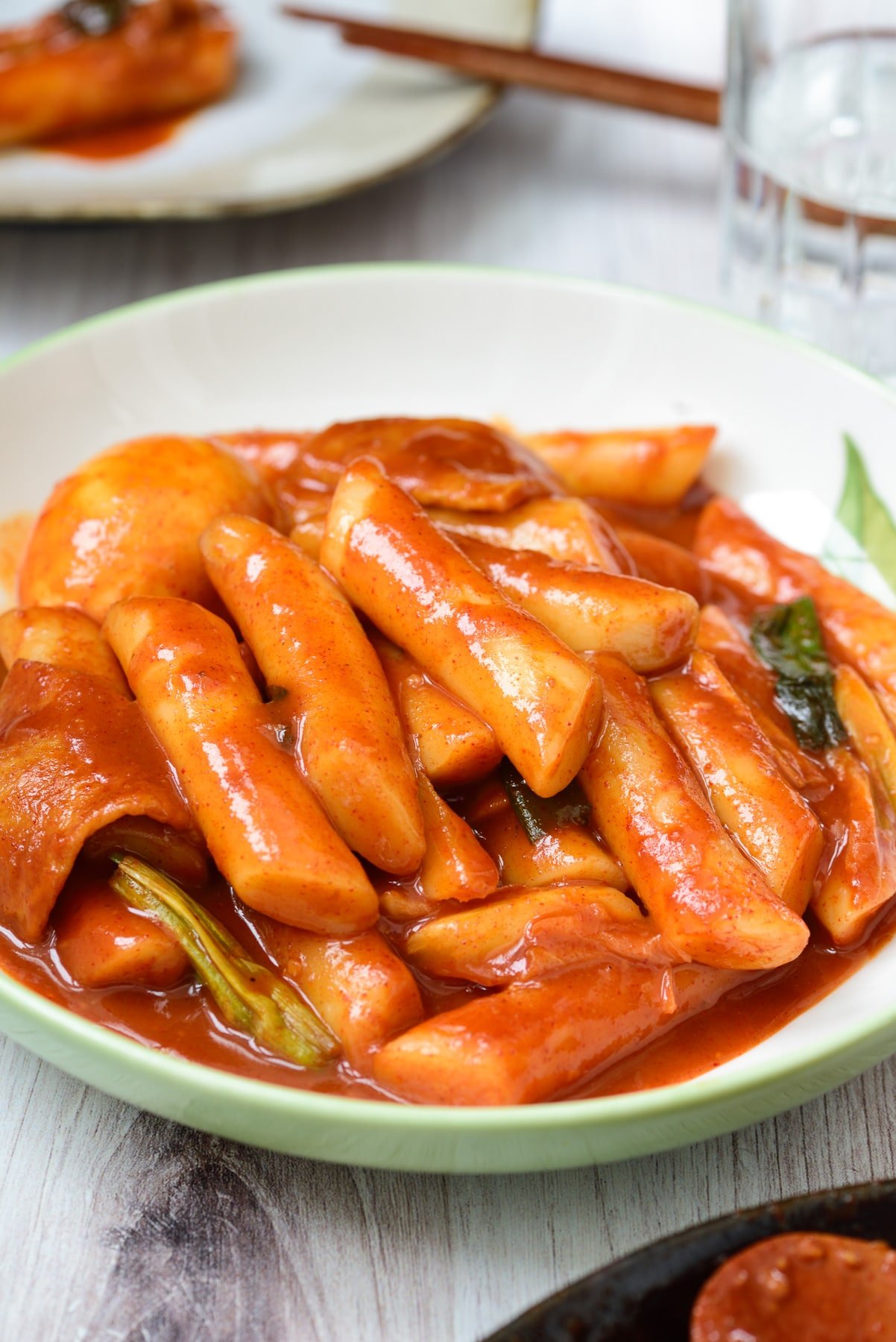
Chewy rice cakes in thick, fiery gochujang sauce with fish cakes. The undisputed king of Korean street food — sweet, spicy, impossibly chewy.
Nutrition & Info
Allergen Warnings
Equipment Needed
Presentation Guide
Vessel: shallow bowl
Garnishes: sliced scallions, sesame seeds, boiled egg
Accompaniments: fish cakes, instant noodles
Instructions
-
1
Soak the rice cakes in warm water for ten minutes to soften them slightly, then drain well. If using frozen rice cakes, allow them to thaw completely at room temperature before proceeding.
-
2
Prepare the broth by simmering five dried anchovies and a ten-centimetre piece of dried kelp in two cups of water for fifteen minutes over medium heat. Strain out the solids and reserve the clear broth.
-
3
In a small bowl, combine the gochujang, gochugaru, soy sauce, sugar, and minced garlic, stirring until the paste is smooth and all the ingredients are evenly incorporated into a thick sauce.
-
4
Pour the anchovy broth into a wide shallow pan over medium-high heat and bring it to a boil. Stir in the prepared sauce mixture, whisking until it dissolves completely into the broth.
-
5
Add the drained rice cakes to the seasoned broth and cook for eight to ten minutes, stirring frequently with a spatula to prevent sticking, until the cakes become plump, chewy, and translucent around the edges.
-
6
Add the fish cake triangles and peeled hard-boiled eggs to the pan, cooking for three more minutes. The sauce should reduce to a thick, glossy coating that clings to each piece.
-
7
Scatter the scallion pieces over the top and give everything one final stir. Transfer to a hot stone pot or shallow serving dish and serve immediately while the rice cakes are still stretchy and tender.
Did You Know?
The original royal version was mild soy sauce — the spicy gochujang version was invented in the 1950s.
Chef's Notes
Equipment Tips
- shallow pan
- ladle
- chopsticks
Garnishing
sliced scallions, sesame seeds, boiled egg
Accompaniments
fish cakes, instant noodles
The Story Behind 떡볶이
### The Story
Tteokbokki's earliest form, called gungjung tteokbokki, dates to the Joseon Dynasty (1392-1897), described in the late 19th-century cookbook Siuijeonseo as rice cakes stir-fried with sirloin beef, sesame oil, soy sauce, and vegetables -- a savory, mild dish reserved for royalty. The spicy version beloved today was born by accident in 1953 when Ma Bok-rim, while helping at her father-in-law's Korean-Chinese restaurant, dropped a rice cake into a bowl of noodles with sauce. Intrigued by the combination, she experimented and discovered that gochujang (fermented red chili paste) was the ideal sauce. She opened Grandma Ma Bok-rim's Tteokbokki, and by the 1970s and 1980s, the surrounding neighborhood had transformed into Sindang-dong Tteokbokki Town.
### On the Calendar
Tteokbokki is eaten year-round as a street snack or casual meal, with no specific seasonal or calendar association. It is a ubiquitous presence at Korean street food stalls, school zones, and night markets.
### Then & Now
From a single restaurant in Sindang-dong, spicy tteokbokki became Korea's most iconic street food. Modern variations include cheese tteokbokki, seafood tteokbokki, and rose (cream-based) tteokbokki. The dish has gained international popularity through Korean Wave (hallyu) cultural exports, appearing in K-dramas and mukbang videos that have introduced it to global audiences.
### Legacy
Tteokbokki's journey from royal court delicacy to democratic street food encapsulates Korea's culinary evolution -- a dish that crossed class boundaries and now crosses national ones.
More South Korean Dishes
 Medium
📜 Story
Medium
📜 Story
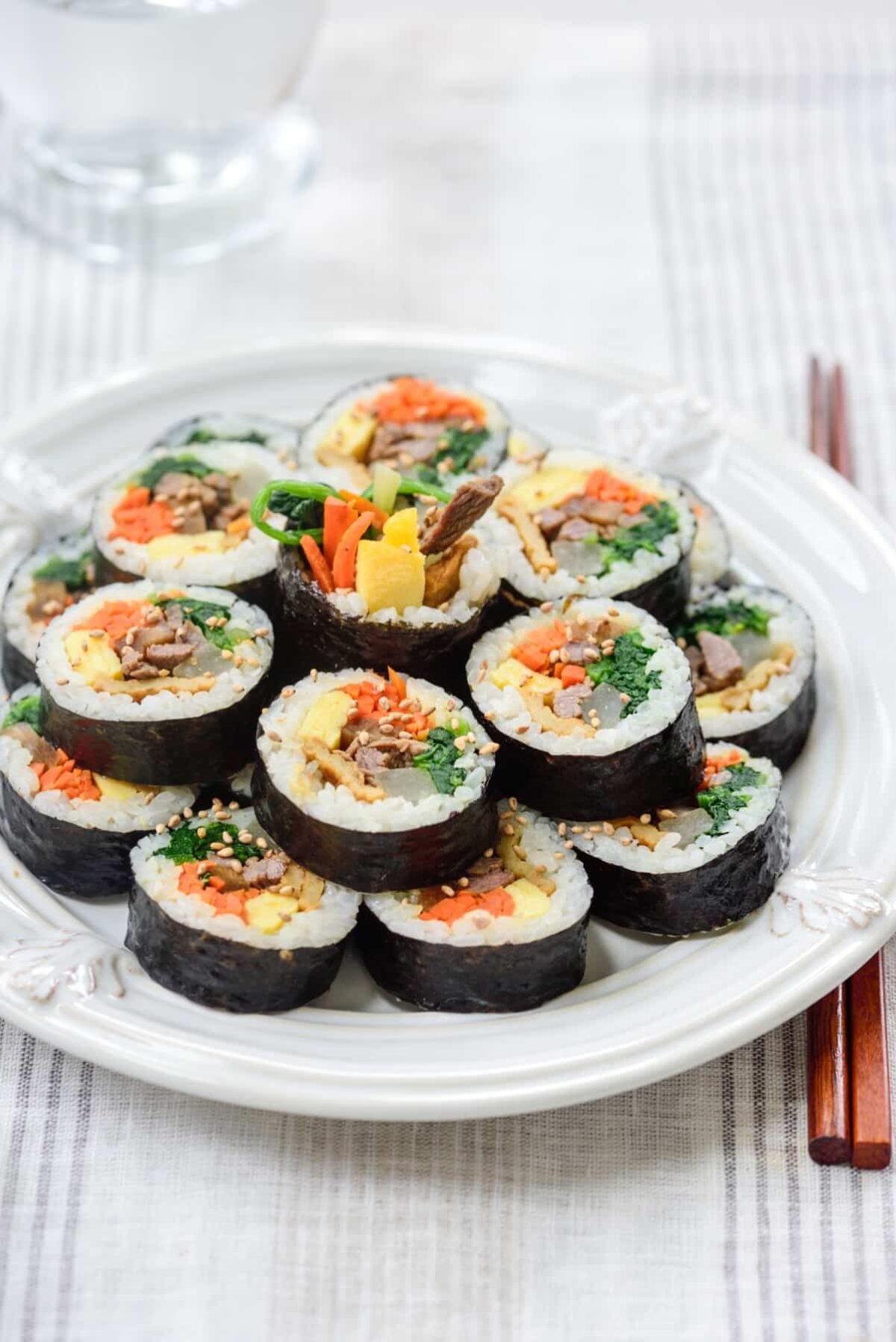
김밥
Korean Seaweed Rice Rolls
Picnics, packed lunches, everyday snack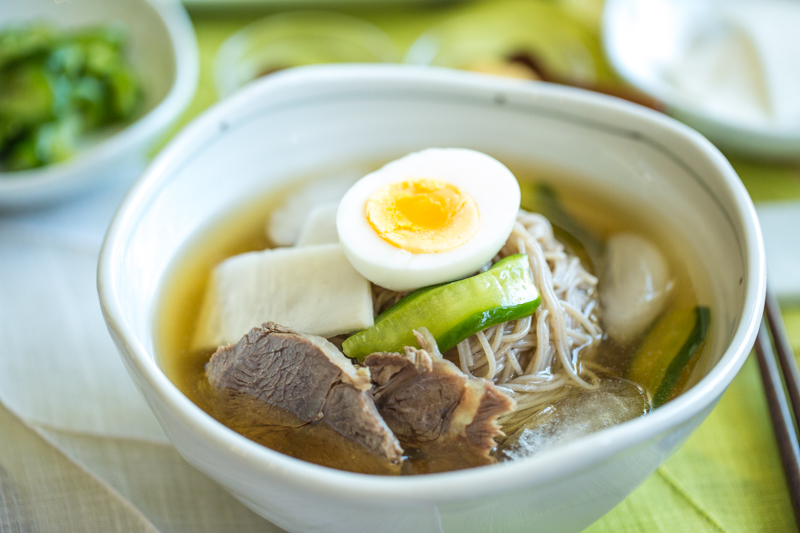 Medium
📜 Story
Medium
📜 Story
냉면
Cold Buckwheat Noodles
Summer, hot weather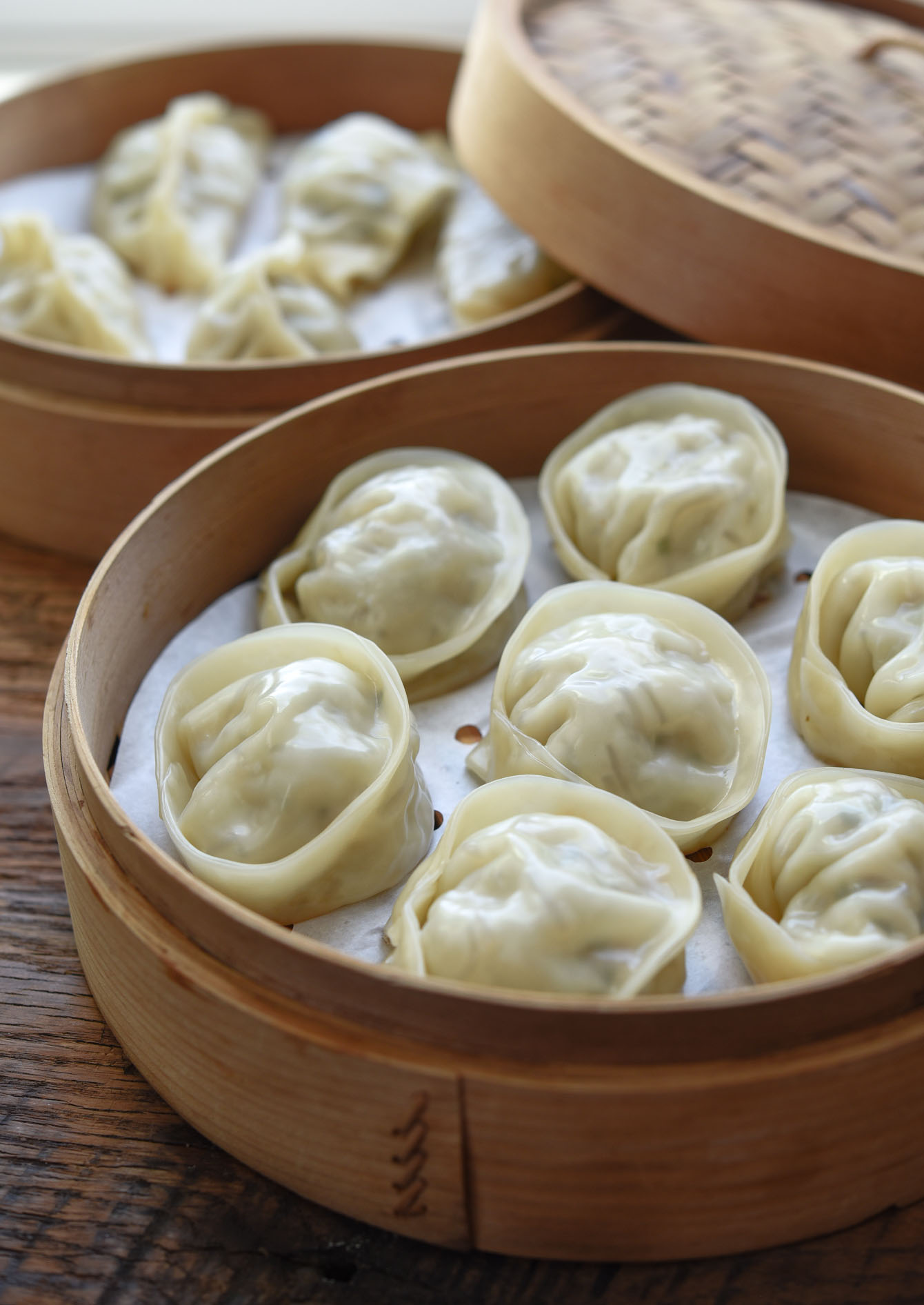 Medium
📜 Story
Medium
📜 Story
만두
Korean Dumplings
Seollal (Lunar New Year), everyday snack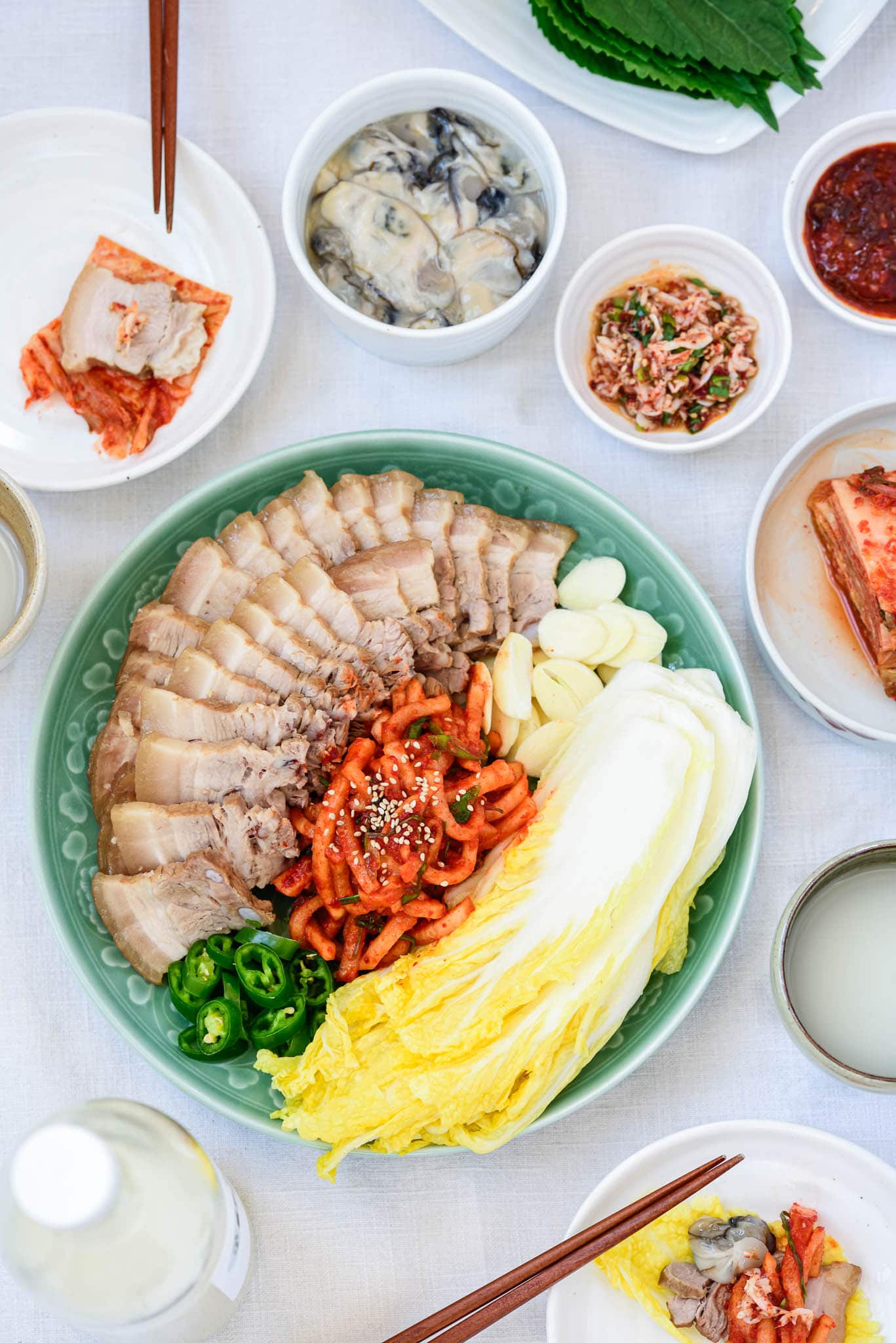 Medium
📜 Story
Medium
📜 Story
보쌈
Boiled Beef Lettuce Wraps
Dinner, celebration, kimjang (kimchi-making) season
Comments (0)
Log in to leave a comment.
No comments yet. Be the first to share your thoughts!