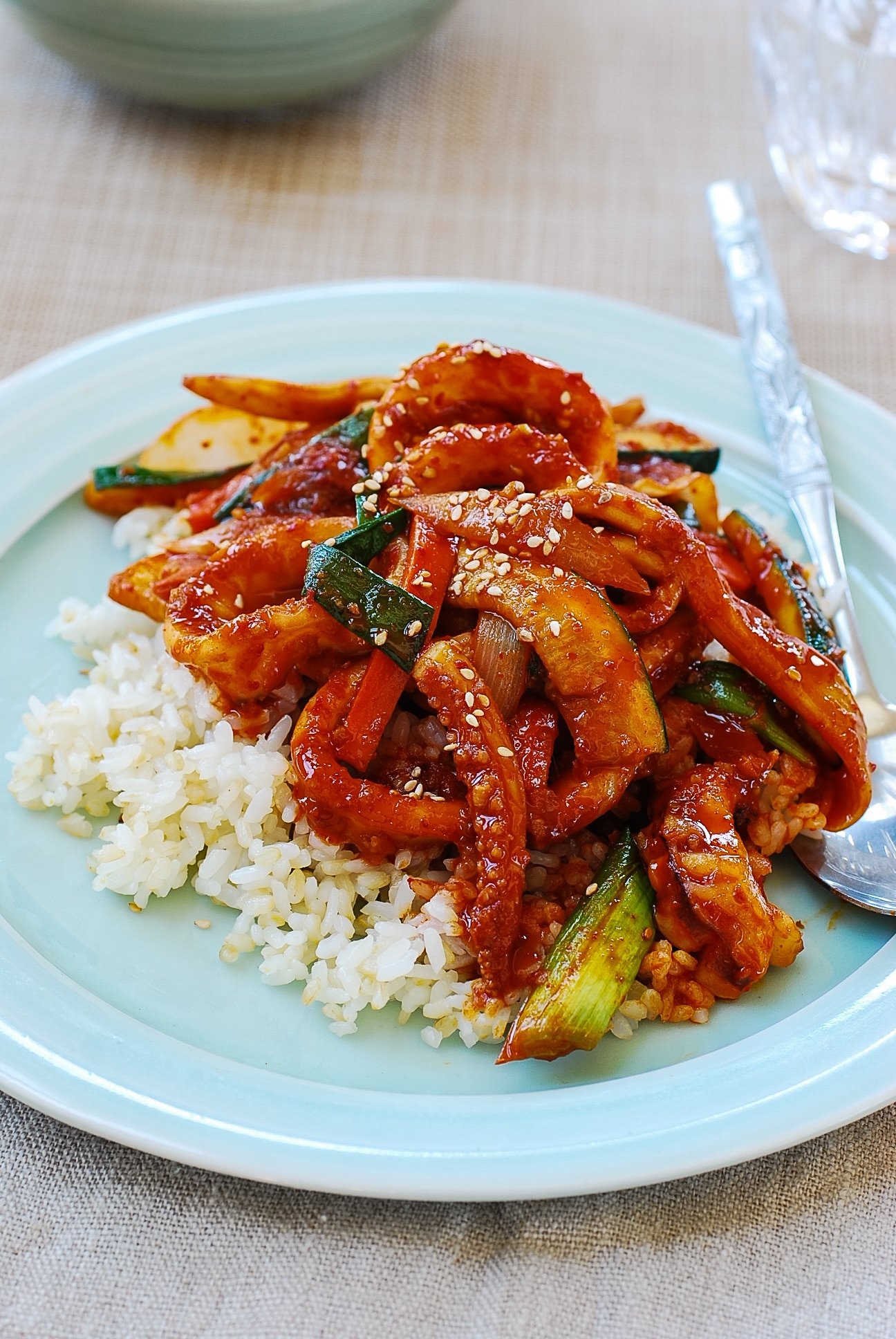
Tender squid rings and tentacles flash-fried with vegetables in a fiery gochujang-gochugaru sauce, the char of the wok adding smoky depth to every caramelized bite.
Nutrition & Info
Allergen Warnings
Equipment Needed
Presentation Guide
Vessel: hot plate
Garnishes: sesame seeds, sliced green onion
Accompaniments: steamed rice, cold beer or soju
Instructions
-
1
Score the squid bodies in a crosshatch pattern for even cooking and beautiful presentation, then cut into 5cm pieces.
-
2
Mix gochujang, gochugaru, soy sauce, sugar, garlic, and rice wine into a sauce.
-
3
Heat vegetable oil in a wok over the highest heat until smoking. Add squid and sear for 1 minute without stirring.
-
4
Add onion and carrot, stir-fry for 2 minutes.
-
5
Pour in the sauce and toss everything together vigorously for 2 minutes.
-
6
Add zucchini and green onions, cook 1 more minute until just wilted.
-
7
Finish with sesame oil, plate, and sprinkle with sesame seeds. Serve immediately with steamed rice.
Did You Know?
The crosshatch scoring technique is not just decorative — it helps the squid cook evenly, curl attractively, and hold more sauce in its grooves.
Chef's Notes
Equipment Tips
- wok or large skillet
- sharp knife
Garnishing
sesame seeds, sliced green onion
Accompaniments
steamed rice, cold beer or soju
The Story Behind 오징어볶음
Ojingeo-bokkeum became a beloved Korean home-cooked dish and anju (drinking snack) in the 20th century. Korea is one of the world's largest consumers of squid, and this dish showcases the Korean talent for transforming affordable seafood into intensely flavored cuisine. It is a staple of pojangmacha (Korean street food tents) and casual eateries.
More South Korean Dishes
 Medium
📜 Story
Medium
📜 Story
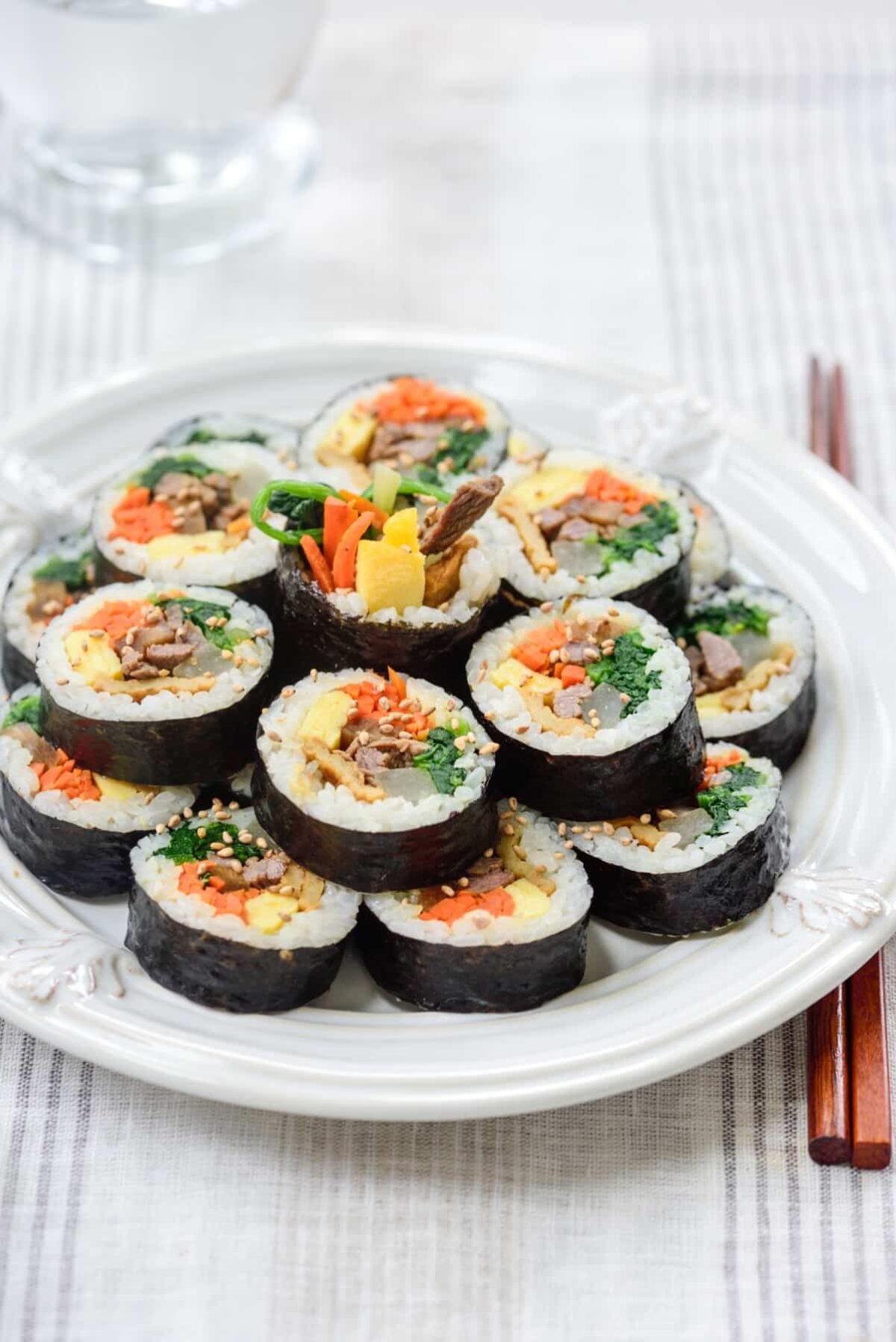
김밥
Korean Seaweed Rice Rolls
Picnics, packed lunches, everyday snack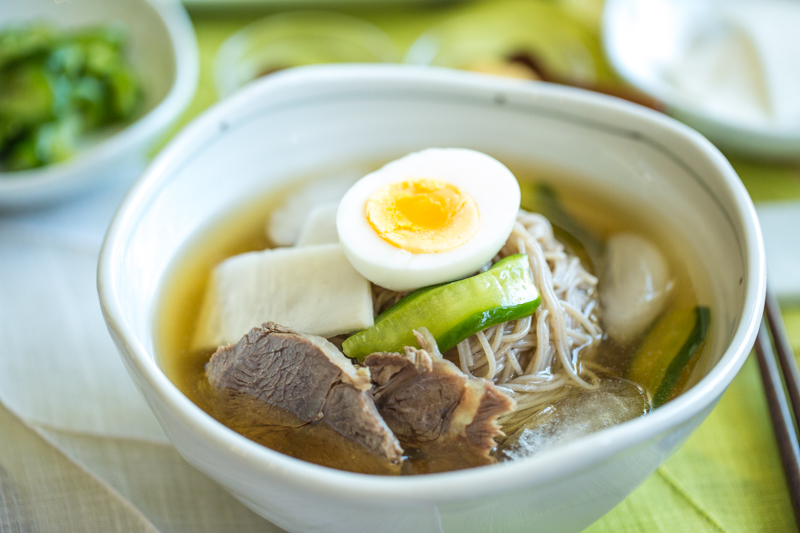 Medium
📜 Story
Medium
📜 Story
냉면
Cold Buckwheat Noodles
Summer, hot weather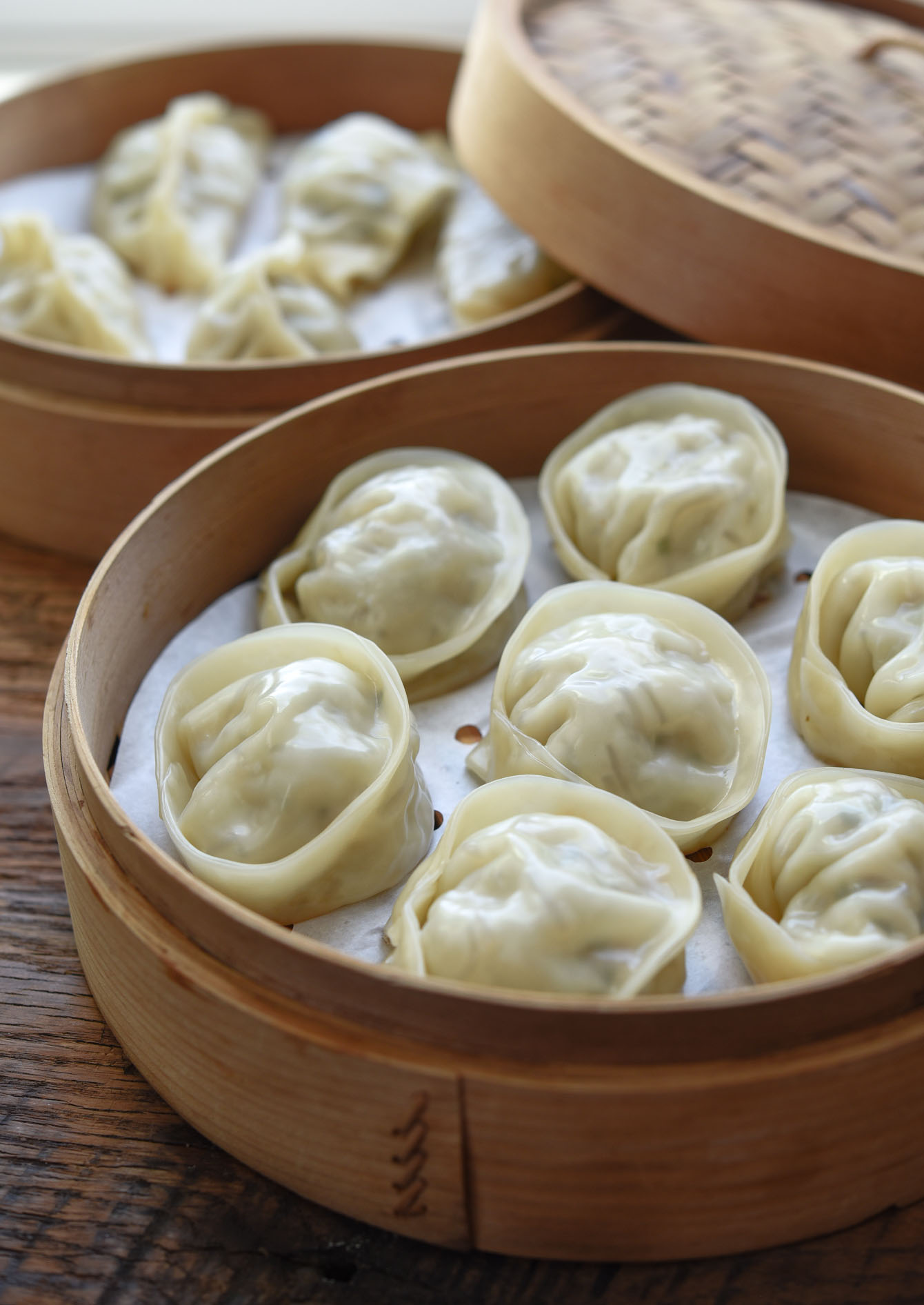 Medium
📜 Story
Medium
📜 Story
만두
Korean Dumplings
Seollal (Lunar New Year), everyday snack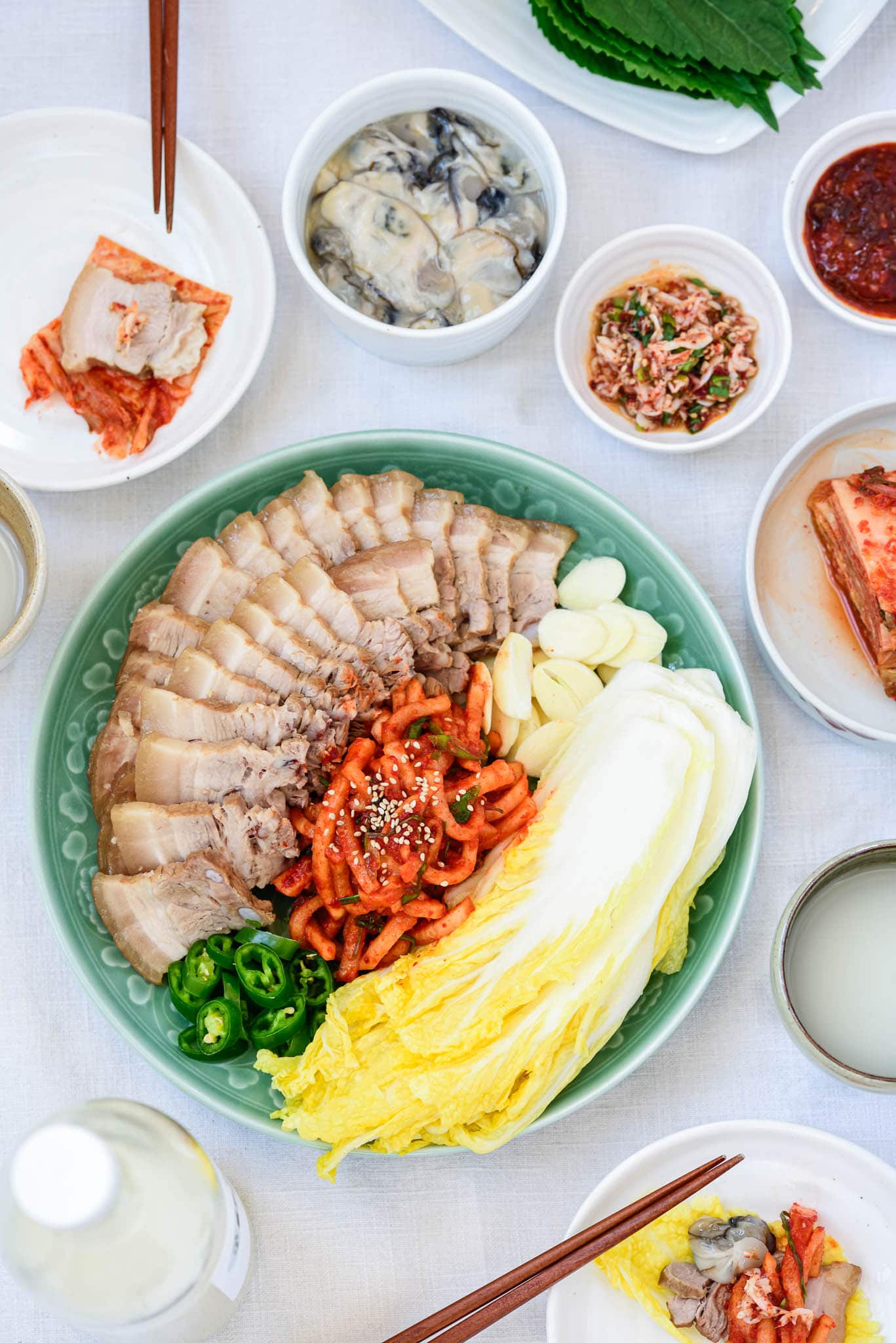 Medium
📜 Story
Medium
📜 Story
보쌈
Boiled Beef Lettuce Wraps
Dinner, celebration, kimjang (kimchi-making) season
Comments (0)
Log in to leave a comment.
No comments yet. Be the first to share your thoughts!