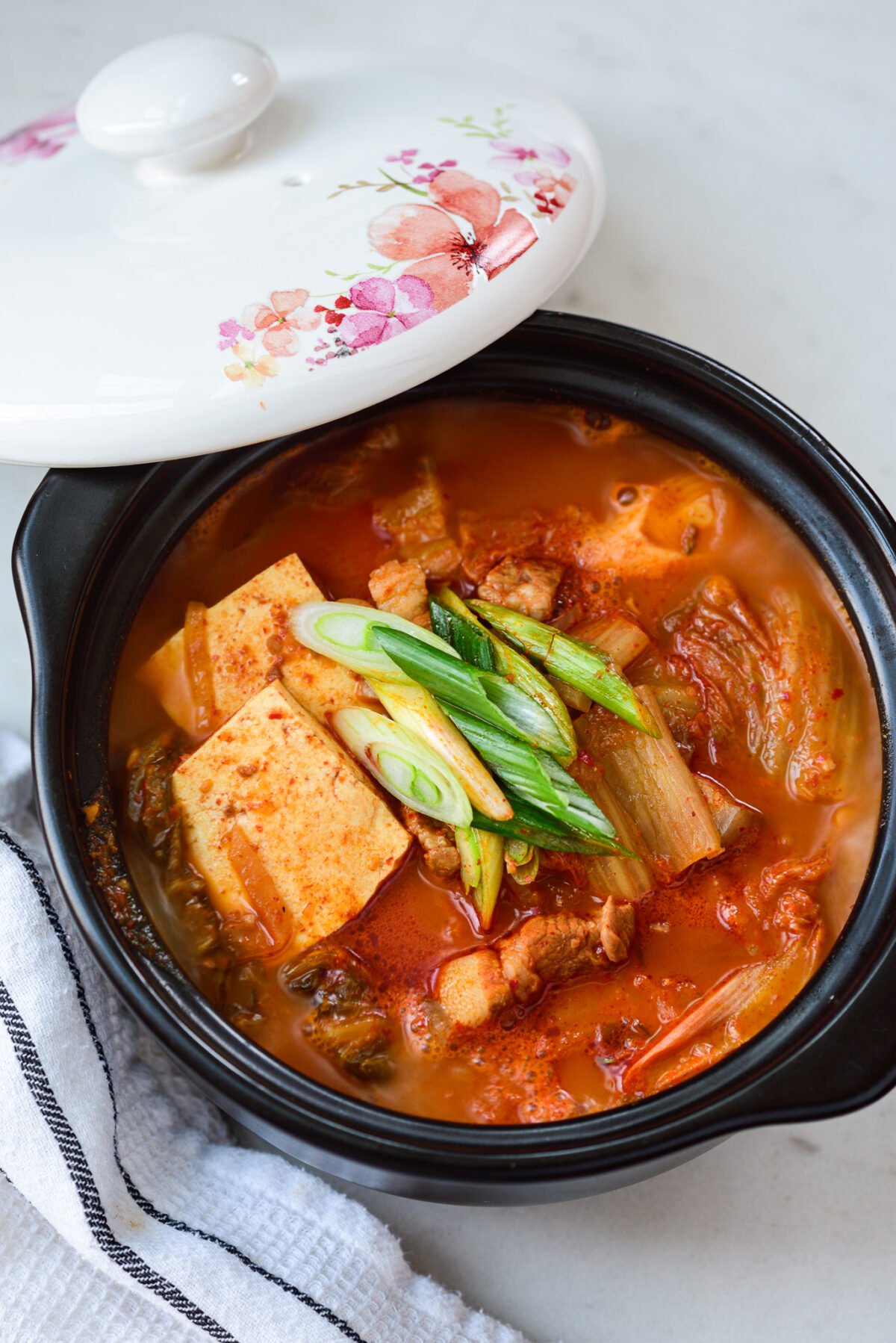
Fiery, bubbling stew of fermented kimchi, seafood, and tofu arriving at the table still boiling. Uses seafood instead of traditional meat.
Nutrition & Info
Allergen Warnings
Equipment Needed
Presentation Guide
Vessel: bubbling earthenware pot
Garnishes: sliced scallions, tofu cubes
Accompaniments: steamed rice, banchan
Instructions
-
1
Heat the sesame oil in a heavy-bottomed pot or Korean earthenware ttukbaegi over medium heat, add the chopped aged kimchi with a couple tablespoons of its brine, and saute for five minutes until the kimchi softens slightly and the edges begin to caramelize.
-
2
Add the sliced onion and minced garlic to the pot, stir to combine with the kimchi, then add the gochugaru and gochujang, mixing everything together for two minutes until the spices coat the kimchi evenly and the paste dissolves into the mixture.
-
3
Pour in the anchovy or kelp broth, bring to a full rolling boil over high heat, then reduce to a steady simmer and cook for ten minutes to allow the fermented kimchi and broth to meld into a deeply savory, tangy base.
-
4
Add the clams first since they take the longest to cook, simmering for three minutes until they begin to open, then add the shrimp and squid and cook for three to four more minutes until the shrimp are pink and the squid is just tender.
-
5
Gently slide the tofu cubes into the bubbling stew, being careful not to break them, season with fish sauce and sugar, then simmer for five more minutes until the tofu is heated through and has absorbed the fiery, funky broth flavors.
-
6
Add the scallion pieces in the last minute of cooking, and serve the jjigae still bubbling vigorously in the pot directly at the table alongside steamed white rice, as this stew is meant to be eaten piping hot while it continues to simmer.
Did You Know?
Uses seafood instead of pork belly. Koreans say kimchi jjigae tastes best with 2-3 month old kimchi.
Chef's Notes
Equipment Tips
- earthenware pot (ttukbaegi)
- ladle
- cutting board
Garnishing
sliced scallions, tofu cubes
Accompaniments
steamed rice, banchan
The Story Behind 김치찌개
Kimchi jjigae developed during the mid-Joseon period, approximately 300-400 years ago, when chili peppers first arrived in Korea and kimchi evolved into the spicy fermented preparation known today. The dish arose from practical necessity: as kimchi aged and became increasingly sour, Koreans discovered that cooking it with chicken and other ingredients transformed the acidity into a rich, complex stew. During and after the Korean War, when resources were scarce, kimchi jjigae became a symbol of sustenance and survival, as its ingredients were affordable and readily available yet provided rich nutrition.
Kimchi jjigae is arguably the most quintessential everyday Korean dish, a direct expression of Korea's fermentation philosophy where nothing is wasted and flavors only improve with time. The dish represents home, warmth, and Korean resilience: during times of hardship, a pot of kimchi jjigae could feed a family with minimal ingredients. It is always served communally, with everyone eating from the same bubbling pot, reflecting the Korean value of sharing (jeong). The quality of the stew depends entirely on the quality of the kimchi, which ties it back to the family's kimjang tradition.
More South Korean Dishes
 Medium
📜 Story
Medium
📜 Story
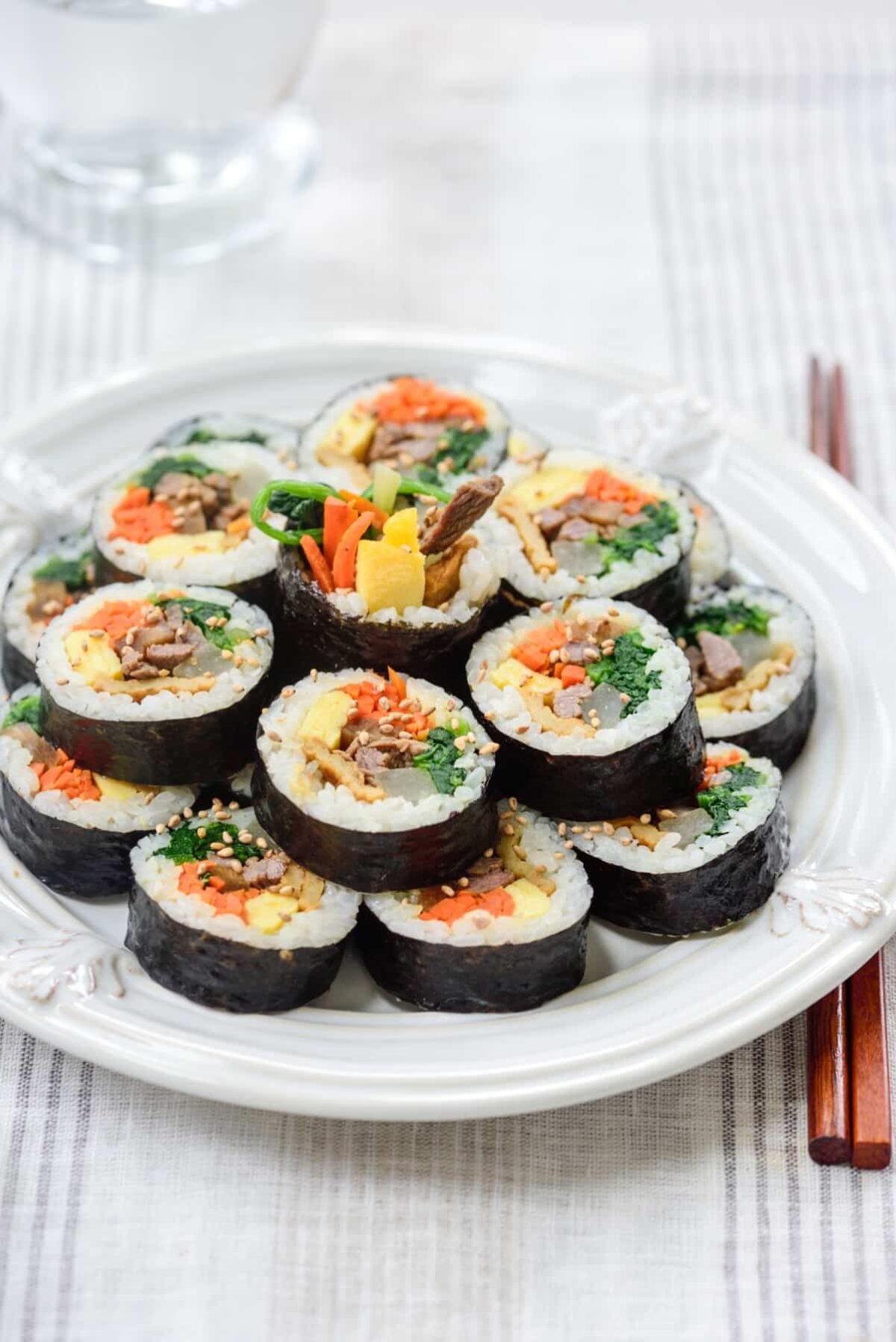
김밥
Korean Seaweed Rice Rolls
Picnics, packed lunches, everyday snack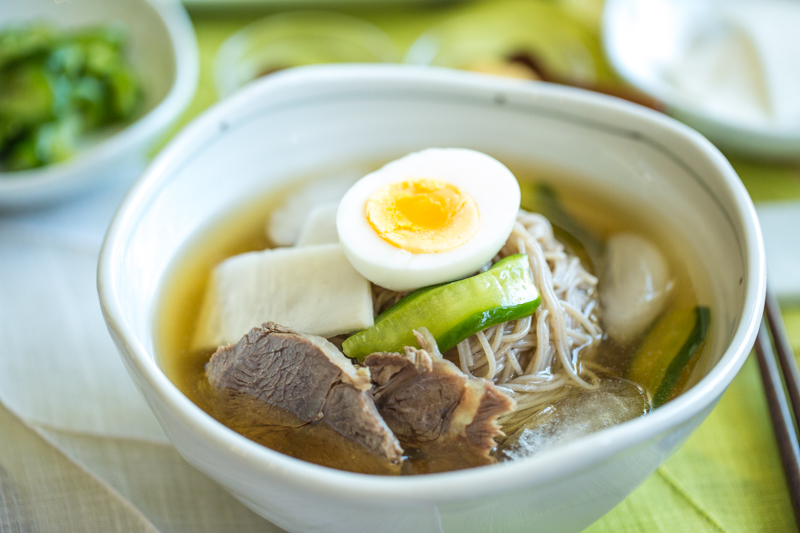 Medium
📜 Story
Medium
📜 Story
냉면
Cold Buckwheat Noodles
Summer, hot weather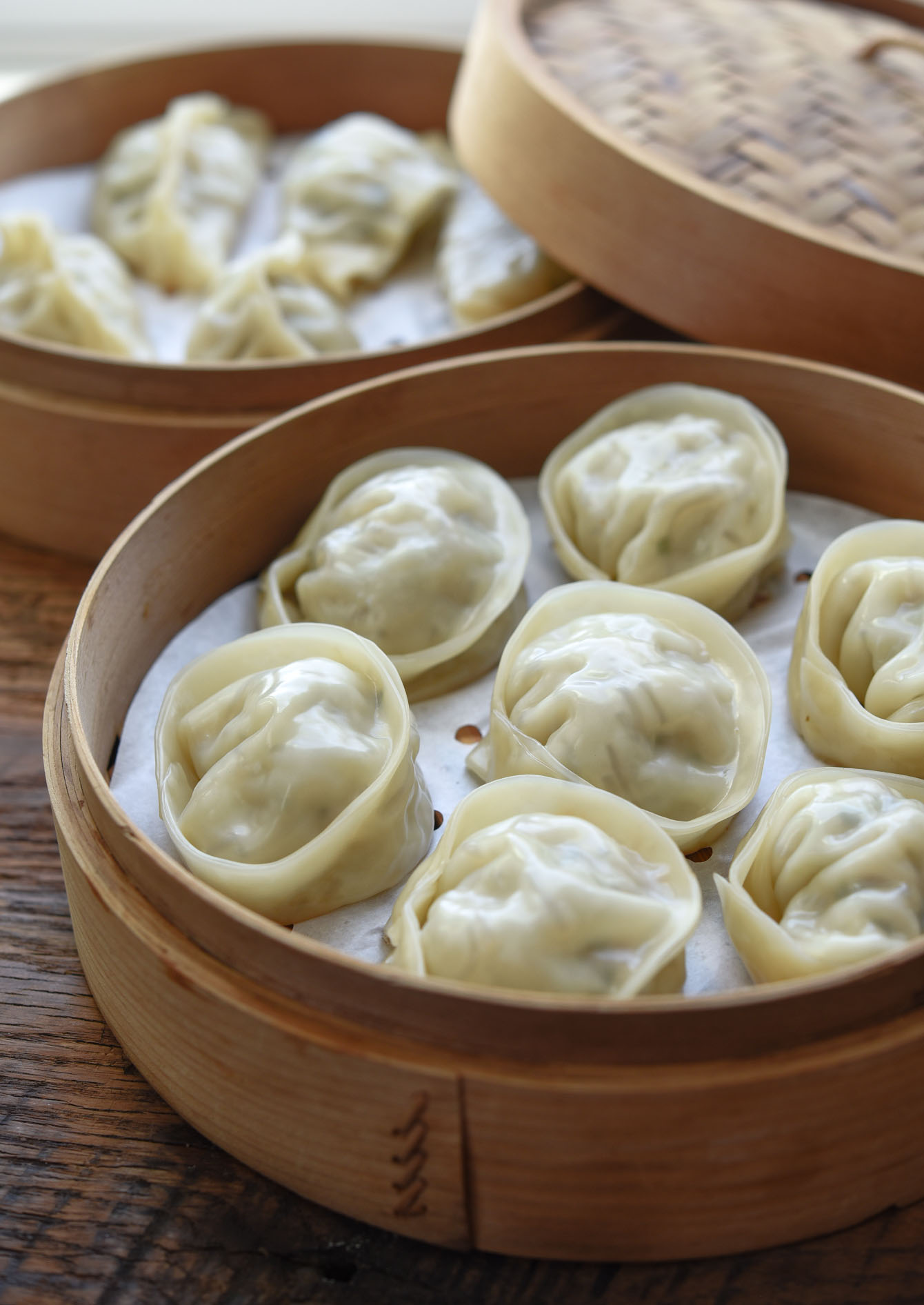 Medium
📜 Story
Medium
📜 Story
만두
Korean Dumplings
Seollal (Lunar New Year), everyday snack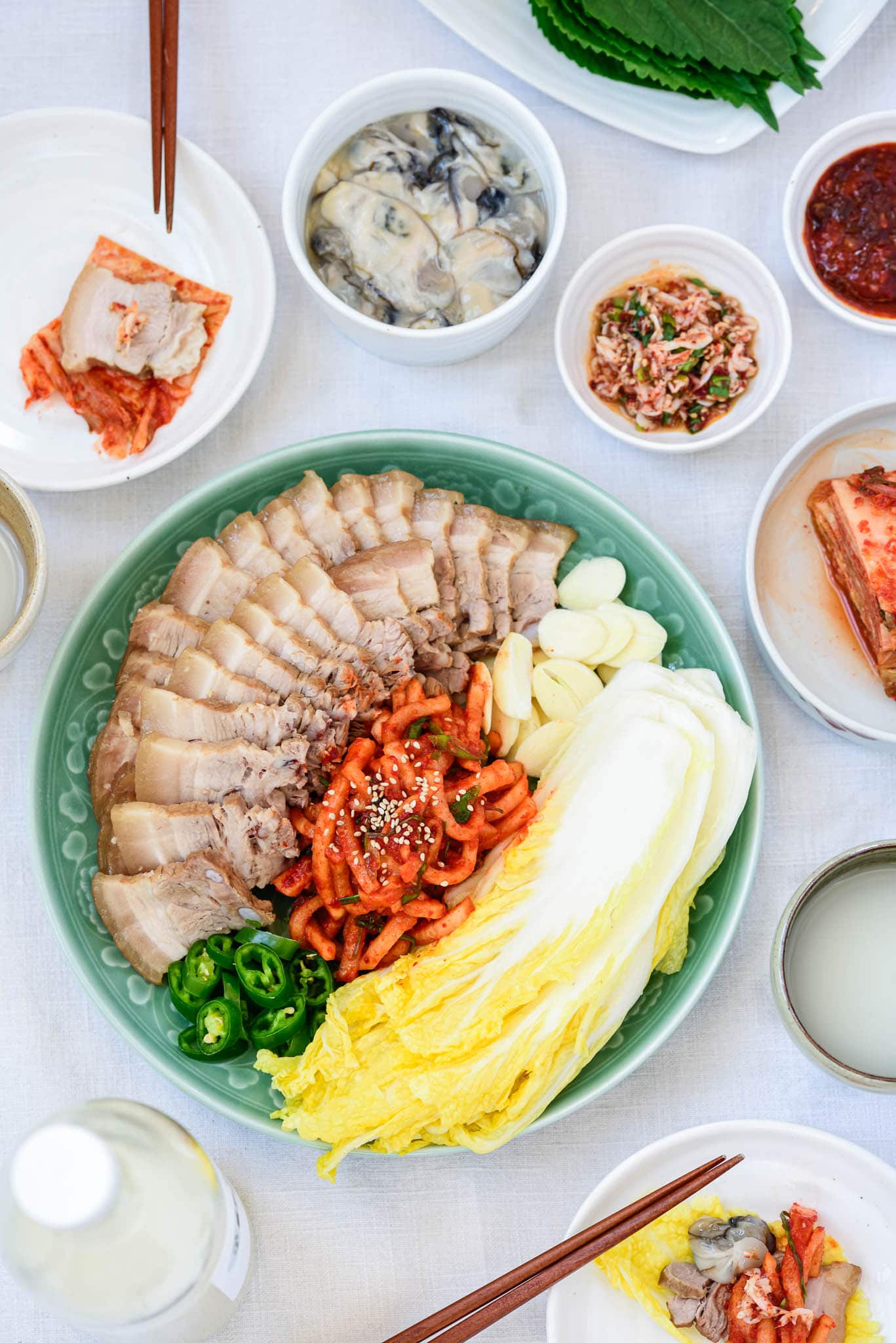 Medium
📜 Story
Medium
📜 Story
보쌈
Boiled Beef Lettuce Wraps
Dinner, celebration, kimjang (kimchi-making) season
Comments (1)
Log in to leave a comment.
The step-by-step instructions were so easy to follow. Perfect result!