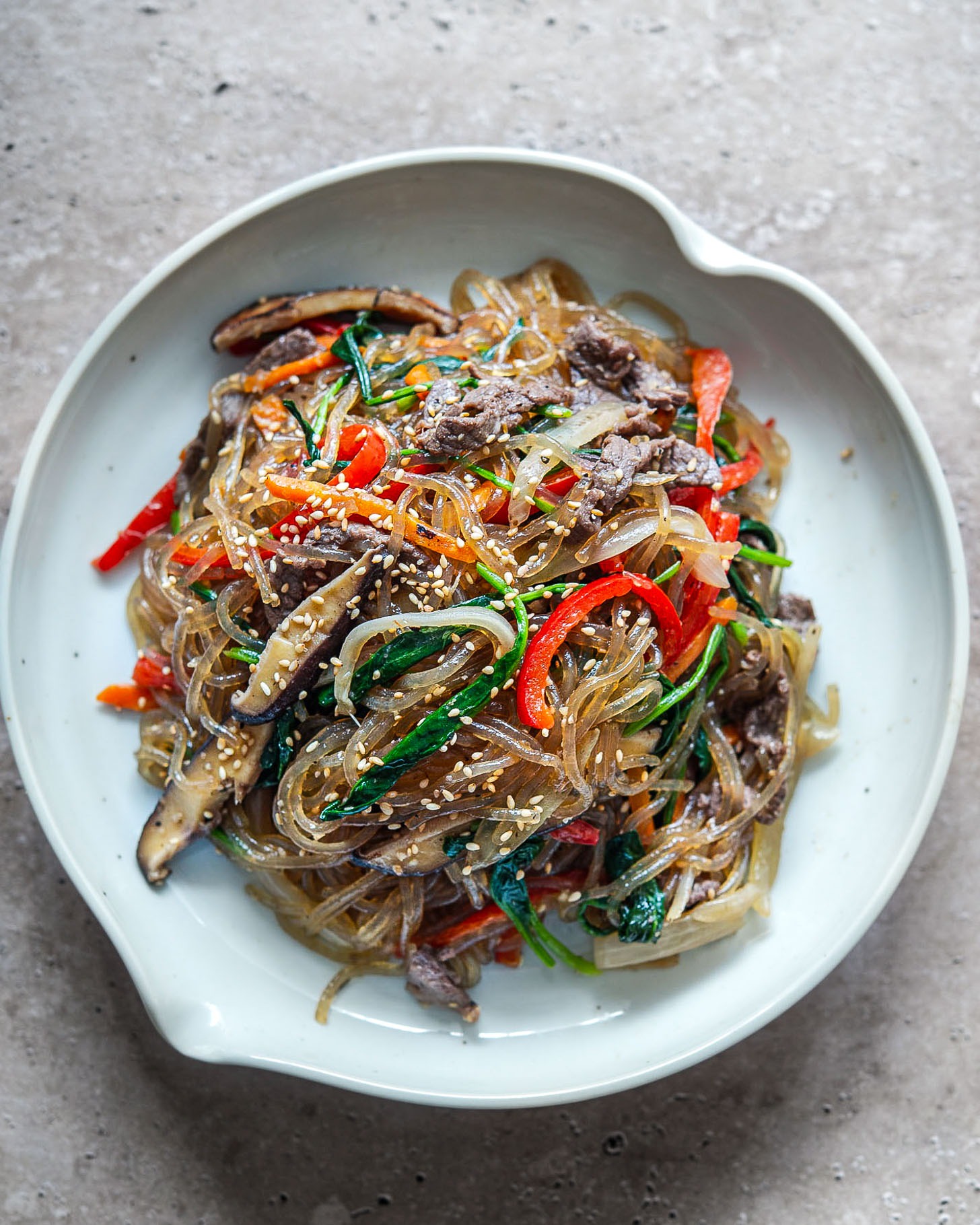
Glass sweet potato noodles stir-fried with rainbow vegetables and beef in sweet sesame-soy glaze. Slippery, chewy, and impossible to stop eating.
Nutrition & Info
Allergen Warnings
Equipment Needed
Presentation Guide
Vessel: large round plate
Garnishes: sesame seeds, egg strips
Accompaniments: steamed rice
Instructions
-
1
Marinate the beef strips in one tablespoon each of soy sauce, sugar, sesame oil, and minced garlic for thirty minutes, then cook in a hot skillet over high heat for two to three minutes until seared and caramelized, and set aside.
-
2
Cook the glass noodles in boiling water for six to seven minutes until chewy and translucent, drain immediately, rinse under cold water to stop cooking, then cut with kitchen scissors into manageable lengths and toss with one tablespoon each of soy sauce and sesame oil.
-
3
Blanch the spinach for thirty seconds in boiling water, shock in ice water, squeeze out all moisture, and season with a pinch of salt and sesame oil, then saute the julienned carrots and sliced onion separately for two minutes each until just tender.
-
4
Saute the soaked and sliced shiitake mushrooms and julienned bell pepper in a tablespoon of oil over high heat for two minutes each, seasoning lightly with salt, keeping each vegetable vibrant and slightly firm.
-
5
Combine all the prepared ingredients in a large, wide mixing bowl, add the remaining soy sauce, sugar, and sesame oil, then toss everything together gently using your hands or tongs until the noodles, vegetables, and beef are evenly coated and distributed.
-
6
Transfer the japchae to a large serving platter, garnish with toasted sesame seeds and thin strips of egg crepe made by cooking the separated yolks and whites into thin omelets and slicing them finely, then serve at room temperature as tradition dictates.
Did You Know?
Created for a 17th-century royal banquet — originally without noodles, just stir-fried vegetables.
Chef's Notes
Equipment Tips
- large skillet or wok
- pot
- tongs
Garnishing
sesame seeds, egg strips
Accompaniments
steamed rice
The Story Behind 잡채
### The Story
Japchae was first created in the early 17th century by Yi Chung (1568-1619) for a royal banquet honoring King Gwanghaegun during the Joseon Dynasty. According to the Veritable Records of the Joseon Dynasty, the king so enjoyed the dish that he rewarded Yi with a promotion equivalent to Secretary of the Treasury. Remarkably, the original japchae contained no noodles -- it was a stir-fried medley of vegetables and mushrooms including cucumbers, radishes, and shiitake. Glass noodles made from sweet potato starch were only introduced to Korea from China after a glass noodle factory opened in northern Korea in 1919, fundamentally transforming the dish into its modern form.
### On the Calendar
Japchae is one of Korea's essential celebration dishes, served at weddings, dol (first birthday parties), hwangap (sixtieth birthday celebrations), Chuseok, and Lunar New Year. It also appears regularly on everyday dinner tables.
### Then & Now
Modern japchae features sweet potato glass noodles stir-fried with julienned vegetables, beef, and a sweet soy sauce dressing, with each ingredient traditionally cooked separately to preserve its distinct flavor and texture before being combined. The dish has remained largely unchanged since the addition of noodles, though vegetarian and seafood variations have emerged.
### Legacy
Japchae's journey from a noodle-less royal creation to Korea's most beloved celebration dish demonstrates how a cuisine can absorb foreign ingredients while maintaining its essential character.
More South Korean Dishes
 Medium
📜 Story
Medium
📜 Story
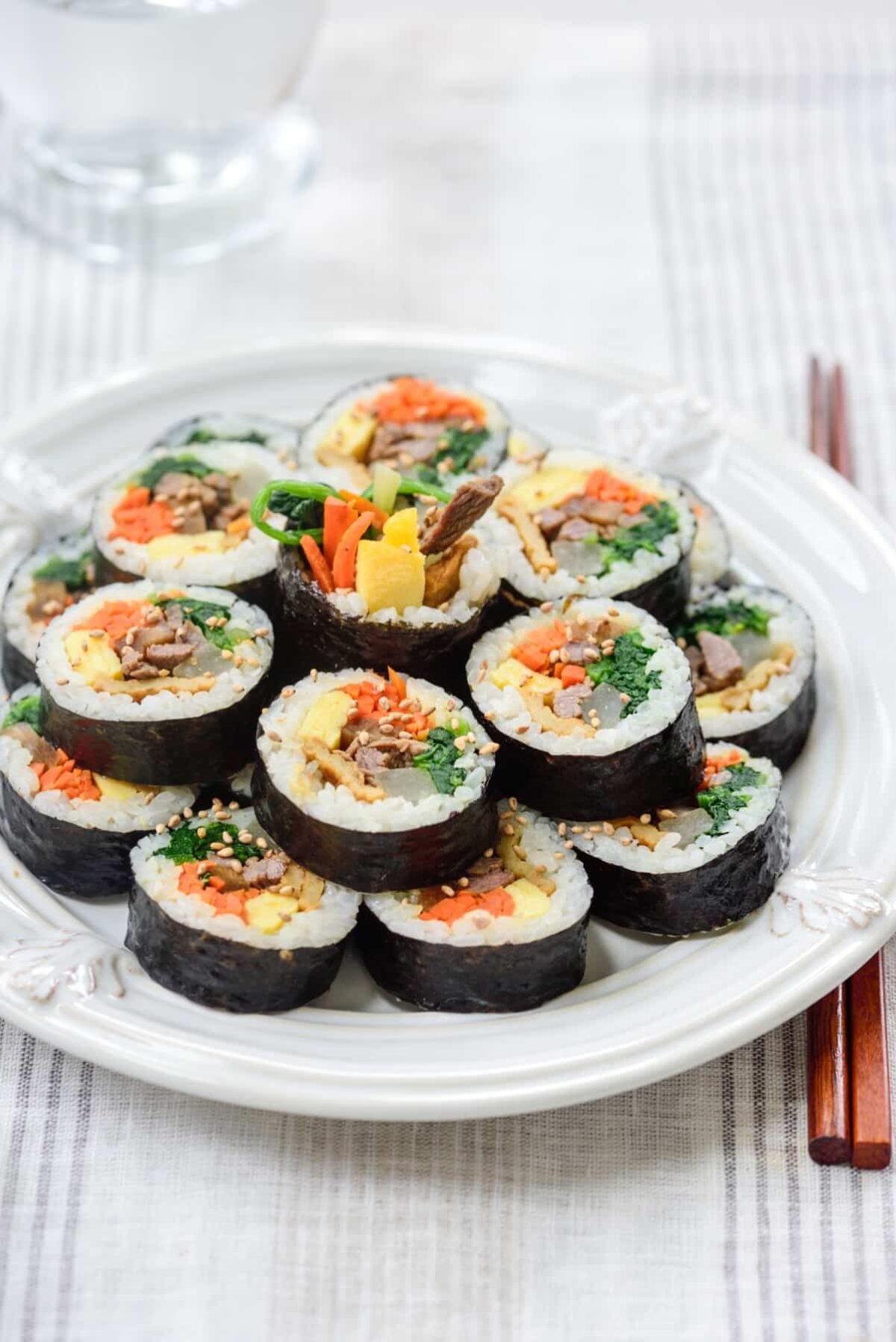
김밥
Korean Seaweed Rice Rolls
Picnics, packed lunches, everyday snack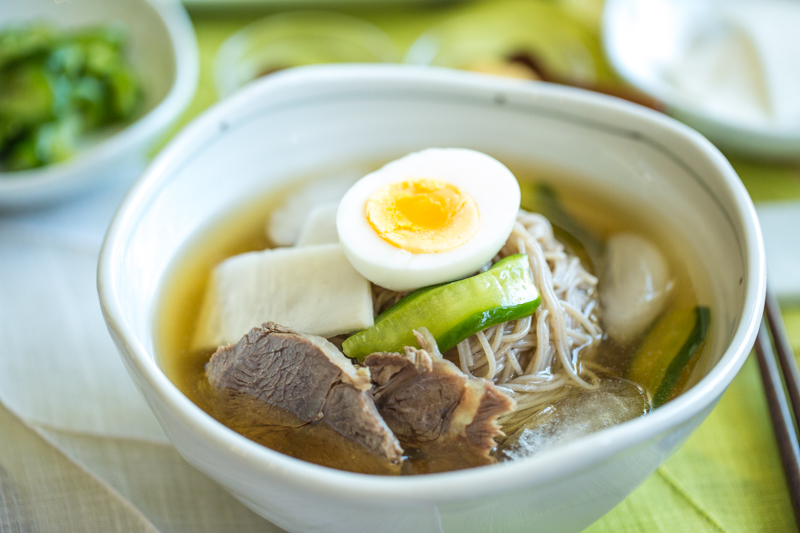 Medium
📜 Story
Medium
📜 Story
냉면
Cold Buckwheat Noodles
Summer, hot weather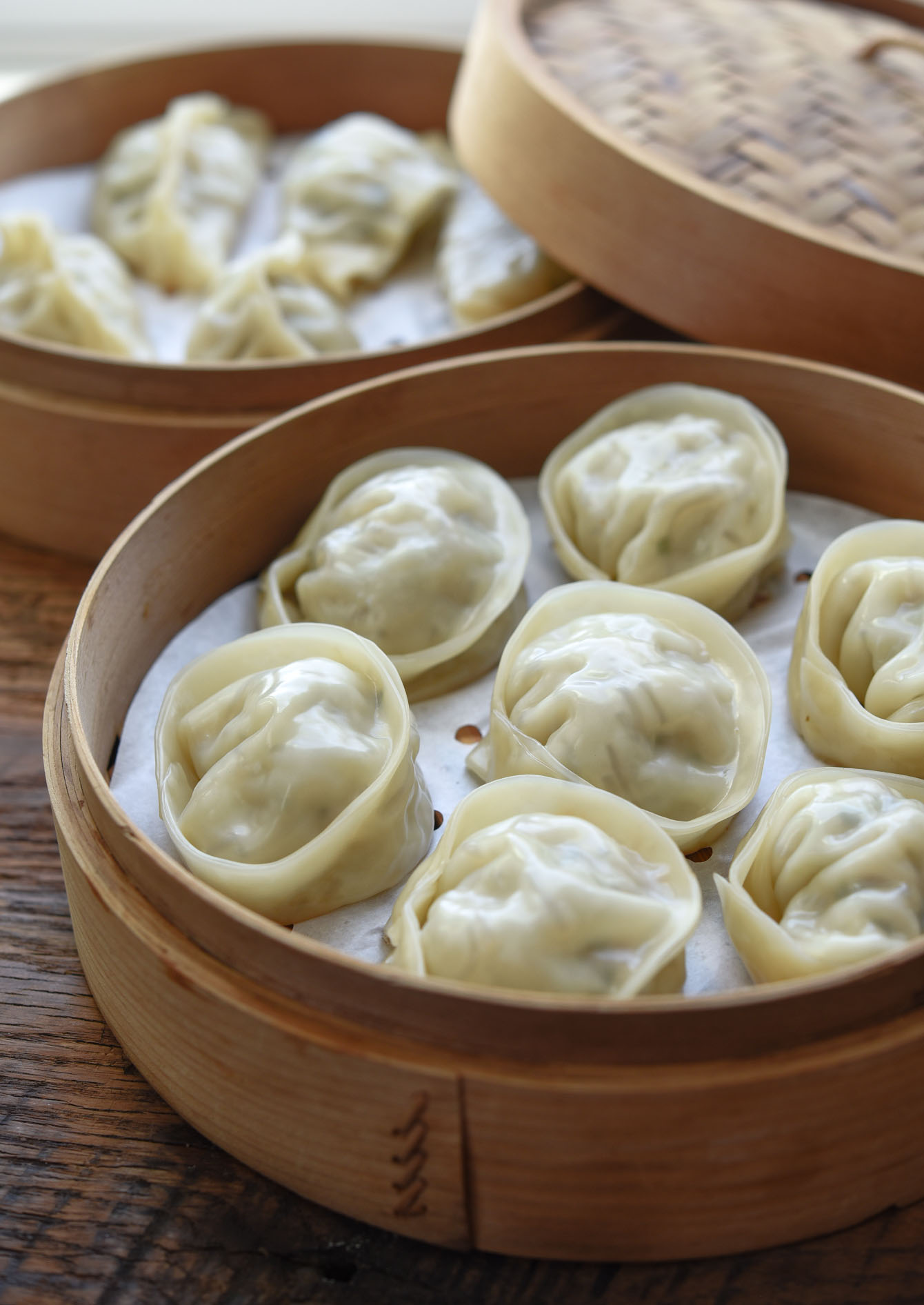 Medium
📜 Story
Medium
📜 Story
만두
Korean Dumplings
Seollal (Lunar New Year), everyday snack Medium
📜 Story
Medium
📜 Story
보쌈
Boiled Beef Lettuce Wraps
Dinner, celebration, kimjang (kimchi-making) season
Comments (0)
Log in to leave a comment.
No comments yet. Be the first to share your thoughts!