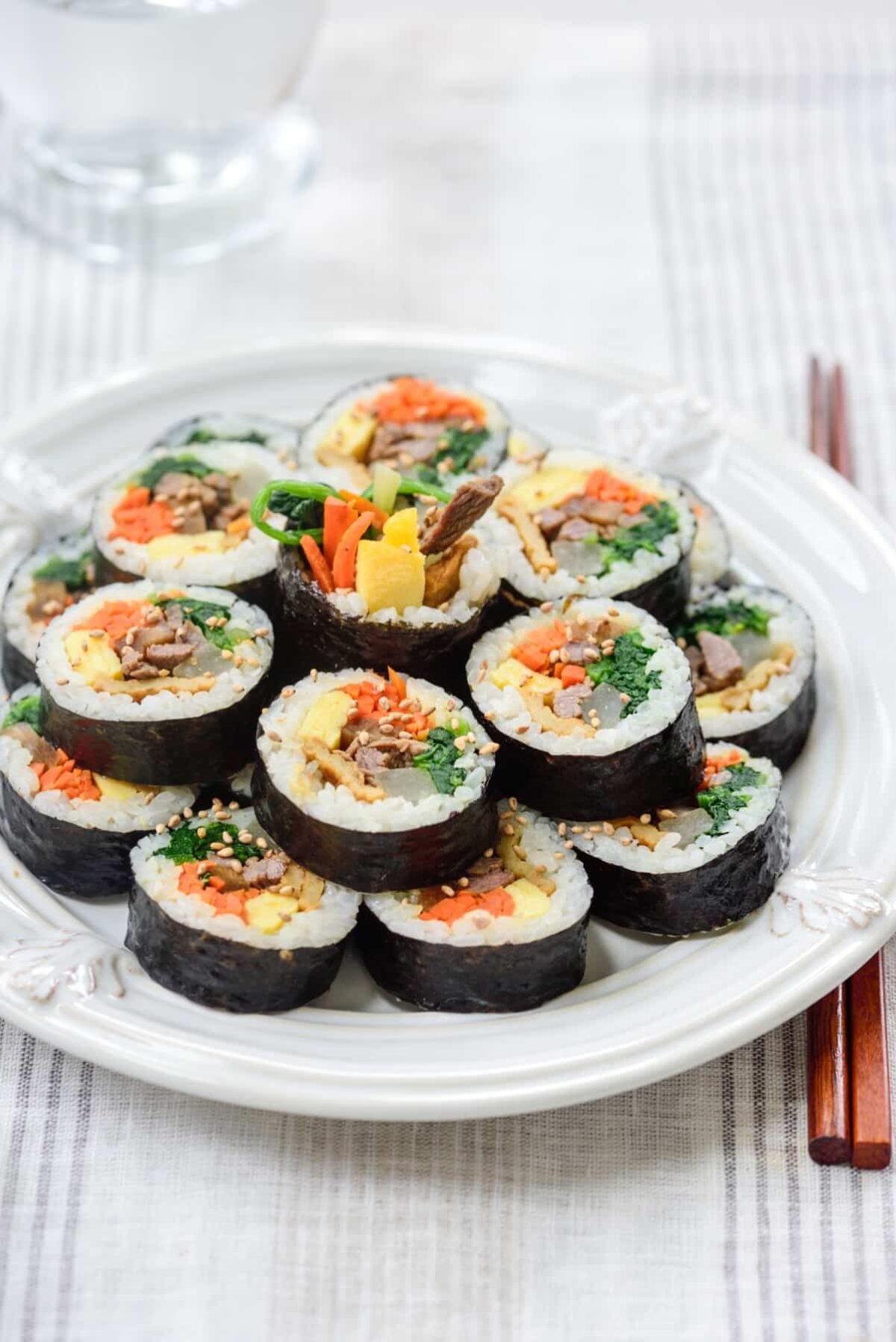
Tightly rolled cylinders of seasoned rice, colorful vegetables, egg, and beef wrapped in roasted seaweed, sliced into bite-size rounds that are as beautiful as they are portable.
Nutrition & Info
Allergen Warnings
Equipment Needed
Presentation Guide
Instructions
-
1
Season warm rice with sesame oil and salt. Marinate beef in soy sauce and sugar, then cook in a hot skillet.
-
2
Make thin egg sheets by pouring beaten egg into an oiled skillet, cooking flat like a crepe. Slice into strips.
-
3
Sauté julienned carrots with a pinch of salt until just tender. Blanch spinach briefly, squeeze dry, and season with sesame oil and salt.
-
4
Place a sheet of gim shiny-side down on a bamboo mat. Spread rice evenly over the lower two-thirds, leaving a 2cm border at the top.
-
5
Arrange fillings in a line across the center: beef, egg, carrot, spinach, cucumber, and pickled radish.
-
6
Roll tightly from the bottom using the bamboo mat, pressing firmly. Seal the edge with a dab of water.
-
7
Brush the outside of each roll with sesame oil, slice into 1.5cm rounds with a wet knife. Sprinkle with sesame seeds.
Did You Know?
Gimbap is the most popular picnic and school lunch food in Korea — nearly every Korean has childhood memories of their mother making gimbap for field trip day.
Chef's Notes
Equipment Tips
- bamboo rolling mat
- sharp knife
- rice cooker
Garnishing
sesame seeds, pickled ginger
Accompaniments
pickled radish, kimchi
The Story Behind 김밥
While seaweed-wrapped rice has ancient roots in Korean cuisine, the modern gimbap as we know it developed in the 20th century. It became the iconic portable Korean food, perfect for school lunches, picnics, and hiking. Unlike Japanese maki, gimbap rice is seasoned with sesame oil rather than vinegar, and fillings reflect distinctly Korean flavors.
Comments (0)
Log in to leave a comment.
No comments yet. Be the first to share your thoughts!