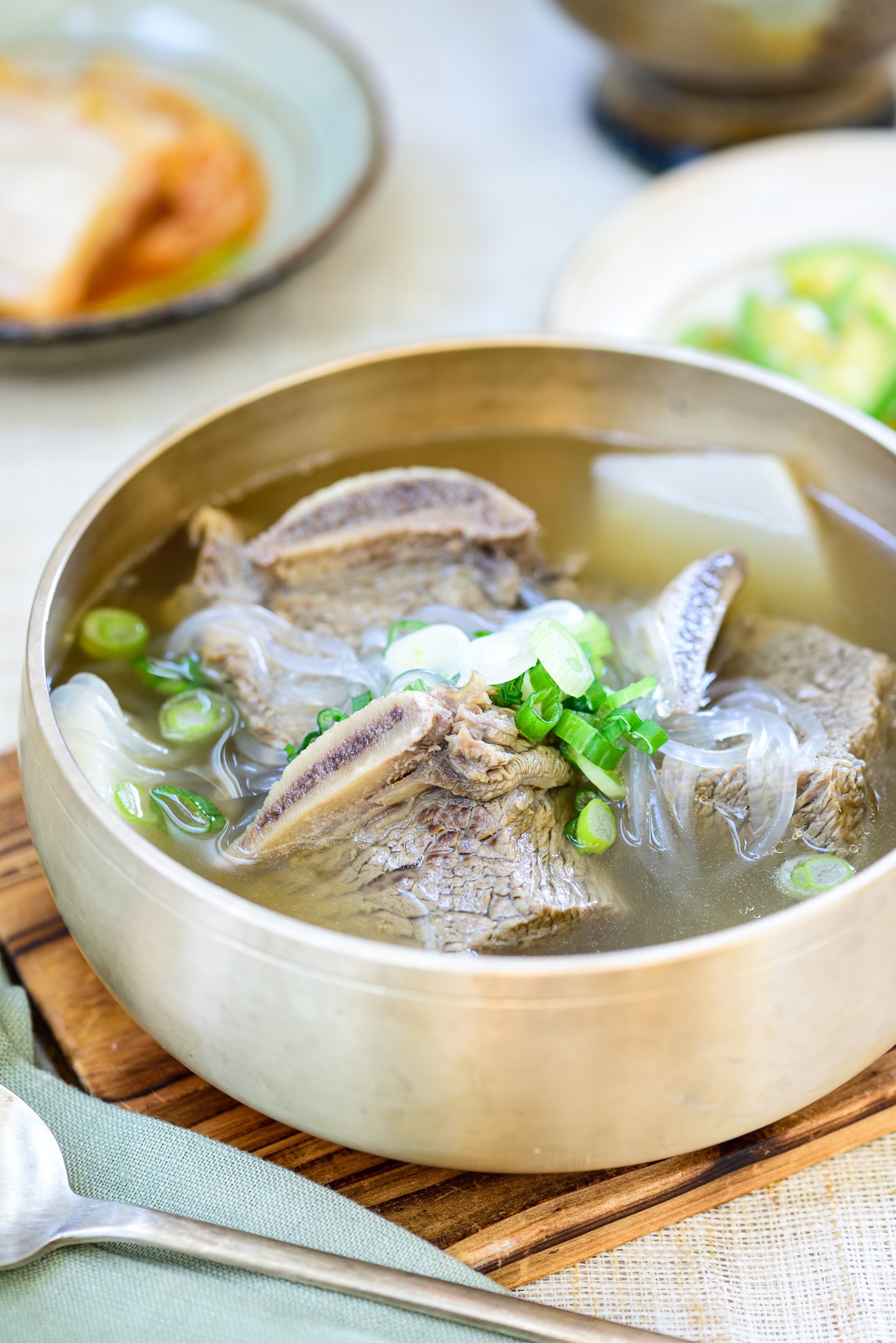
A clear, deeply beefy soup of slow-simmered short ribs with glass noodles and radish, the broth so pure and restorative it glistens like liquid gold.
Nutrition & Info
Allergen Warnings
Equipment Needed
Presentation Guide
Vessel: large ceramic bowl
Garnishes: egg strips, green onion, sesame oil
Accompaniments: steamed rice, kimchi, kkakdugi (cubed radish kimchi)
Instructions
-
1
Soak short ribs in cold water for 1 hour to draw out blood. Drain and rinse thoroughly.
-
2
Place ribs in a large pot, cover with fresh cold water. Bring to a boil, then drain and rinse ribs again to remove impurities.
-
3
Return ribs to a clean pot with 2L fresh water, onion, and garlic. Bring to a boil, then reduce to a gentle simmer.
-
4
Simmer for 2 hours, skimming foam and fat periodically, until the meat is tender and the broth is clear and flavorful.
-
5
Add radish cubes and cook for 20 more minutes until radish is translucent.
-
6
Add soaked glass noodles and soy sauce, cook for 5 minutes. Season with salt and pepper.
-
7
Make a thin egg sheet, slice into strips. Serve soup in bowls, garnish with egg strips, green onion, and a drop of sesame oil.
Did You Know?
Galbi-tang was traditionally served to welcome honored guests, with the size and quality of the ribs reflecting the host's respect for the visitor.
Chef's Notes
Equipment Tips
- large stock pot
- fine mesh strainer
- ladle
Garnishing
egg strips, green onion, sesame oil
Accompaniments
steamed rice, kimchi, kkakdugi (cubed radish kimchi)
The Story Behind 갈비탕
Galbi-tang is a treasured dish from the Joseon Dynasty, when beef was reserved for the aristocratic yangban class and special celebrations. The technique of blanching and slow-simmering to achieve a perfectly clear broth reflects the Korean culinary emphasis on purity and refinement. It remains a staple of Korean celebration meals, especially during Seollal (Lunar New Year) and Chuseok (harvest festival).
More South Korean Dishes
 Medium
📜 Story
Medium
📜 Story
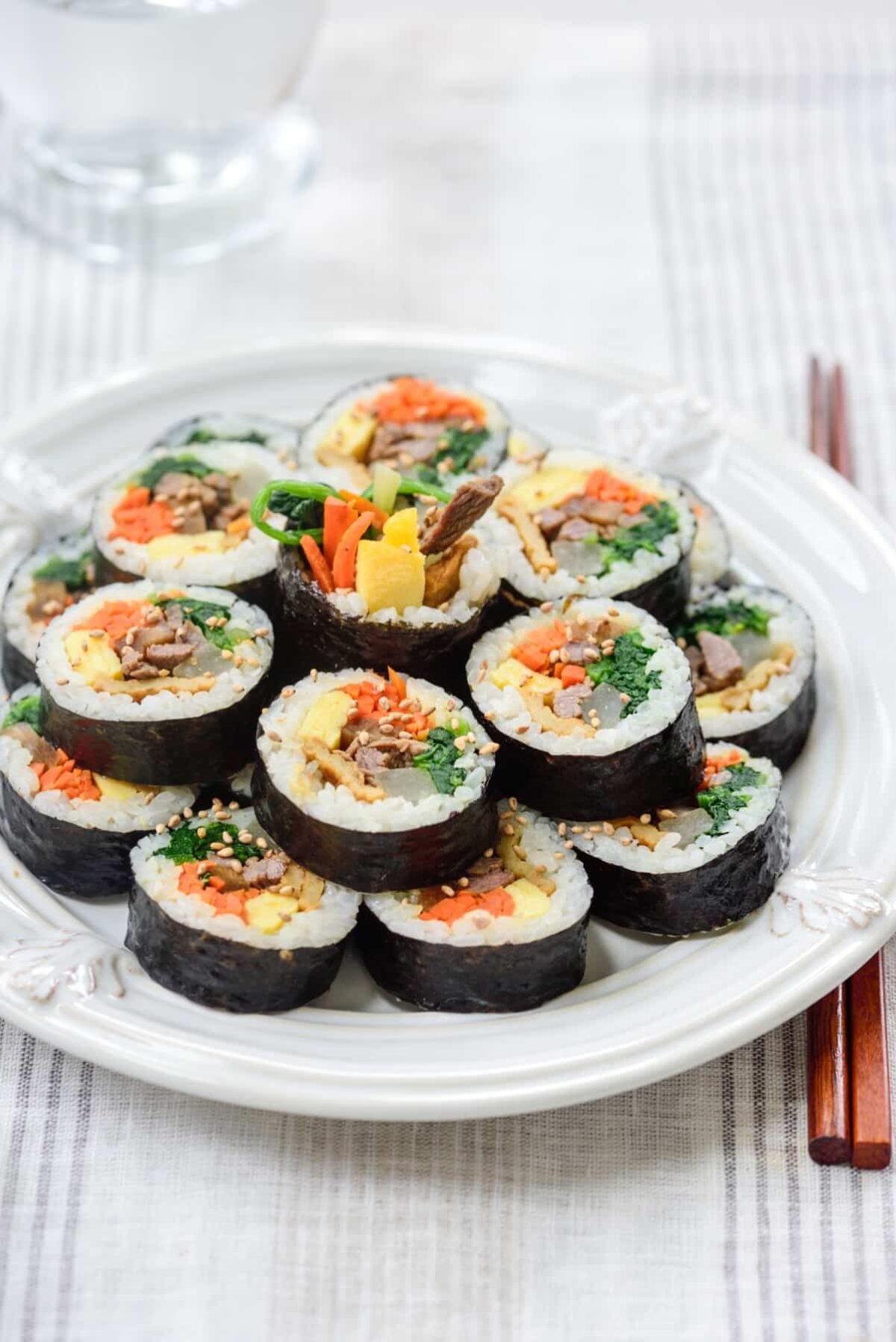
김밥
Korean Seaweed Rice Rolls
Picnics, packed lunches, everyday snack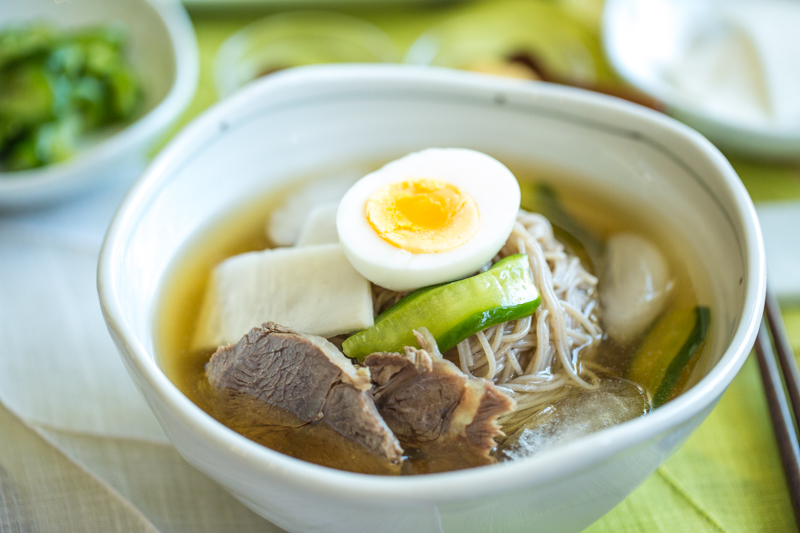 Medium
📜 Story
Medium
📜 Story
냉면
Cold Buckwheat Noodles
Summer, hot weather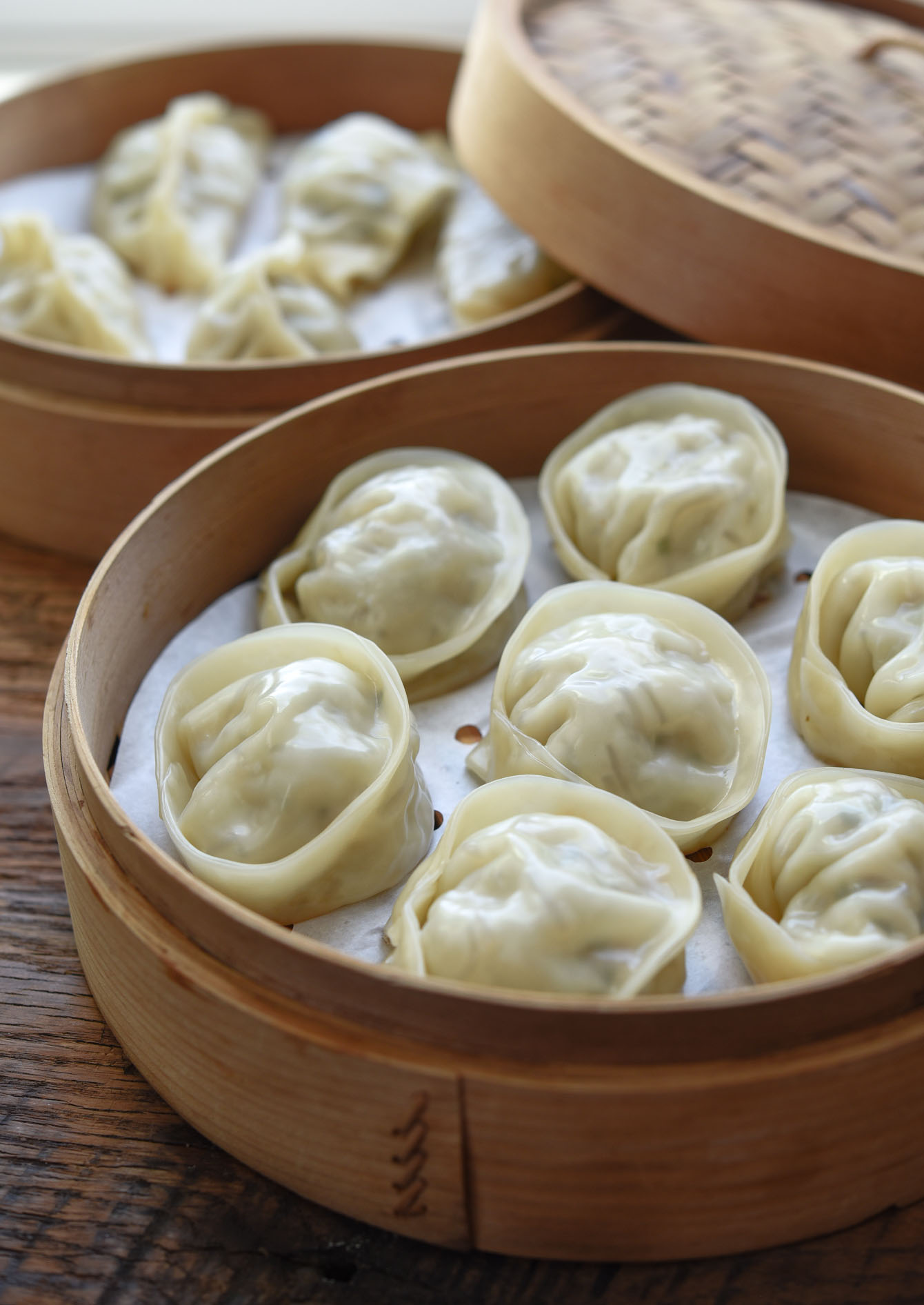 Medium
📜 Story
Medium
📜 Story
만두
Korean Dumplings
Seollal (Lunar New Year), everyday snack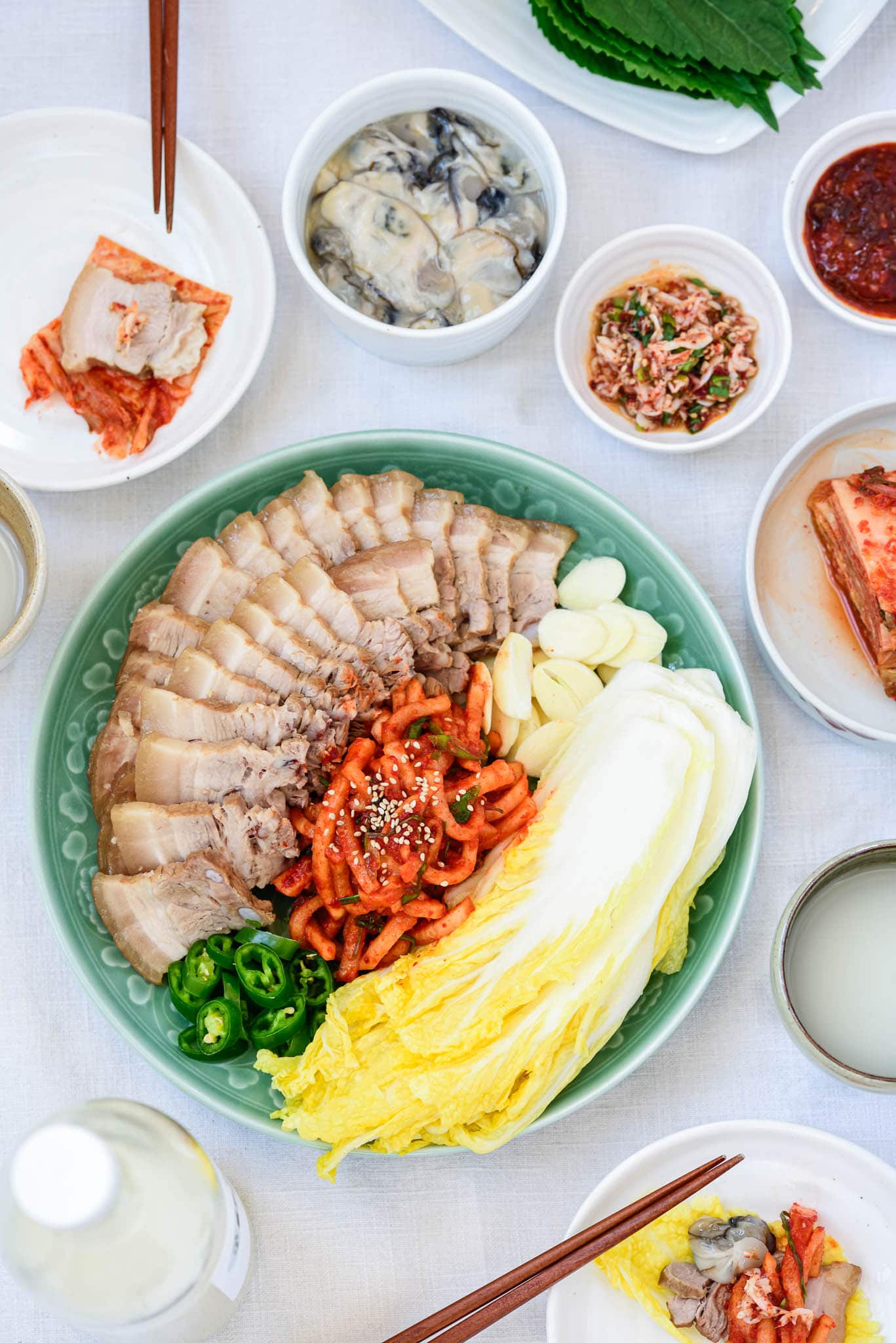 Medium
📜 Story
Medium
📜 Story
보쌈
Boiled Beef Lettuce Wraps
Dinner, celebration, kimjang (kimchi-making) season
Comments (0)
Log in to leave a comment.
No comments yet. Be the first to share your thoughts!