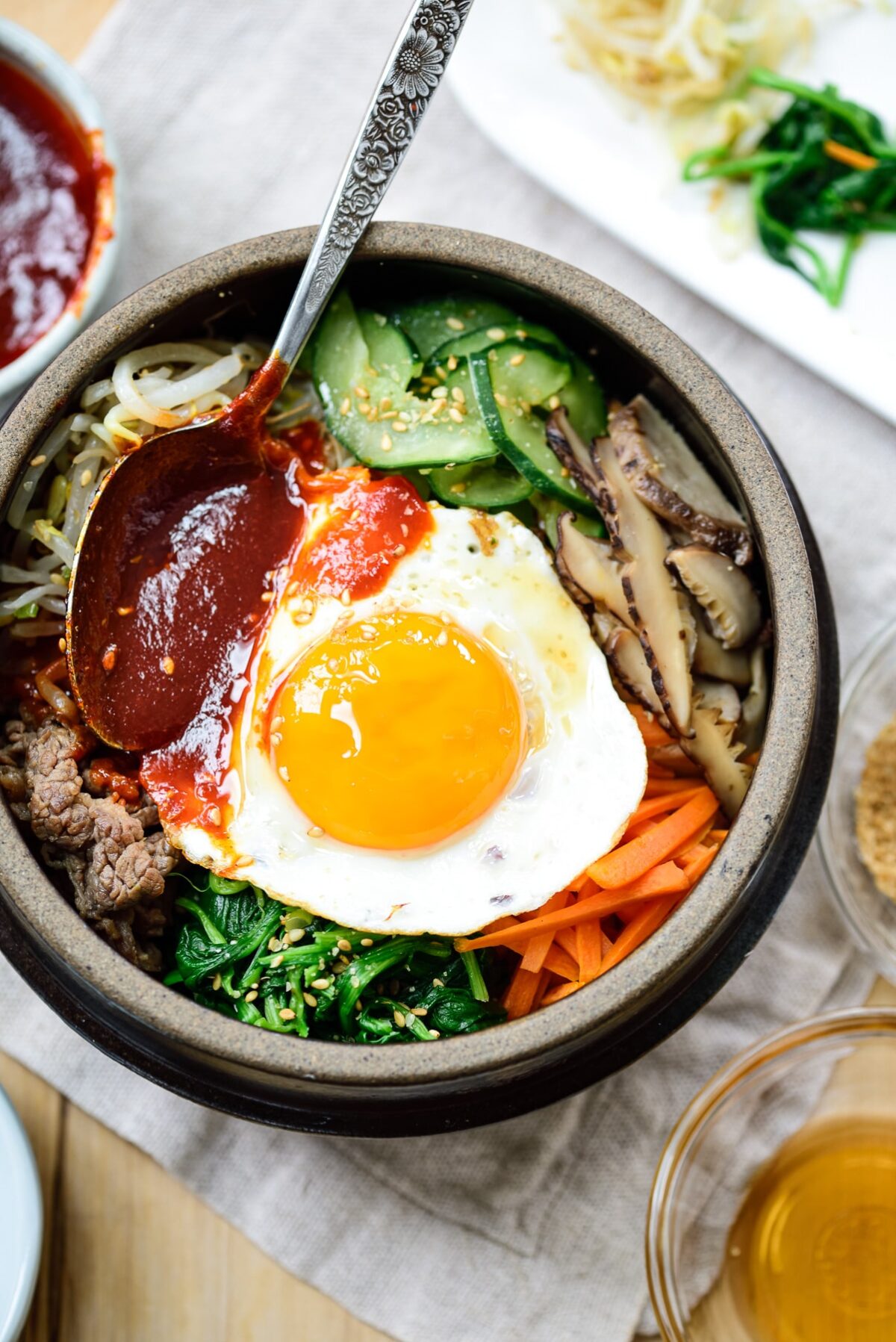
Vibrant bowl of rice crowned with seasoned vegetables, spicy gochujang, and a golden fried egg — mixed together at the table into a colorful medley.
Nutrition & Info
Allergen Warnings
Equipment Needed
Presentation Guide
Vessel: hot stone bowl (dolsot)
Garnishes: fried egg, sesame seeds, gochujang
Accompaniments: kimchi, doenjang jjigae
Instructions
-
1
Marinate the sliced beef in one tablespoon each of soy sauce, sesame oil, and sugar with one clove of minced garlic for at least thirty minutes, then cook in a hot skillet over high heat for two to three minutes until caramelized and slightly charred.
-
2
Blanch the spinach in boiling salted water for thirty seconds, shock immediately in ice water to preserve the bright green color, squeeze out all excess moisture, then toss with a pinch of salt, a drizzle of sesame oil, and minced garlic.
-
3
Cook the bean sprouts in boiling water for two minutes until just tender, drain and season with salt and sesame oil, then saute the julienned carrots and zucchini separately in a hot skillet with a touch of oil for two minutes each until tender-crisp.
-
4
Fry the eggs sunny-side up in a non-stick skillet with a small amount of sesame oil over medium heat, cooking until the whites are fully set but the yolks remain perfectly runny, as the flowing yolk acts as a rich sauce when mixed into the bowl.
-
5
Brush the inside of each serving bowl with sesame oil, press a mound of hot rice into the bottom, then arrange each prepared vegetable and the beef in separate colorful sections radiating out from the center like a clock face.
-
6
Place a fried egg in the center of each bowl, add a generous spoonful of gochujang, sprinkle with sesame seeds, then serve immediately, instructing diners to break the egg yolk and mix everything together vigorously from the bottom up before eating.
Did You Know?
In dolsot bibimbap, rice forms a crispy golden crust on the stone pot bottom — the best part.
Chef's Notes
Equipment Tips
- stone bowl (dolsot)
- rice cooker
- skillet
Garnishing
fried egg, sesame seeds, gochujang
Accompaniments
kimchi, doenjang jjigae
The Story Behind 비빔밥
The earliest reference to bibimbap appears as hondon-ban in the book 'Historical Notes of Gijae' written by Bak Dongnyang around 1590. Several theories explain its origin: it may have evolved from the practice of mixing food offerings at jesa (ancestral rites) where, after outdoor ceremonies, all dishes were combined in one bowl; or it may have originated as a practical farmers' lunch where wives combined available ingredients in a single bowl. Another tradition holds that ordinary Koreans ate bibimbap on the eve of the lunar new year to use up leftover side dishes. The first known recipe appears in the Siuijeonseo, an anonymous cookbook from the late 19th century.
Bibimbap has become a symbol of Korean culture internationally, embodying the principle of obangsaek: the five representative colors (red from carrots and gochujang, green from spinach and zucchini, yellow from egg yolk, white from rice and bean sprouts, black from seaweed and mushrooms) represent the five elements and cardinal directions. The act of mixing everything together before eating symbolizes harmony and unity. Jeonju, in South Korea's Jeolla Province, is considered the spiritual home of bibimbap and hosts an annual festival celebrating the dish.
More South Korean Dishes
 Medium
📜 Story
Medium
📜 Story
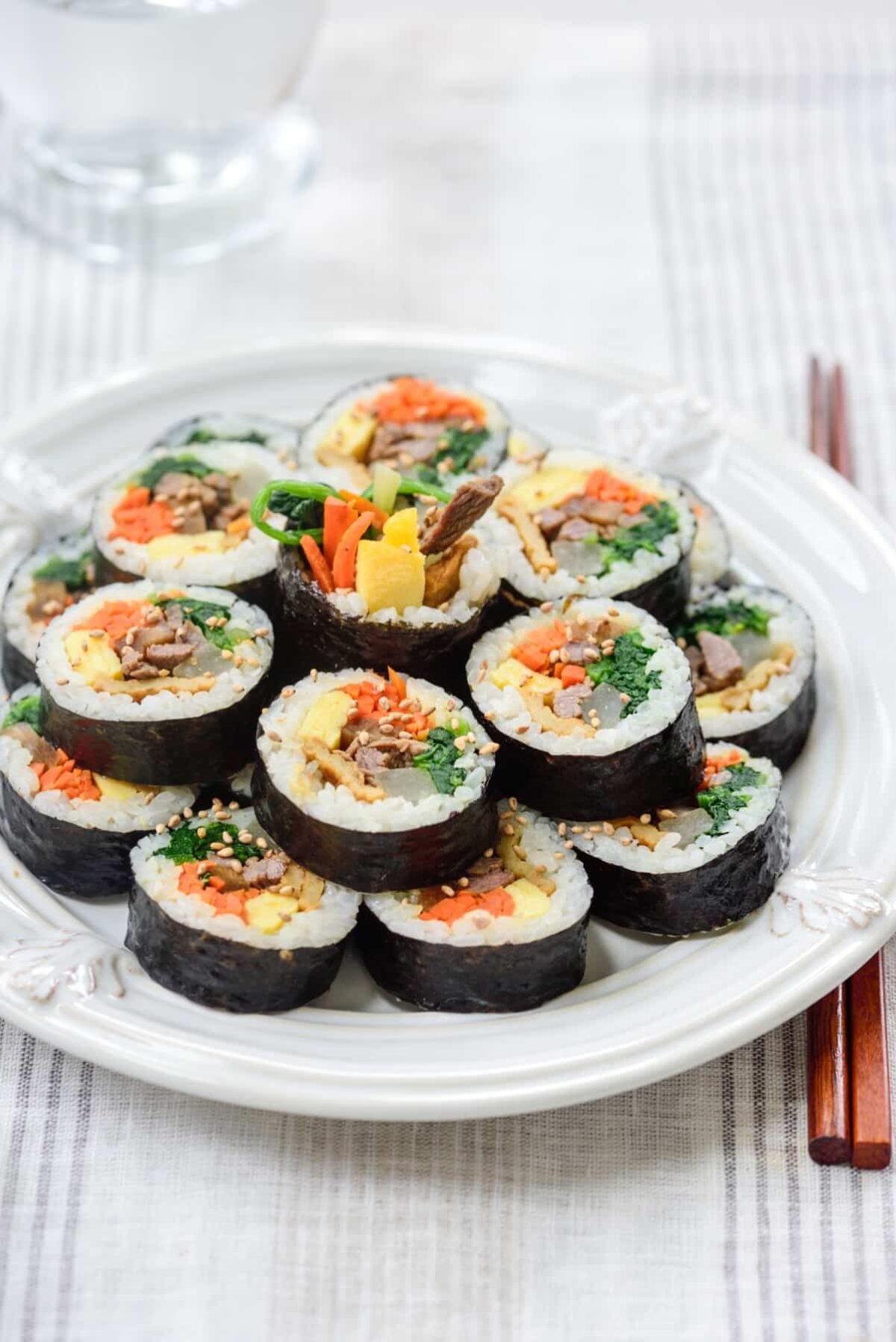
김밥
Korean Seaweed Rice Rolls
Picnics, packed lunches, everyday snack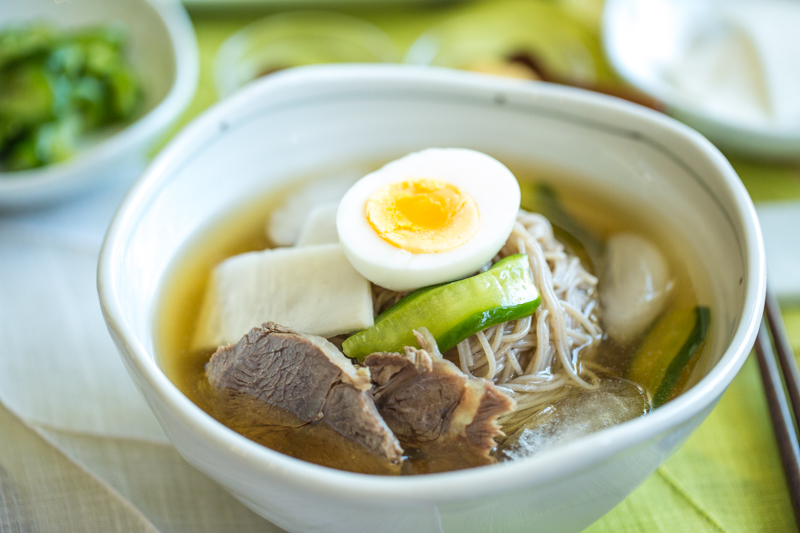 Medium
📜 Story
Medium
📜 Story
냉면
Cold Buckwheat Noodles
Summer, hot weather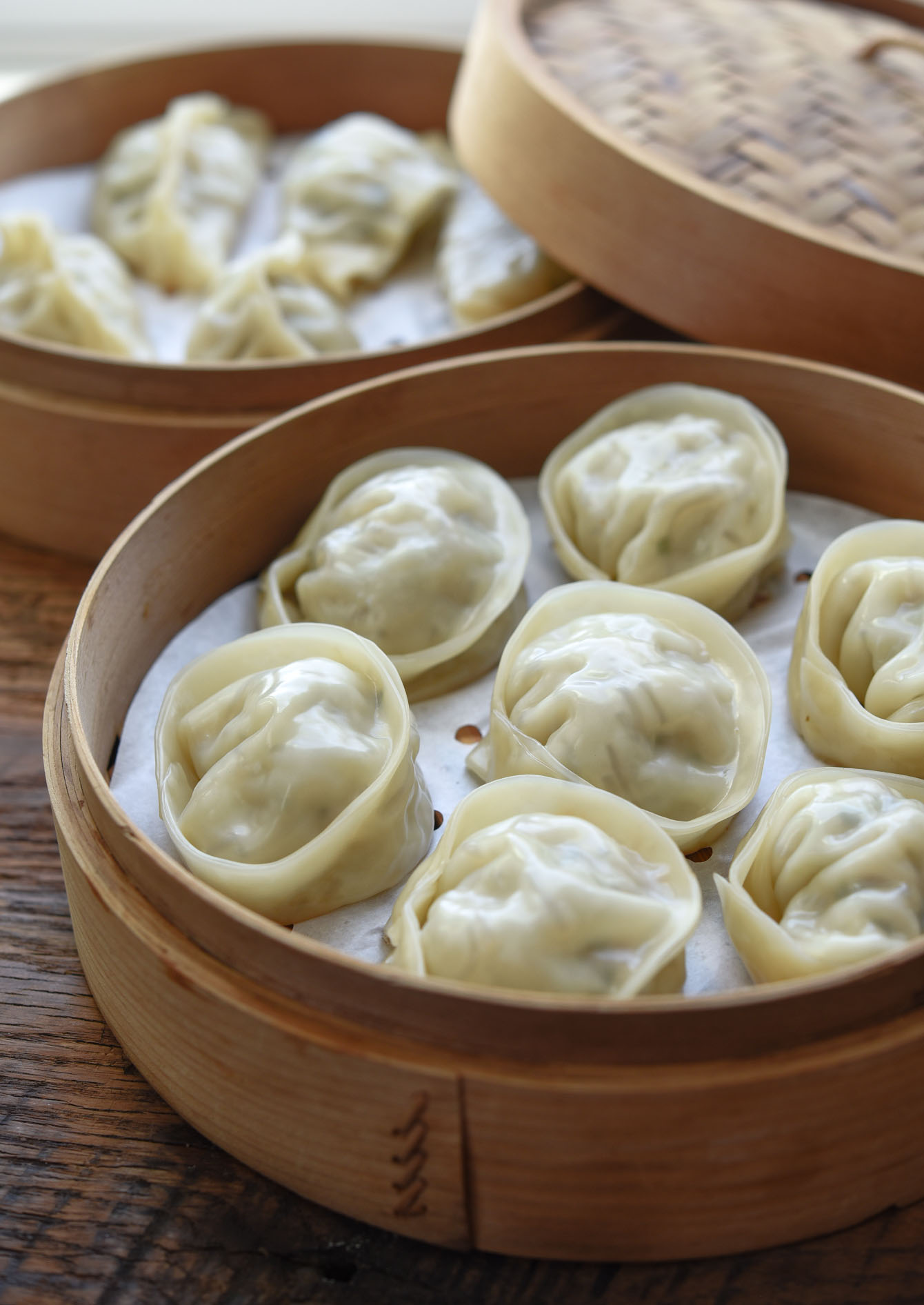 Medium
📜 Story
Medium
📜 Story
만두
Korean Dumplings
Seollal (Lunar New Year), everyday snack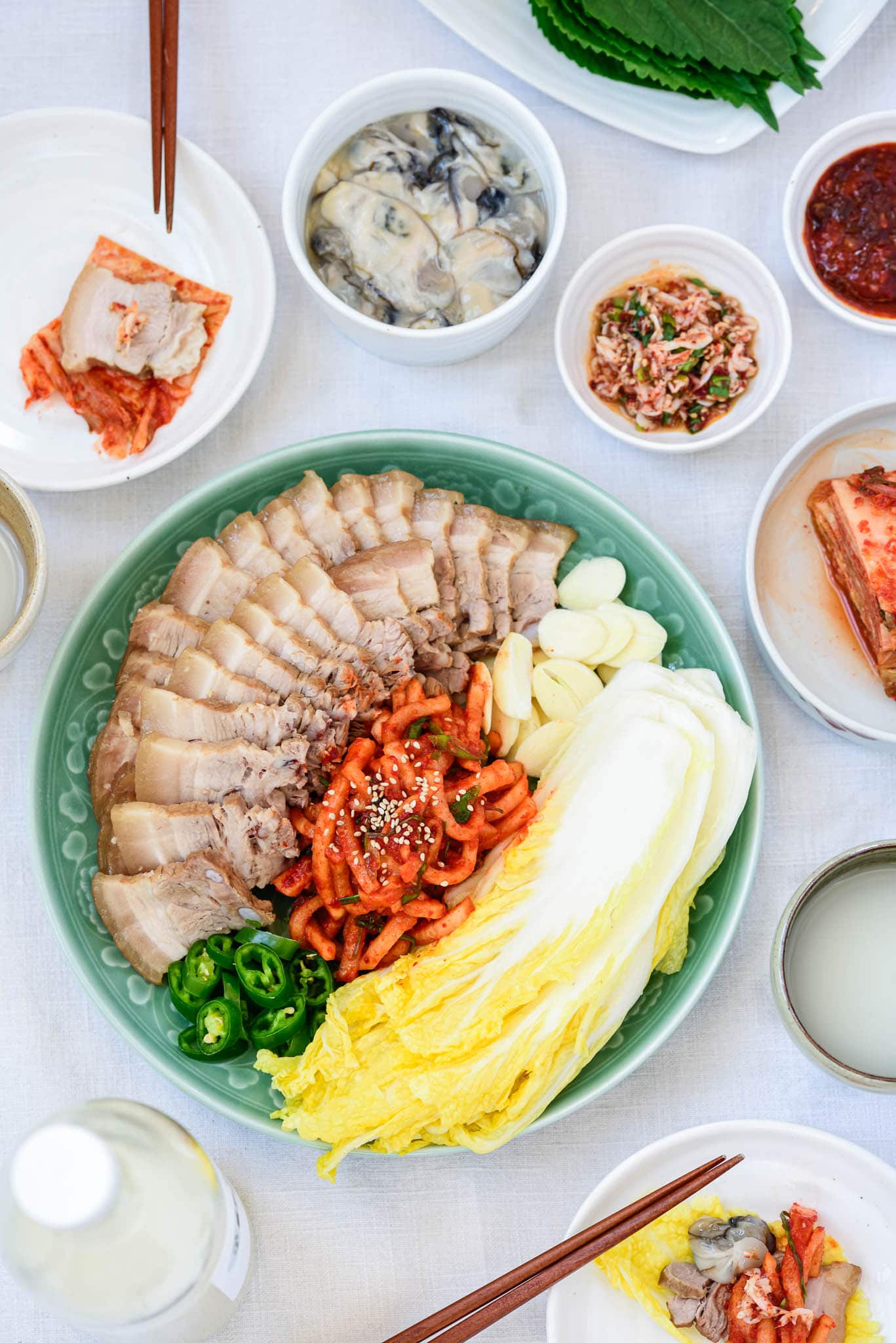 Medium
📜 Story
Medium
📜 Story
보쌈
Boiled Beef Lettuce Wraps
Dinner, celebration, kimjang (kimchi-making) season
Comments (0)
Log in to leave a comment.
No comments yet. Be the first to share your thoughts!