
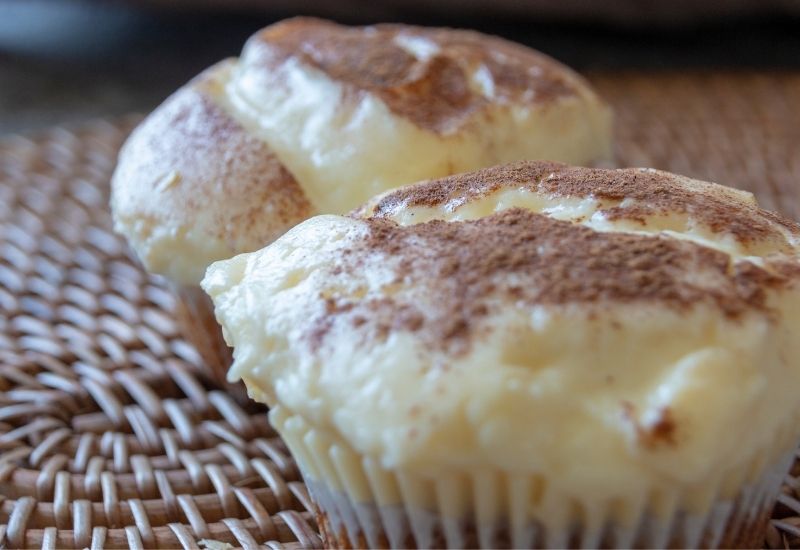
A silky, cinnamon-dusted custard set in a crisp shortcrust pastry shell — a beloved South African dessert of Dutch heritage, delicate and comforting.
Nutrition & Info
Allergen Warnings
Equipment Needed
Presentation Guide
Instructions
-
1
Make pastry: rub butter into flour and salt until crumbly. Add egg yolk and water, form dough. Chill 30 minutes.
-
2
Roll out pastry, line a greased tart tin, and blind bake at 180°C (350°F) for 15 minutes.
-
3
Heat milk with the cinnamon stick until just simmering. Remove cinnamon stick.
-
4
Melt butter, stir in flour and cornflour to make a roux. Gradually whisk in hot milk until smooth and thick.
-
5
Remove from heat. Beat sugar and egg yolks together, stir into the custard with vanilla. Fold in stiffly beaten egg whites.
-
6
Pour filling into the pre-baked shell. Bake at 180°C for 15 minutes until just set. Dust generously with ground cinnamon.
Did You Know?
South Africa celebrates National Melktert Day on February 27th, the same date as the country's National Braai Day — both honoring iconic elements of South African food culture.
Chef's Notes
Equipment Tips
- tart tin (26cm)
- saucepan
- whisk
- rolling pin
Garnishing
ground cinnamon, icing sugar
Accompaniments
The Story Behind Melktert
Melktert arrived at the Cape with Dutch settlers in the 17th century, adapted from the Dutch melktaart. The South African version evolved to be lighter and more delicate, with a higher ratio of milk to egg. It became a staple of Cape Malay and Afrikaner home baking traditions.

Comments (0)
Log in to leave a comment.
No comments yet. Be the first to share your thoughts!