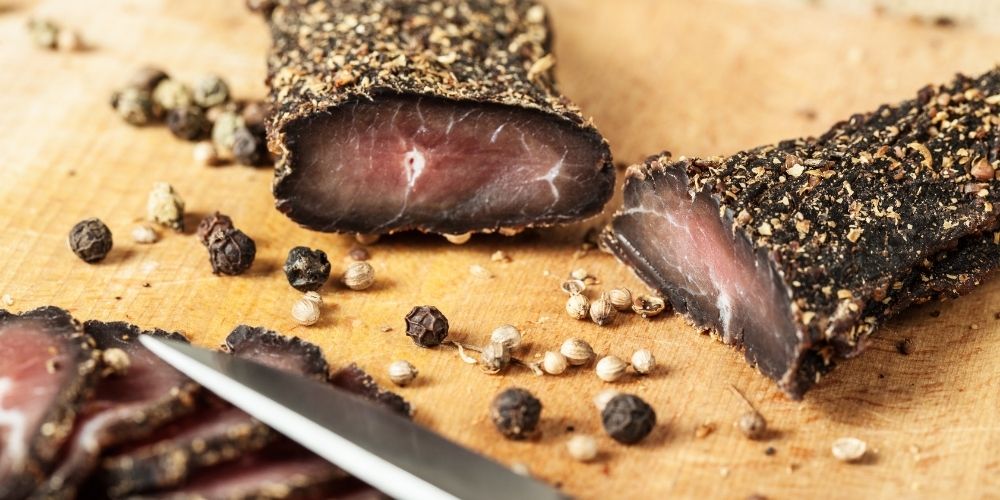
Air-dried, spiced beef seasoned with coriander, pepper, and vinegar — South Africa's deeply savory answer to jerky, but with a more tender, moist texture.
Nutrition & Info
Equipment Needed
Presentation Guide
Vessel: wooden cutting board
Accompaniments: dried fruit, craft beer
Instructions
-
1
Cut the beef into thick strips approximately two to three centimeters wide, cutting with the grain of the meat so the biltong has a proper fibrous texture when sliced, and trim away any large pieces of sinew that could become unpleasantly tough when dried.
-
2
Toast the whole coriander seeds in a dry skillet over medium heat for two to three minutes until fragrant and lightly golden, then crush them coarsely with a mortar and pestle, leaving some larger pieces for texture alongside the fine powder.
-
3
Combine the coarse salt, crushed coriander, black pepper, brown sugar, and baking soda in a bowl, then dip each strip of beef briefly into the brown vinegar on both sides, shaking off the excess before pressing the spice mixture generously onto all surfaces.
-
4
Layer the seasoned beef strips in a glass or plastic container, cover, and refrigerate for twelve to twenty-four hours, turning the pieces once halfway through to ensure even curing as the salt draws moisture from the meat.
-
5
Remove the cured strips from the container, shake off excess spice mixture lightly, and thread butcher's hooks through one end of each strip, then hang them in a cool, dry, well-ventilated area with good airflow, ideally using a biltong box with a small fan.
-
6
Dry the biltong for four to seven days depending on thickness and personal preference, checking daily by pressing the outside, which should feel firm while the center remains slightly yielding for medium biltong, then slice thinly against the grain to serve and store in paper bags.
Did You Know?
Biltong dates back to Dutch settlers who needed to preserve meat in the African climate. Unlike jerky, it's never smoked — just air-dried.
Chef's Notes
Equipment Tips
- biltong box or dehydrator
- sharp knife
- hooks
Accompaniments
dried fruit, craft beer
The Story Behind Biltong
The Story: Biltong is cured, dried meat that originated with Dutch settlers (Voortrekkers) at the Cape of Good Hope in the seventeenth century. The word comes from the Dutch bil (buttock) and tong (strip). The settlers needed to preserve meat for long overland journeys, and they adapted indigenous Khoikhoi drying techniques with European vinegar curing and spicing methods. Strips of beef were seasoned with coriander, pepper, salt, and vinegar, then hung to air-dry in the cool Cape climate.
On the Calendar: Biltong is consumed year-round as a snack, at braais, during rugby and cricket matches, and as a road trip staple. It is particularly associated with Heritage Day (September 24th), also informally known as National Braai Day.
Then & Now: The basic curing process remains unchanged from Voortrekker days, though commercial production has expanded enormously. Biltong has become South Africa's most iconic snack food and a growing international export, distinguished from American jerky by its thicker cut and air-drying (rather than smoking) process.
Legacy: Biltong is a taste of South African history in every strip, connecting the modern snacker to the pioneer traditions of the Cape frontier.

Comments (0)
Log in to leave a comment.
No comments yet. Be the first to share your thoughts!