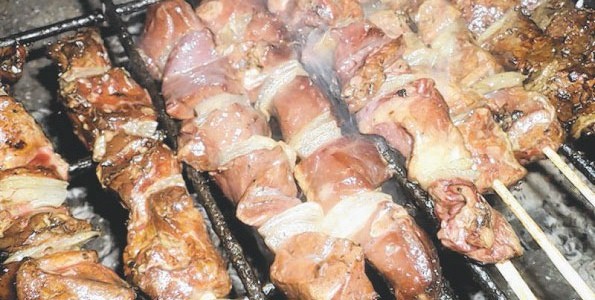
Quick-fried cubes of tender beef tossed with onions, peppers, and Somali spices — a fast, flavorful everyday dish served with rice, canjeero, or pasta.
Nutrition & Info
Equipment Needed
Presentation Guide
Vessel: round serving plate
Garnishes: fresh cilantro, lime wedge
Accompaniments: canjeero, basmati rice
Instructions
-
1
Heat the vegetable oil in a large skillet or wok over high heat until the oil shimmers, add the beef cubes in a single layer without crowding, and sear for three to four minutes without stirring until a deep brown crust forms on the bottom.
-
2
Flip the beef cubes to brown the other sides for two minutes, then add the diced onion and reduce heat to medium, cooking together for four to five minutes until the onion softens and absorbs the caramelized meat juices.
-
3
Add the minced garlic and diced green bell pepper, stir-fry for two minutes until the pepper begins to soften slightly while still retaining some crunch, then add the xawaash, cumin, coriander, and cardamom, tossing to coat the beef evenly.
-
4
Add the chopped tomatoes with a pinch of salt, stir well, and cook for five to six minutes until the tomatoes break down into a thick, clinging sauce that coats each piece of beef, adding a splash of water only if the pan becomes too dry.
-
5
Season with salt and black pepper to taste, remove from heat, and fold in the fresh chopped cilantro, letting the residual heat wilt the herbs and release their aroma into the dish.
-
6
Serve the suqaar immediately on a large plate alongside fluffy basmati rice, folded canjeero, or cooked spaghetti, which reflects the Italian-Somali culinary heritage and is an equally traditional accompaniment.
Did You Know?
Somalis often eat suqaar with spaghetti — a delicious legacy of Italian colonial influence that has become thoroughly Somali.
Chef's Notes
Equipment Tips
- skillet
- cutting board
- sharp knife
Garnishing
fresh cilantro, lime wedge
Accompaniments
canjeero, basmati rice
The Story Behind Suqaar
The Story: Suqaar, meaning small pieces in Somali, is a preparation of finely diced meat (beef, goat, or lamb) sauteed with onions, peppers, garlic, and a blend of spices. The dish represents the practical genius of Somali nomadic cooking: meat cut small cooks quickly over a portable fire, conserving precious fuel in the arid landscape. The seasonings reflect the Indian Ocean spice trade, with cumin, coriander, and turmeric complementing the natural flavor of fresh meat.
On the Calendar: Suqaar is an everyday meal, served atop canjeero for breakfast, alongside rice or pasta for lunch, or as a filling for sambusas. Its quick preparation makes it the go-to protein dish for busy families.
Then & Now: The fundamental technique of dicing and quickly frying meat with aromatics has not changed, though urban and diaspora cooks now pair suqaar with a wider range of accompaniments including flatbreads, rice, and even French fries. The dish's adaptability has made it one of the most frequently cooked Somali meals at home.
Legacy: Suqaar is Somali cooking at its most essential: fresh meat, sharp spices, quick fire, and the pastoral wisdom of a people who have always known how to make the most of what the land provides.


Comments (0)
Log in to leave a comment.
No comments yet. Be the first to share your thoughts!