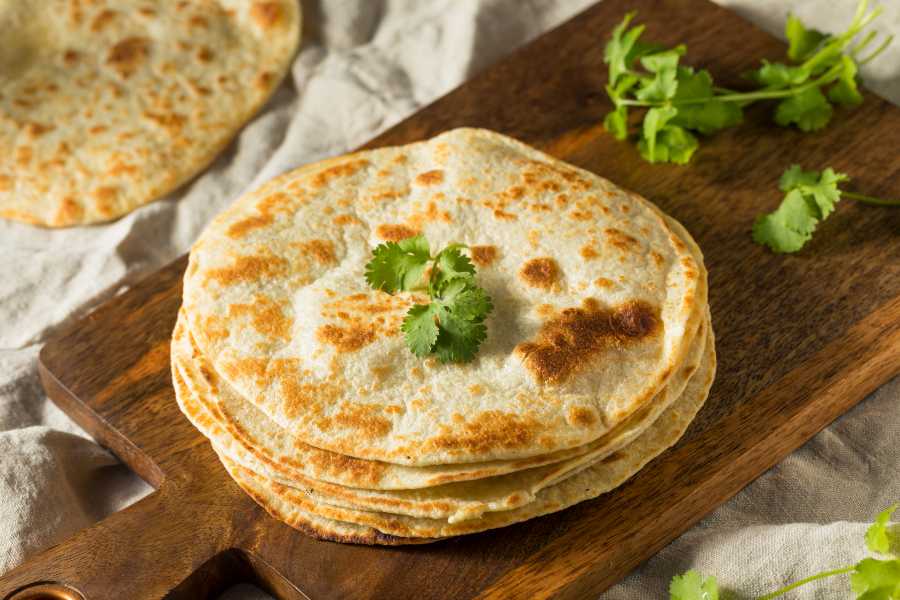
A flaky, layered flatbread made by folding and rolling dough with oil, creating delicate crispy layers similar to paratha.
Instructions
-
1
Mix flour, salt, and sugar in a bowl, add oil and warm water, and knead for ten minutes until smooth and elastic.
-
2
Divide dough into six balls, cover with a damp cloth, and rest for fifteen minutes.
-
3
Roll each ball into a thin circle, brush generously with oil, then fold in half and in half again.
-
4
Roll out the folded dough again into a circle, this creates the flaky layers.
-
5
Heat a flat griddle over medium heat, cook each bread for three minutes per side, brushing with oil.
-
6
Press gently with a spatula while cooking to ensure even browning, serve hot and flaky.
Did You Know?
Skilled Somali cooks can create sabaayad with over twenty paper-thin layers by repeating the fold-and-roll technique multiple times.
The Story Behind Sabaayad
Sabaayad arrived in Somali cuisine through the Indian Ocean trade networks that connected the Somali coast to the Indian subcontinent for over a thousand years. The layered flatbread technique, similar to Indian paratha, was adopted and adapted by Somali cooks who made it their own with specific dough ratios and cooking methods. Today sabaayad is as Somali as canjeero, a testament to how cuisines evolve through cultural exchange across oceans.



Comments (0)
Log in to leave a comment.
No comments yet. Be the first to share your thoughts!