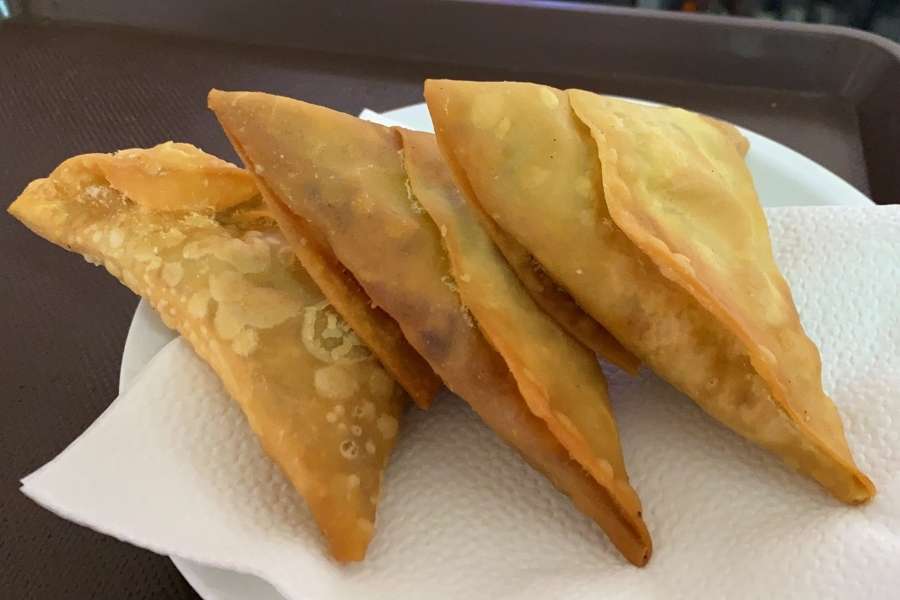
Crispy fried potato balls stuffed with seasoned ground beef, a popular Somali street food and appetizer.
Nutrition & Info
Allergen Warnings
Equipment Needed
Presentation Guide
Instructions
-
1
Boil potatoes in salted water until very tender, drain well, and mash until completely smooth.
-
2
Cook ground beef with onion, garlic, cumin, turmeric, salt, and pepper until browned and dry.
-
3
Take a handful of mashed potato, flatten in your palm, place a spoonful of meat filling in the center.
-
4
Close the potato around the filling, shaping into a smooth ball, and repeat with remaining ingredients.
-
5
Dip each ball in beaten egg, then roll in breadcrumbs until evenly coated.
-
6
Deep fry in batches at 175C for four minutes until golden brown, drain on paper towels, and serve hot.
Did You Know?
Nafaqo competitions are held during Ramadan in some Somali neighborhoods, with cooks competing to make the crispiest, most perfectly shaped balls.
Chef's Notes
Equipment Tips
- large pot
- mixing bowl
- deep fryer or pot
- slotted spoon
Garnishing
lemon wedges, hot sauce
Accompaniments
salad, chili sauce
The Story Behind Nafaqo
Nafaqo showcases the Indian culinary influence on Somali cuisine, arriving through centuries of trade across the Indian Ocean. Similar to Indian potato chops, Somali cooks adapted the concept with their own spice profiles and fillings. The dish has become one of the most popular street foods in Mogadishu and other Somali cities, particularly during Ramadan when elaborate iftar spreads always include a plate of golden nafaqo.

Comments (0)
Log in to leave a comment.
No comments yet. Be the first to share your thoughts!