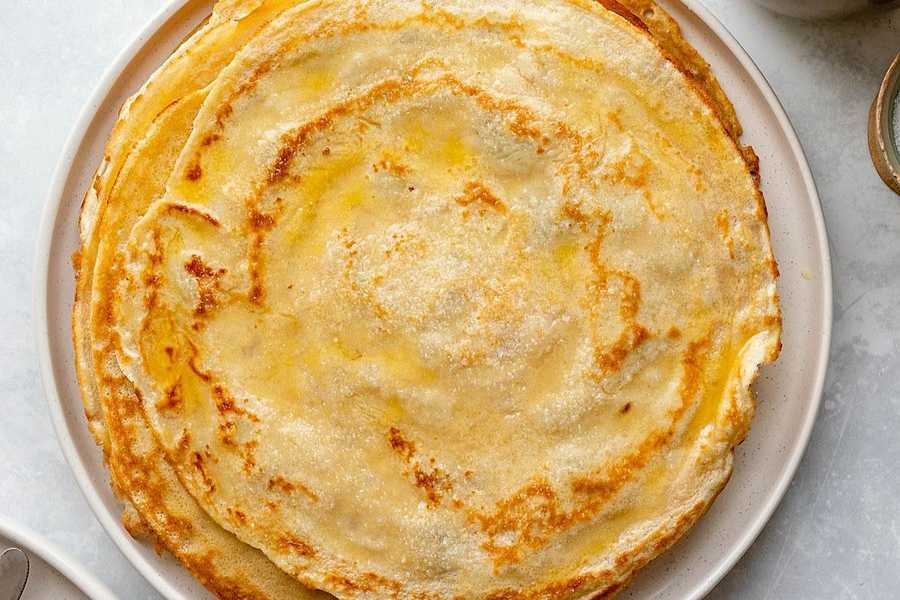
A thin, crispy-edged layered pancake flavored with cardamom and sugar, cooked until golden and served folded with ghee or honey.
Instructions
-
1
Whisk flour, sugar, cardamom, and salt together in a large bowl until well combined.
-
2
Add egg and warm water, whisk vigorously until you have a smooth, thin batter without lumps.
-
3
Stir in melted ghee and let batter rest for ten minutes to allow the flour to hydrate.
-
4
Heat a flat griddle over medium heat, brush lightly with ghee.
-
5
Pour a thin layer of batter onto the griddle, swirling to create a round crepe-like pancake.
-
6
Cook for two minutes until the bottom is golden and crispy, flip carefully, cook one more minute, then fold and serve.
Did You Know?
During Ramadan, malawax is one of the first foods eaten at iftar, paired with sweet tea to break the fast gently.
The Story Behind Malawax
Malawax holds a special place in Somali breakfast culture, a daily ritual that starts many mornings across the country. The layered, crispy texture sets it apart from other flatbreads, showing the influence of Indian Ocean trade routes that brought similar crepe-making techniques to the Somali coast. Each family has their preferred thickness and sweetness level, making malawax a deeply personal dish that carries the taste of home for Somalis worldwide.

Comments (0)
Log in to leave a comment.
No comments yet. Be the first to share your thoughts!