
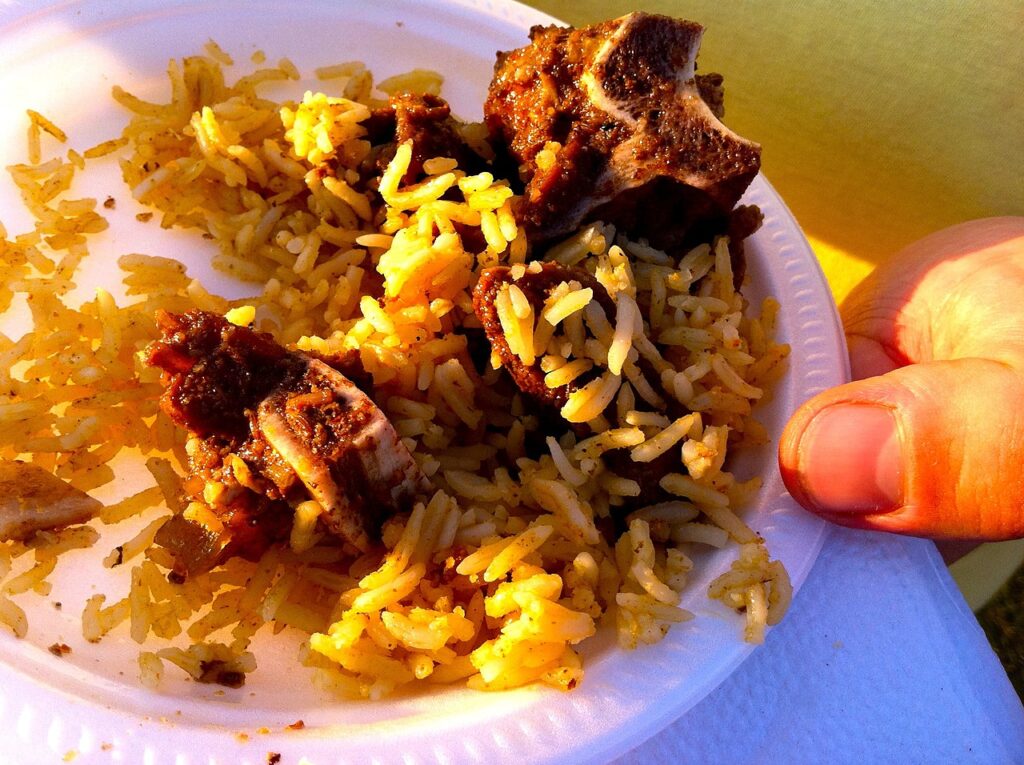
Tender goat meat slow-simmered with onions, tomatoes, and aromatic xawaash spices until falling-apart tender, a staple of Somali celebrations.
Instructions
-
1
Heat oil in a heavy pot over medium-high heat, add goat pieces and brown well on all sides for ten minutes.
-
2
Remove meat, add onions and garlic, sauté for five minutes until softened and golden.
-
3
Return meat to pot, add tomatoes, xawaash, cumin, and turmeric, stir to coat everything evenly.
-
4
Pour in water, bring to a boil, then reduce to low heat and cover tightly.
-
5
Simmer for ninety minutes until meat is tender and falls easily from the bone, stirring occasionally.
-
6
Season with salt and pepper, garnish with fresh cilantro, and serve with rice or canjeero.
Did You Know?
In Somali culture, the most honored guest at a gathering is always served the choicest cut of goat, typically the rib section.
The Story Behind Hilib Ari
Hilib ari is inseparable from Somali identity, reflecting the nomadic pastoral heritage where goats were the primary livestock. For thousands of years, Somali herders have relied on goat meat as their main protein source, and the methods of preparing it have been refined across countless generations. This stew represents the convergence of nomadic simplicity and sophisticated spicing, a dish that is simultaneously rustic and deeply flavorful.


Comments (0)
Log in to leave a comment.
No comments yet. Be the first to share your thoughts!